
What Is CBD? A Science-Based, Up-to-Date Guide to Cannabidiol (2026)
We explain in plain language, with sources, what CBD is, how it behaves in the body and what research has found so far.
By: cbd.school editorial teamUpdated: 27 sources
Quick check
This article is prepared in line with our editorial policy.
- We don’t sell products, recommend brands or give personal doses.
- We base health information on peer-reviewed studies or official bodies. If the evidence is weak, we say so clearly: How do we rate the strength of evidence?
- If you spot an error, write to us through the contact form. We check it against the source, correct it if it’s right and update the page’s date.
More detail: Editorial Policy. Our content is for information only; it is not a substitute for diagnosis or treatment.
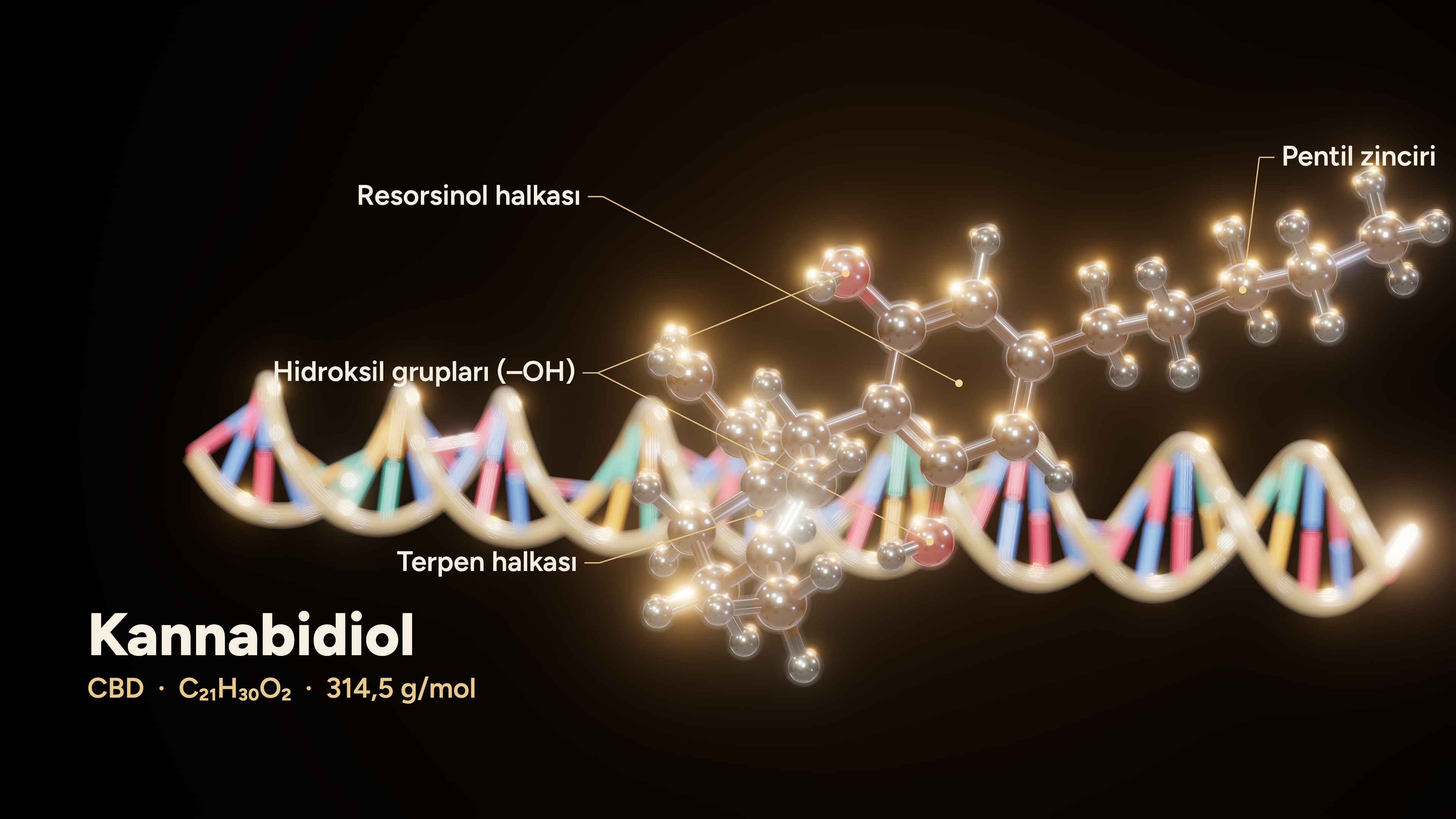
You may have heard of CBD from someone close to you, at a pharmacy or on social media. Maybe you’re wondering whether it could help with pain, sleep or anxiety; that’s a very understandable question. In this guide, we explain in plain language, with sources, what CBD is, how it behaves in the body, what research says today, its possible side effects and the rules in Turkey. For details by condition, see the CBD Guide.
Note: In medical reports, "CBD" can also mean other things: in the biliary tract, it stands for the largest bile duct, the common bile duct (also called the choledochus) (MeSH; Gümüş 2025), and in neurology, for a rare brain disease called corticobasal degeneration (Armstrong 2013). This page is about cannabidiol, the compound found in cannabis.
What’s in this article?14 sections
At a glance: CBD
Full name | Cannabidiol |
|---|---|
Source | The cannabis plant (Cannabis sativa); a lab-made (synthetic) form also exists |
Does it get you high? | No. The compound that gets you high is THC. In large amounts, CBD can cause drowsiness. |
Is it addictive? | According to the World Health Organization, it has shown no potential for abuse or dependence in humans. |
Approved medicine | Epidiolex / Epidyolex (US 2018, Europe 2019); for seizures in Dravet, Lennox–Gastaut and tuberous sclerosis. Not licensed in Turkey. |
Where research is strongest | These three severe types of epilepsy (with the approved medicine) |
Things to watch | Drug interactions, liver test results, drowsiness |
In Turkey | Can be sold only in pharmacies (2025 law, 2026 regulation) |
What is CBD?
CBD is a member of a family of compounds found in cannabis called cannabinoids. The two best-known members of this family are CBD and THC. THC causes intoxication (a "high"); CBD does not. For the other members of the family: What are cannabinoids?
Products known as "CBD oil" are made by mixing CBD extract from the plant with a carrier oil such as olive oil or MCT (What is CBD oil?). Hemp seed oil is a different product. According to the US Food and Drug Administration (FDA), the seed itself does not produce CBD or THC; the small amounts in seed products come from contact with other parts of the plant during harvesting and processing (FDA). In a study of 20 hemp seed oils sold in Turkey, CBD came out at no more than about 0.02 mg per milliliter; small amounts of THC were also measured in all but one of the samples (Kacargil 2026).
In 2018, the World Health Organization’s expert committee reported that CBD is generally well tolerated and has shown no potential for abuse or dependence in humans. The committee also wrote that some of the side effects seen may be due to drug interactions (WHO 2018).
The difference between CBD and THC
Both come from the same plant, but they behave very differently in the body. For a detailed comparison: THC vs. CBD.
CBD | THC | |
|---|---|---|
Intoxication (high) | No | Yes |
Risk of dependence | Not shown in humans (WHO 2018) | Yes |
Drug testing | Tests don’t look for CBD, but if the product contains THC, the test can come back positive | Tests look for it |
In sports (WADA) | Not banned | Banned in competition |
In Turkey | Only through pharmacies, within the product types in the regulation | Covered by narcotics law |
Pure CBD is not expected to make a drug test positive. Even so, in one study, a urine test came back positive in one of 10 people taking 100 mg of pure CBD twice a day for two weeks; an oil containing only 0.5 mg of THC also made the test positive with regular use (Wolinsky 2026). More detail: Can using CBD make a drug test positive?
How does CBD work in the body?
Exactly how CBD works in the body is not yet known. It is thought to act on many targets; some of these are linked to the body’s own cannabinoid system (the endocannabinoid system). An effect seen in the lab doesn’t mean it will work in patients; only studies in people can show that.
How the body handles CBD, on the other hand, is better understood:
- Only a small part of CBD taken by mouth reaches the blood. On an empty stomach, this is estimated at about 6% (Perucca and Bialer 2020).
- Taken with food, the amount reaching the blood rises 2–5-fold (Jang 2024). The European Medicines Agency recommends taking the approved medicine the same way every day (always with food or always on an empty stomach).
- No difference in blood levels was found between drops under the tongue and capsules; most of the drops are probably swallowed (Johnson 2024).
- It leaves the body slowly. According to the approved medicine’s label, it takes 56–61 hours for the amount in the blood to fall by half.
- It is broken down in the liver by enzymes (CYP3A4 and CYP2C19) that also break down many other medicines. This is why it interacts with some medicines (Epidiolex label, 2026).
What does the research say?
The most solid results so far came from the approved CBD medicine in some severe forms of epilepsy. In the CBD Guide, we review the research on each condition one by one. The most reliable of these studies are those in which patients are randomly assigned to groups: one group takes CBD, and the other takes an inactive look-alike (placebo); this shows whether a difference really comes from CBD. The table below summarizes where things stand today for pure CBD. We explain what the evidence levels mean on our strength of evidence page.
| Where it stands today (CBD alone) | Number of topics | Topics |
|---|---|---|
| Proven to help | 3 | Dravet Syndrome, Lennox–Gastaut Syndrome, Tuberous Sclerosis |
| May help a little | 1 | Blood Pressure |
| Mixed results | 9 | Drug-Resistant Epilepsy, Neuropathic Pain, CBD Cream (Topical), Anxiety, Social Anxiety, Schizophrenia, Addiction, Skin Conditions, Irritable Bowel and Stomach Problems |
| Not enough research | 10 | Chemotherapy Nausea, Panic Attacks, Depression, Migraine, Dementia, Spasticity Other Than MS, Tourette Syndrome, Cancer Risk, Loss of Appetite and Weight Loss, ADHD |
| No effect found | 17 | Autism, Cancer Pain, Appetite Loss in Cancer, Sleep and Anxiety in Cancer, Cancer Treatment, Pain After Surgery, Arthritis and Osteoarthritis, Chronic Pain, PTSD, Insomnia, Bipolar Depression, Fibromyalgia, Crohn’s and Ulcerative Colitis, MS Spasticity, Parkinson’s Disease, Diabetes, Glaucoma |
40 topics in total. The table builds itself from the current assessments in the CBD Guide.
The table is for pure CBD. Results for products containing THC are different and are assessed separately in the guide.
Epilepsy
The approved CBD medicine reduced seizures when added to the epilepsy medicines patients were already taking. In children and young people with Dravet syndrome, the median number of seizures per month fell from 12.4 to 5.9; in the placebo group, it fell from 14.9 to 14.1 (Devinsky 2017). In Lennox–Gastaut syndrome, drop seizures fell by 43.9% with the medicine and by 21.8% with placebo (Thiele 2018). These results belong to a medicine whose content and dose are controlled; they can’t be applied directly to CBD oils whose content isn’t checked.
Pain
Pain is one of the topics people are most curious about when it comes to CBD. In 15 of 16 pain studies using pharmaceutical-grade CBD, there was no clear difference between people taking CBD and those taking placebo (Moore 2024). Pure CBD taken by mouth gave a similar result in nerve pain (Zubcevic 2023). The small benefits seen in some types of pain belong to medicines containing THC. More detail: chronic pain and CBD.
Sleep and anxiety
A 2025 analysis pooling the results of many studies found no clear difference in sleep quality versus placebo with CBD-only products; a difference was seen with products that also contained THC (da Silva 2025). For anxiety, public speaking anxiety decreased in small one-time experiments; in longer and larger studies, results are mixed and research is ongoing. More detail: anxiety and CBD, insomnia and CBD.
Cancer
Lab experiments with tumor cells are intriguing, but these results have not been shown in patients; based on what we know today, CBD is not a cancer treatment. The evidence for chemotherapy nausea belongs to medicines containing THC. More detail: cancer treatment claims, myth or fact?
Multiple sclerosis (MS)
The medicine approved in some countries for muscle stiffness in MS is a mouth spray that contains both THC and CBD (nabiximols). There is no controlled study yet looking at pure CBD in MS. This spray is not licensed in Turkey.
Possible side effects and drug interactions
The most common side effects of CBD are drowsiness, diarrhea and decreased appetite. The two main things to watch are the liver and drug interactions.
- Drowsiness: In studies of the approved medicine, drowsiness occurred in 32% of people taking the medicine and 11% of those taking placebo (Epidiolex label). That’s why care is needed when driving: CBD and driving.
- Liver: In a study of healthy adults, 5.6% of those taking 5 mg of CBD per kilogram of body weight a day (about 350 mg for a 70 kg person) had liver values above 3 times normal within 4 weeks (Florian 2025). This is seen more often when it is used together with valproate (Epidiolex label).
- Liver disease: In moderate to severe liver impairment, CBD can reach blood levels 2.5–5 times higher (Epidiolex label).
- Alcohol: When CBD is taken with alcohol, the amount reaching the blood increases (Epidiolex label).
- Pregnancy and breastfeeding: The FDA strongly advises against using cannabis products, including CBD, during this time: CBD in pregnancy and breastfeeding.
- Young people and children: The European Food Safety Authority (EFSA) could not set a safe level for people under 25 (EFSA 2026). The approved medicine is also used in children only under a doctor’s supervision.
CBD can slow the breakdown of some medicines in the liver and change their levels in the blood. The most important interactions have been reported with the following (Epidiolex label):
- Epilepsy medicines: clobazam (its active breakdown product can rise about 3-fold, and drowsiness can increase) and valproate (raised liver values)
- The blood thinner warfarin (the clotting value INR can rise; closer monitoring is needed)
- Transplant medicines: tacrolimus, everolimus, sirolimus
If you want to see sourced warnings for 78 medicines: Check CBD drug interactions. A medicine not being on the list does not mean there is no interaction. All safety topics: Is CBD oil safe?
CBD product types and labels
Type | What it means | Good to know |
|---|---|---|
Isolate | Purified CBD on its own | The approved medicine is also purified CBD |
Broad-spectrum | Hemp extract said to have had its THC removed | May contain other cannabinoids that can cause problems on a doping test (Gillham 2026) |
Full-spectrum | Extract that also contains the plant’s other compounds, including a small amount of THC | The idea that they are "more effective together" (the entourage effect) has not been proven in humans |
Products also differ by how they are used: drops (oil), capsules, creams, edibles and vapor (vape). Inhaling vapor has not been shown to be safe: Is CBD vaping harmful? Details on the types: CBD spectrum guide.
The amount stated on the label isn’t always accurate either. Of 84 CBD products bought online, the CBD amount on the label matched the actual content in only about a third (31%); THC was found in 21% of the products (Bonn-Miller 2017). When assessing a product, it helps to check the certificate of analysis from an independent laboratory and the batch number: How to read a CBD label
How has it been used in studies?
There is no CBD dose that fits everyone, and we don’t recommend personal doses; if it is used as a medicine, the doctor sets the dose. The information below only describes what studies and official bodies have done.
- Epilepsy studies: In the Dravet and Lennox–Gastaut studies, the approved medicine was given at 20 milligrams per kilogram of body weight a day (20 mg/kg/day; a study dose, not a personal recommendation). Patients were monitored under a doctor’s supervision and with liver tests (Devinsky 2017; Thiele 2018).
- Liver study: Healthy adults were given 5 mg per kilogram of body weight a day (a study dose; not a personal recommendation) (Florian 2025).
- Official safety limits: For CBD sold as food, the limits are much lower. EFSA’s 2026 provisional safe level is about 2 mg a day for a 70 kg adult; no level could be set for people under 25, pregnant or breastfeeding women, or people taking medicines (EFSA 2026). The UK Food Standards Agency advises no more than 10 mg a day for healthy adults (FSA). These are upper limits set for product safety, not personal dose recommendations.
- To convert the milligrams your doctor prescribed into drops of your own bottle: CBD oil dose and drop calculator.
The status of CBD in Turkey and around the world
In Turkey, hemp-derived products, including CBD, may be sold only in pharmacies (Law No. 7557; January 31, 2026 regulation). The regulation defines four product types: medicinal product (medicine), health product, support product and personal care product. Products in the medicine and health product classes are dispensed with a prescription; no prescription requirement is stated for support products with a THC content of no more than 0.3%. As of October 2026, there is no approved CBD medicine in Turkey; the list of licensed medicines published by the Turkish Medicines and Medical Devices Agency on October 16, 2026 contains no medicine with CBD (TİTCK). CBD products sold online, on social media, at herbal shops or in stores are outside the legal sales channel. Timeline and official sources: CBD laws in Turkey.
- US: The FDA approved the licensed CBD medicine in 2018. According to the FDA, CBD cannot be added to food or marketed as a dietary supplement (FDA).
- European Union: CBD in food is considered a "novel food," and the authorization process is ongoing; in 2026, EFSA announced a provisional safe level.
- UK: The Food Standards Agency publishes a list of products whose authorization process is still under way.
- Sports: The World Anti-Doping Agency (WADA) does not ban CBD; THC is banned in competition (WADA 2027 list). More detail: athletes and CBD.
Is research still ongoing?
Yes. As of October 19, 2026, 539 studies testing cannabidiol are registered on ClinicalTrials.gov; 118 of them are enrolling patients or preparing to. There is no registered CBD study being conducted in Turkey (ClinicalTrials.gov). As new results come in, we update this guide and the CBD Guide.
If you are considering CBD
You can talk with your doctor or pharmacist about the following:
- The complaint you’re considering it for and what research has found on it (the table on this page and the guide pages can help)
- All the medicines, herbal products and supplements you take, especially epilepsy medicines, blood thinners and transplant medicines
- Whether you have liver disease, regular alcohol use and, if needed, liver tests
- Pregnancy, breastfeeding or plans to become pregnant
- Situations such as driving or drug or doping tests
In Turkey, the only legal sales channel is the pharmacy. If you have a side effect, you can report it to the Turkish Pharmacovigilance Center (TÜFAM): how to report a side effect
Conclusion
CBD is a compound that does not get you high and has shown no dependence potential; but being natural doesn’t mean it is harmless in every situation. Today, the strongest evidence concerns the effect of the approved CBD medicine in some severe forms of epilepsy; research on topics such as pain, sleep and anxiety is ongoing. Talking with your doctor about any question you have, along with the medicines you take, is the safest place to start.
This article is for information only; it is not a diagnosis or treatment recommendation. We don’t sell products or recommend any product or brand. How we prepare our content: Editorial Policy. Trusted outside sources: Trusted CBD sources. If you spot an error, write to [email protected].
Frequently asked questions
Does CBD get you high or cause addiction?
No. The compound that gets you high is THC; CBD does not. According to the World Health Organization’s 2018 assessment, CBD has shown no potential for abuse or dependence in humans. Still, it can cause drowsiness, especially in large amounts.
What is CBD good for?
Today, the most solid result is that the approved CBD medicine reduces seizures in Dravet and Lennox–Gastaut syndromes and in tuberous sclerosis. Research on topics such as pain, sleep and anxiety is ongoing; for most of the topics we have reviewed, results are mixed or there was no clear difference between people who took CBD and those who didn’t. You can also find the topic you’re curious about in the CBD Guide.
What are the side effects and drug interactions of CBD?
The most common are drowsiness, diarrhea and decreased appetite; liver values can also rise. CBD can change the blood levels of epilepsy medicines such as clobazam and valproate, the blood thinner warfarin and some transplant medicines. It’s a good idea to talk with your doctor or pharmacist about the medicines you take.
Are CBD oil and hemp seed oil the same thing?
No. CBD oil contains CBD from the plant’s flowers and leaves, while seed oil is a food oil made by pressing the seeds. In 20 seed oils sold in Turkey, CBD came out at no more than about 0.02 mg per milliliter, and small amounts of THC were measured in all but one of the samples.
Does CBD show up on a drug test?
Tests look for THC, not CBD, so pure CBD is not expected to make a test positive. However, if the product contains a small amount of THC or the label is wrong, the test can come back positive. If the test result matters for you, talk about it with your doctor.
Is CBD legal in Turkey?
Hemp-derived products, including CBD, may be sold only in pharmacies (Law No. 7557, January 31, 2026 regulation). Products in the medicine and health product classes are dispensed with a prescription; no prescription requirement is stated for support products with a THC content of no more than 0.3%. As of October 2026, there is no approved CBD medicine in Turkey.
What does CBD mean in medicine? Does it have to do with the bile duct?
In medical reports, CBD most often means the common bile duct (choledochus), the largest bile duct; in neurology, it is short for corticobasal degeneration. These have nothing to do with cannabidiol (CBD) from cannabis.
References
Show 27 references
- Devinsky O, et al. Trial of Cannabidiol for Drug-Resistant Seizures in the Dravet Syndrome. N Engl J Med. 2017. PMID 28538134
- Thiele EA, et al. Cannabidiol in patients with seizures associated with Lennox-Gastaut syndrome (GWPCARE4): a randomised, double-blind, placebo-controlled phase 3 trial. Lancet. 2018. PMID 29395273
- Moore A, et al. Cannabidiol (CBD) Products for Pain: Ineffective, Expensive, and With Potential Harms. J Pain. 2024. PMID 37863344
- Zubcevic K, et al. Oral capsules of tetra-hydro-cannabinol (THC), cannabidiol (CBD) and their combination in peripheral neuropathic pain treatment. Eur J Pain. 2023. PMID 36571471
- da Silva GHS, et al. Effectiveness of cannabinoids on subjective sleep quality in people with and without insomnia or poor sleep: A systematic review and meta-analysis of randomised studies. Sleep Med Rev. 2025. PMID 40929927
- Florian J, et al. Cannabidiol and Liver Enzyme Level Elevations in Healthy Adults: A Randomized Clinical Trial. JAMA Intern Med. 2025. PMID 40622698
- Perucca E, Bialer M. Critical Aspects Affecting Cannabidiol Oral Bioavailability and Metabolic Elimination, and Related Clinical Implications. CNS Drugs. 2020. PMID 32504461
- Jang JH, et al. Quantitative summary on the human pharmacokinetic properties of cannabidiol to accelerate scientific clinical application of cannabis. Naunyn Schmiedebergs Arch Pharmacol. 2024. PMID 38850302
- Johnson DA, et al. Cannabidiol Oil Ingested as Sublingual Drops or Within Gelatin Capsules Shows Similar Pharmacokinetic Profiles in Healthy Males. Cannabis Cannabinoid Res. 2024. PMID 37733294
- Bonn-Miller MO, et al. Labeling Accuracy of Cannabidiol Extracts Sold Online. JAMA. 2017. PMID 29114823
- Wolinsky D, et al. The acute and chronic pharmacokinetics and pharmacodynamics of oral cannabidiol with and without low doses of delta-9-tetrahydrocannabinol. J Anal Toxicol. 2026. PMID 40704705
- Gillham SH, et al. Daily Use of a Broad-Spectrum Cannabidiol Supplement Produces Detectable Concentrations of Cannabinoids in Urine Prohibited by the World Anti-Doping Agency: An Effect Amplified by Exercise. Med Sci Sports Exerc. 2026. PMID 40920736
- Kacargil CU, et al. Determination of cannabinoids in commercial hemp seeds and hemp seed oil products in Türkiye by LC-MS/MS. Forensic Sci Int. 2026. PMID 41621128
- US FDA / DailyMed. EPIDIOLEX (cannabidiol) prescribing information, revision 05/2026.
- European Medicines Agency (EMA). Epidyolex product page and product information (authorized September 19, 2019).
- World Health Organization (ECDD). Cannabidiol (CBD) Critical Review Report. 2018.
- EFSA. Provisional safe level for cannabidiol as a novel food. February 9, 2026.
- UK Food Standards Agency (FSA). Cannabidiol (CBD) consumer advice.
- US FDA. FDA Regulation of Cannabis and Cannabis-Derived Products, Including Cannabidiol (CBD) (Q&A; accessed October 20, 2026).
- Law No. 7557. Official Gazette 32965, July 24, 2025.
- Republic of Turkey Ministry of Health. Kenevirden Elde Edilen Ürünlere Dair Yönetmelik (Regulation on Products Derived from Hemp). Official Gazette 33154, January 31, 2026.
- TİTCK. List of Licensed Human Medicinal Products (October 16, 2026).
- WADA. 2027 Prohibited List.
- ClinicalTrials.gov. Studies testing cannabidiol (539 records as of October 19, 2026; 118 enrolling or preparing to enroll patients; no registered study in Turkey; recounted on October 20, 2026).
- MeSH (US National Library of Medicine). Common Bile Duct (D003135; synonym: Choledochus) (accessed October 23, 2026).
- Gümüş T, et al. A rare case of abdominal gunshot trauma: Isolated common bile duct injury within the portal triad accompanied by liver and lung injury. Ulus Travma Acil Cerrahi Derg. 2025. PMID 41392840
- Armstrong MJ, et al. Criteria for the diagnosis of corticobasal degeneration. Neurology. 2013. PMID 23359374
Change log
- October 23, 2026: Added a note and a question on other medical meanings of the abbreviation "CBD" (common bile duct, corticobasal degeneration).
 What Are Cannabinoids? A List of Cannabis Cannabinoids
 Tension-Type Headache and CBD: What Does the Research Say?
 CBD and Weight: What Does the Research Say?