
Does CBD Harm the Liver? Research and Drug Interactions
Like everything that enters the body, CBD is processed in the liver; we’ve brought together in plain language what studies, from mice to healthy volunteers, say about the liver.
By: cbd.school editorial teamUpdated: 12 sources
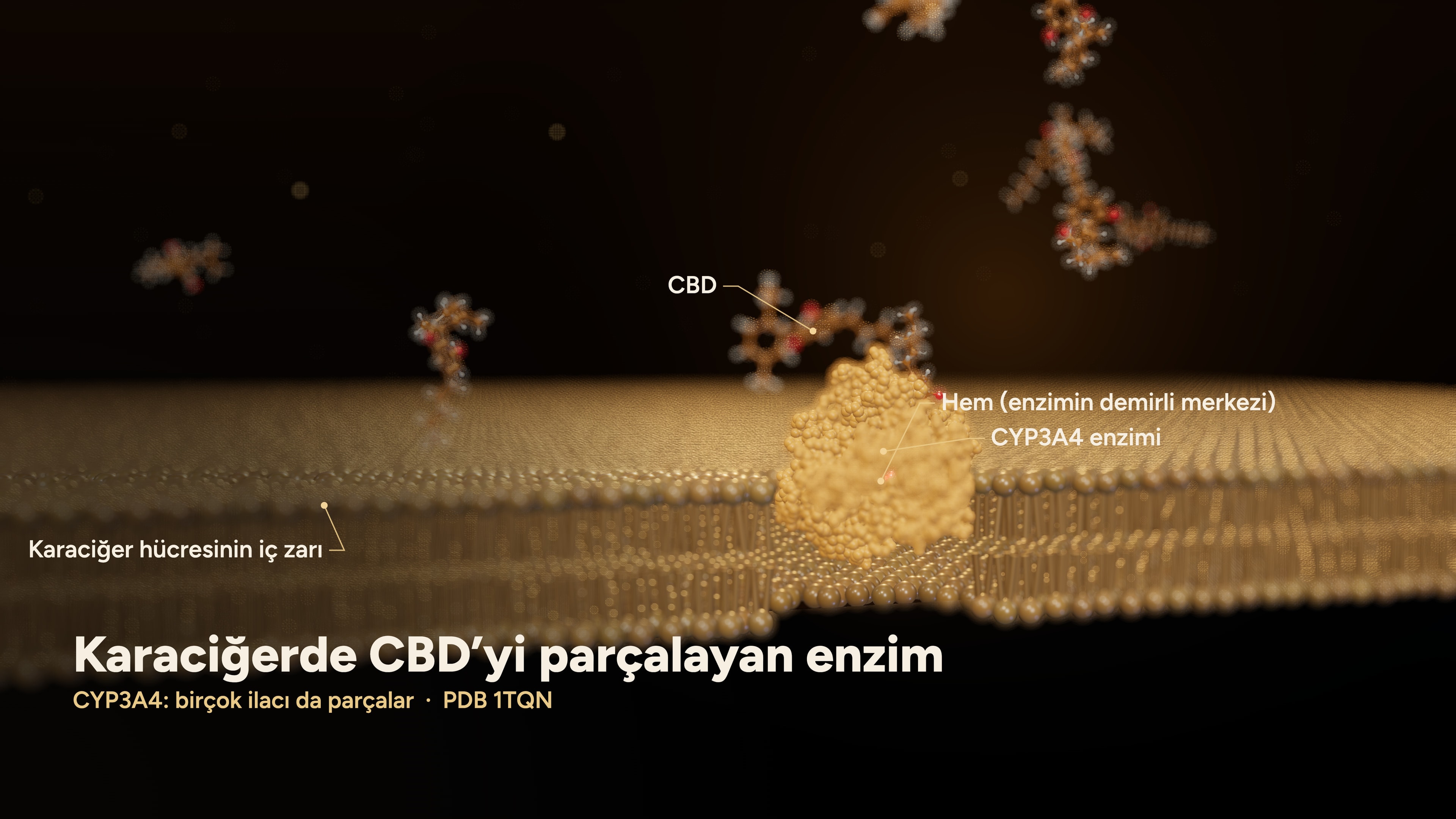
It’s easy to assume CBD is harmless because it’s "natural," but like everything that enters the body, CBD is processed in the liver. That’s why "Will it harm my liver?" is a very fair question, and one researchers have also been focusing on in recent years. In this article, we’ve gathered what studies from mice to healthy volunteers have found, who needs to be more careful, drug interactions, and the topics you can discuss with your doctor. You can find general safety information on the safety page of the CBD Guide.
What’s in this article?10 sections
What do liver enzymes tell us?
The liver is the organ that processes medicines and many other substances that enter the body. The enzymes called ALT and AST, which are checked in blood tests, are normally found inside liver cells. When the cells are under strain or damaged, more of these enzymes pass into the blood and show up as high on the test.
Mild increases can happen for many reasons and don’t always mean a serious problem. Studies usually use "3 times the upper limit of normal" as a threshold; increases above this level are monitored more closely, especially if bilirubin is also rising. The prescribing information for the approved (licensed) CBD medicine is also based on these thresholds.
Why is this question in the spotlight?
A mouse study published in 2019 brought this topic to a wide audience. Researchers gave male mice a CBD-rich cannabis extract by mouth: single doses of 246, 738 or 2,460 mg per kilogram, or 61.5, 184.5 or 615 mg per kilogram every day for 10 days. At the highest single dose, liver enzymes and bilirubin rose. Of the mice that received the highest dose for ten days, 75% became severely ill on the third and fourth days (Ewing 2019).
The researchers write that they chose these doses by "scaling" from the highest dose of the approved medicine. However, such calculations between mice and humans are not exact; these amounts should not be considered equal to a dose a person would take. What’s more, the study used a cannabis extract, not pure CBD. The mouse study is therefore important as a warning sign that says "this should be checked in humans too"; the real information comes from human studies.
What do human studies say?
The approved CBD medicine
According to the US prescribing information for the approved CBD medicine used in severe childhood epilepsies, ALT rose above 3 times normal in 12–13% of people taking the medicine in controlled studies, compared with 1% in the placebo group. The increases mostly began in the first two months of treatment; in about two-thirds of cases they resolved when the medicine was stopped or the dose was reduced, and in about one-third they resolved while treatment continued.
The risk varied greatly depending on the other medicines taken: the rate was 21% in people also taking the epilepsy medicine valproate, 30% in those taking both valproate and clobazam, and 3% in those taking neither. That’s why everyone using the approved medicine has liver tests before starting treatment and regularly during treatment.
Healthy adults
- The FDA’s controlled study (Florian 2025): In this study run by the US Food and Drug Administration, 201 healthy adults were randomly divided into two groups; one group took 5 mg of CBD per kilogram per day for 28 days, and the other took a placebo. Liver enzymes rose above 3 times normal in 5.6% of the CBD group; this was not seen in anyone in the placebo group. Seven people were withdrawn from the study because they met the criteria for possible drug-induced liver injury. The researchers stress that the long-term effects of the lower doses on the market should also be studied.
- High dose (Watkins 2021): Of 16 healthy adults taking 1,500 mg of CBD a day, ALT rose above normal in 7 (44%) and above 5 times normal in 5 (31%). The increases began within the first 2–4 weeks, and it was not possible to predict in advance who would be affected.
Pooled analysis of studies
In an analysis combining 12 studies (1,229 participants) in which liver tests were measured regularly, raised liver enzymes and drug-induced liver injury were clearly more common in people taking CBD than in those taking placebo (Lo 2023). The most important risk factors were a high dose (1,000 mg a day, or 20 mg per kilogram or more) and taking epilepsy medicines at the same time. No severe liver injury was reported in the studies reviewed, and no cases were seen in adults taking less than 300 mg of CBD a day. However, in the FDA study published after this analysis, increases were also seen at a lower dose of 5 mg per kilogram per day.
Together with a painkiller
In a study of 86 patients with knee osteoarthritis, 600 mg of CBD a day or a placebo was added for 8 weeks in patients regularly taking 3 g of acetaminophen (paracetamol) a day. CBD did not reduce pain more than placebo; raised liver enzymes, however, were more common in the CBD group (15 patients vs. 5) (Pramhas 2023).
What we don’t know yet
There is no long-term study showing how low-dose products sold in pharmacies or online affect the liver when used for years. The safety of CBD in people with conditions such as fatty liver disease or hepatitis has not been studied enough either. The UK Food Standards Agency advises healthy adults to take no more than 10 mg a day of CBD sold as food, and lists possible effects on the liver with long-term use among its reasons.
Who should be more careful?
- People with liver disease: In moderate and severe liver impairment, CBD reaches higher levels in the blood; the prescribing information for the approved medicine calls for dose adjustment in these patients.
- People taking valproate or clobazam: Raised liver enzymes were clearly more common together with these medicines.
- People regularly taking acetaminophen (paracetamol) or other medicines that can affect the liver.
- People whose liver tests have been high before: The prescribing information recommends more frequent monitoring in patients whose enzymes are high at the start.
The prescribing information for the approved medicine advises seeking care from a health professional right away if symptoms appear such as unexplained nausea, vomiting, pain in the upper right part of the abdomen, tiredness, loss of appetite, yellowing of the eyes or skin, and dark urine. If you notice any of these while using CBD, see your doctor.
Possible side effects and drug interactions
The liver is the main organ that processes CBD, and CBD can in turn slow down how some medicines are broken down in the liver. As a result, CBD can change the blood levels of some medicines. Known examples include the epilepsy medicine clobazam, the blood thinner warfarin, and immunosuppressants such as tacrolimus, which is used by transplant patients. For details, see the drug interactions page.
Apart from the liver, drowsiness, decreased appetite and diarrhea are the most common side effects. Product quality is a separate problem: only 31% of 84 CBD products bought online had labels that matched their contents (Bonn-Miller 2017), which means you could be taking more CBD than the label says. We explain how to read a label on the label-reading page .
How was it used in the studies?
In the studies where liver findings were seen, the doses were: in the FDA study, 5 mg per kilogram per day, split into two doses, for 28 days (about 350 mg a day for a 70 kg person); in the Watkins study, 1,500 mg a day for about 3.5 weeks; in the knee osteoarthritis study, 600 mg a day for 8 weeks; and with the approved medicine, 10–25 mg per kilogram per day. These are study doses, not personal recommendations. For CBD sold as food, the UK advises no more than 10 mg a day; the European Food Safety Authority set the provisional safe level for pure CBD supplements at about 2 mg a day for a 70 kg adult.
If you are thinking about using CBD
Caring about your liver is exactly the right approach. Before you decide, you can talk with your doctor about these topics:
- Whether you have a known liver disease or liver tests that have been high in the past.
- All the medicines and supplements you take, especially epilepsy medicines, acetaminophen (paracetamol), blood thinners and immunosuppressants.
- Your alcohol use.
- If you are thinking of long-term use, whether liver tests are needed before you start and while you use it.
In Turkey, cannabis-derived products, including CBD, can be sold only in pharmacies (Law No. 7557, regulation of January 31, 2026). Those classed as medicines and health products are dispensed with a prescription; for supplement products with a THC content of no more than 0.3%, no prescription requirement is stated. As of October 2026, there is no approved (licensed) CBD medicine in Turkey. For details, see the regulations page.
Conclusion
CBD can raise liver enzymes in some people; this has been seen not only in mice but also in controlled studies in healthy volunteers. The risk rises at high doses and together with certain medicines, and it usually reverses when CBD is stopped; the long-term effect of low doses is not yet known. If you are considering CBD, the safest path is to review your medicines and liver tests together with your doctor.
Frequently asked questions
Does CBD harm the liver?
It can raise liver enzymes in some people. In the FDA’s controlled study in healthy adults, enzymes rose above 3 times normal in 5.6% of people taking 5 mg of CBD per kilogram per day. These increases are more common at high doses and with certain epilepsy medicines, and they usually resolve when CBD is reduced or stopped. The long-term effect of low doses is not yet known.
What do the doses in the mouse study mean for humans?
There is no direct equivalent. The mice were given single doses of up to 2,460 mg per kilogram of a CBD-rich cannabis extract; dose calculations between mice and humans are not exact. This study was a warning sign that said 'this should be checked in humans too'; the real information comes from human studies.
Should I have liver tests while using CBD?
Talk about this with your doctor. In people using the approved CBD medicine, tests are done before starting and regularly during treatment. If you will use CBD for a long time, have liver disease, or take medicines that can affect the liver, your doctor may order tests.
Which symptoms suggest a liver problem?
The prescribing information for the approved medicine lists unexplained nausea, vomiting, pain in the upper right part of the abdomen, tiredness, loss of appetite, yellowing of the eyes or skin, and dark urine. If you notice any of these while using CBD, see your doctor.
Where can CBD products be bought in Turkey?
In Turkey, cannabis-derived products, including CBD, can be sold only in pharmacies (Law No. 7557, regulation of January 31, 2026). Those classed as medicines and health products are dispensed with a prescription; for supplement products with a THC content of no more than 0.3%, no prescription requirement is stated. As of October 2026, there is no approved (licensed) CBD medicine in Turkey.
References
Show 12 references
- Florian J, et al. Cannabidiol and Liver Enzyme Level Elevations in Healthy Adults: A Randomized Clinical Trial. JAMA Intern Med. 2025. PMID 40622698
- Watkins PB, et al. Cannabidiol and Abnormal Liver Chemistries in Healthy Adults: Results of a Phase I Clinical Trial. Clin Pharmacol Ther. 2021. PMID 33022751
- Lo LA, et al. Cannabidiol-associated hepatotoxicity: A systematic review and meta-analysis. J Intern Med. 2023. PMID 36912195
- Pramhas S, et al. Oral cannabidiol (CBD) as add-on to paracetamol for painful chronic osteoarthritis of the knee: a randomized, double-blind, placebo-controlled clinical trial. Lancet Reg Health Eur. 2023. PMID 38033459
- Ewing LE, et al. Hepatotoxicity of a Cannabidiol-Rich Cannabis Extract in the Mouse Model. Molecules. 2019. PMID 31052254
- So GC, et al. A Phase I Trial of the Pharmacokinetic Interaction Between Cannabidiol and Tacrolimus. Clin Pharmacol Ther. 2025. PMID 39601108
- Grayson L, et al. An interaction between warfarin and cannabidiol, a case report. Epilepsy Behav Case Rep. 2018. PMID 29387536
- Bonn-Miller MO, et al. Labeling Accuracy of Cannabidiol Extracts Sold Online. JAMA. 2017. PMID 29114823
- US FDA / DailyMed. EPIDIOLEX (cannabidiol) oral solution prescribing information, sections 2.1, 2.6, 5.1, 8.6 and 17 (accessed October 20, 2026).
- UK Food Standards Agency (FSA). Cannabidiol (CBD) consumer advice (October 2023).
- European Food Safety Authority (EFSA). Provisional safe level for cannabidiol as a novel food (2026).
- Ministry of Health. Kenevirden Elde Edilen Ürünlere Dair Yönetmelik (Regulation on Products Derived from Hemp). Official Gazette, January 31, 2026, issue 33154. Official Gazette 33154
 Wound Healing and CBD: What the Research Shows
 Menopause and CBD: What Does the Research Say?
 NewCBD Before Surgery: What Should You Tell Your Anesthesia Team?
 CBD and Weight: What Does the Research Say?