
Migraine and Cannabinoids: A 2026 Scientific Review
It is very understandable to be curious about CBD when you are coping with migraine attacks. In this article we explain in plain language what the first controlled migraine study with cannabis found and what we do not yet know about CBD oil.
By: cbd.school editorial teamUpdated: 15 sources
Quick check
This article is prepared according to our editorial policy.
- We do not sell products, recommend brands or give personal doses.
- We base health information on peer-reviewed studies or official institutions. When the evidence is weak, we say so clearly: How do we determine the level of evidence?
- If you see an error, write to us through the contact form. We check it against the source, correct it if it is right and update the page's date.
More: Editorial Policy. Our content is for information only; it does not replace diagnosis or treatment.
For someone who lives with migraine, an attack is not an ordinary headache: throbbing pain comes with nausea and sensitivity to light and sound, and it can sometimes take away a day or more. That is why many people who do not get enough relief from current medicines, or who are tired of their side effects, think of CBD and cannabis. In this article we explain in plain language what migraine is, why cannabis compounds are of interest, what studies have found and the topics you can discuss with your doctor. A summary table of the studies is on the migraine page of the CBD Guide.
What’s in this article?9 sections
What is migraine?
Migraine is a headache disorder with recurring attacks that often lasts for years. According to the World Health Organization, attacks usually last 4 to 72 hours. The pain is usually moderate or severe, one-sided and throbbing; it gets worse with everyday activity and often comes with nausea and sensitivity to light and sound. Some people have temporary symptoms such as visual disturbances before the pain (aura). Migraine is more common in women, and in 2021 it ranked third in the total health burden caused by nervous system disorders (WHO).
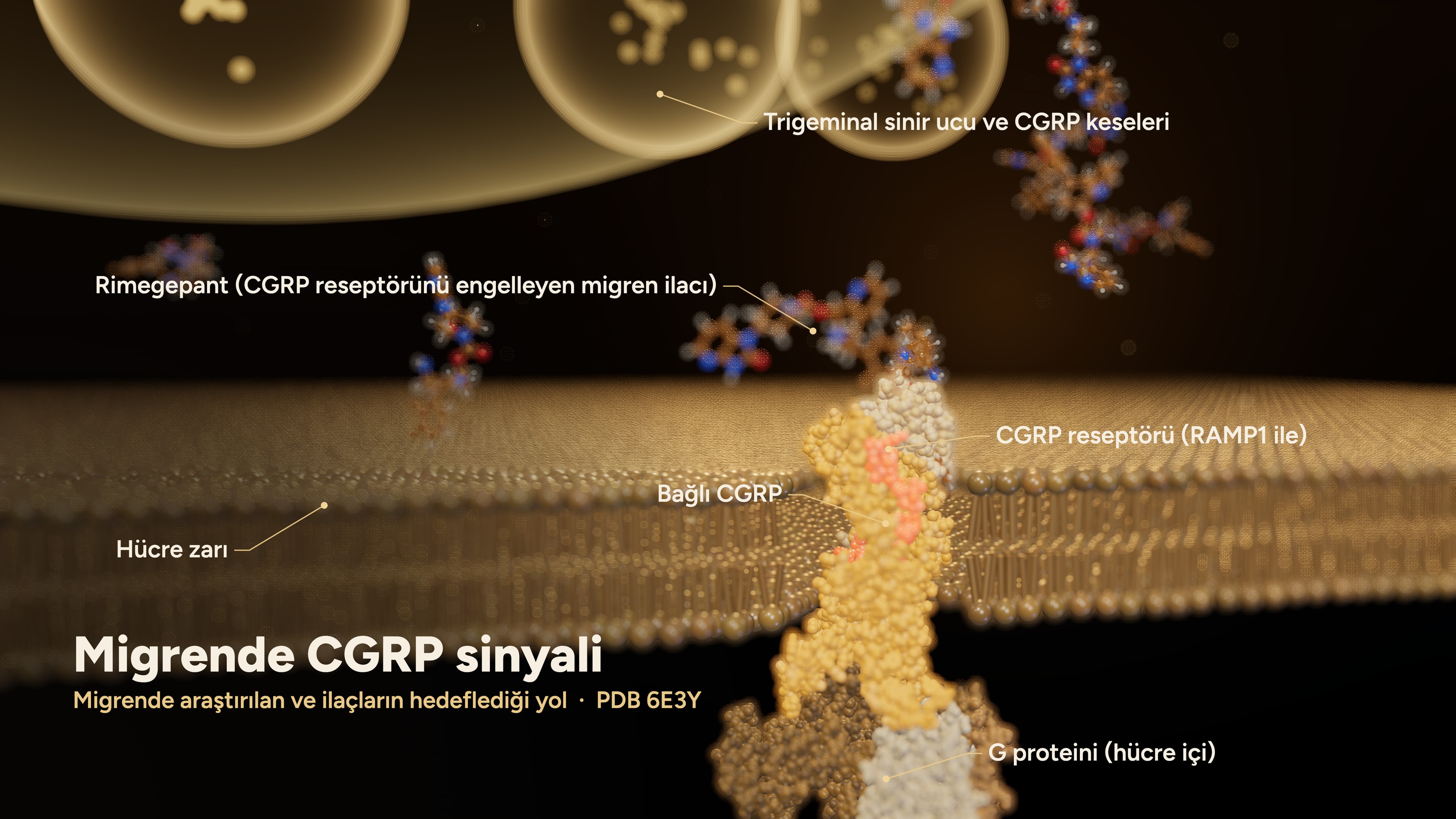
Today migraine is thought to be a nervous system disorder related to nerves in the brain and head becoming oversensitive. During an attack, nerve endings in the head release substances that increase pain and widen blood vessels; one of these, CGRP, is also the target of newer migraine medicines. Treatment has two sides: medicines that stop the pain during an attack, and preventive treatments that aim to reduce the number of attacks if they are frequent. Your doctor decides which is right based on your health. For milder pain that wraps around the head like a band, see our article on tension-type headache.
Why are cannabis and CBD of interest?
Our body has a signaling network that helps regulate pain, inflammation and the excitability of nerve cells: the endocannabinoid system. THC in cannabis binds directly to this system's receptors and causes a high. CBD, on the other hand, does not cause a high or mental fog and binds only very weakly to these receptors; it is thought to act through other pathways. We explain the difference between the two substances in our THC and CBD article.
Some researchers suggest that this system may not work well enough in conditions such as migraine and fibromyalgia; this is called the "clinical endocannabinoid deficiency" hypothesis (Russo 2016). One of the first clues supporting this idea was a small study in people with chronic migraine that found lower levels of anandamide (a cannabinoid the body makes itself) in the cerebrospinal fluid than in people without migraine (Sarchielli 2007). But this is still a hypothesis; it has not been shown that taking cannabinoids from outside corrects such a deficiency.
Animal studies have also raised interest. In a study in mice, a mixture with a very high proportion of CBD and very little THC (100 to 1) reduced light avoidance, one of the migraine-like symptoms, but had no effect on oversensitivity to touch on the face (Zorrilla 2025). Results like these guide research, but an effect seen in animals does not mean the same result will occur in humans.
What does the research say?
Whether a treatment works is best shown by controlled studies in which participants are randomly assigned to groups and one group receives a product that looks the same but has no effect (placebo). The first, and so far only, large study of this kind with cannabis in migraine was published in 2026.
THC and CBD together during a migraine attack: the most important study
In the study, conducted in the US, 92 adults with migraine treated a total of 247 attacks (Schuster 2026). Each participant tried four different vaporized products in a randomly assigned order over up to four attacks: marijuana with 6% THC, CBD-dominant cannabis with 11% CBD, marijuana containing both (6% THC + 11% CBD), and a placebo with no THC or CBD. There was at least one week between attacks; results were assessed 2 hours after use.
Inhaled product | Pain relief at 2 hours | What was found? |
|---|---|---|
THC + CBD (6% + 11%) | 67.2% (46.6% with placebo) | Better than placebo for pain relief, for pain going away completely (34.5% vs. 15.5%) and for relief of the most bothersome symptom; some benefits lasted 24–48 hours. |
THC-dominant (6%) | 68.9% | Better than placebo for pain relief; no clear difference in pain going away completely. |
CBD-dominant (11%) | Not clearly different from placebo | There was no clear difference from placebo in any of the main measures. |
No serious side effects were reported in the study. This result is the first strong sign that cannabis compounds may have a real effect during a migraine attack. Still, a few points are worth keeping in mind:
- The positive result came from vaporized marijuana containing THC. The CBD-dominant product alone showed no clear difference.
- CBD oil taken by mouth was not tested in the study. This result does not count as evidence for CBD oil used as drops.
- Each attack was treated with a single use; the effects of frequent and long-term use were not studied.
- Because THC causes a high, some participants may have realized which group they were in; this could have affected the result somewhat.
A 2026 review that combined five controlled studies (1,072 people) painted the same picture: inhaling THC and CBD together shows a moderately reliable benefit during a migraine attack, while the CBD-dominant product shows no clear benefit. The authors stress that it cannot be concluded that cannabinoids work for headaches "in general," and that larger, longer studies are needed (Costa-Oliveira 2026).
Pure CBD and CBD oil: no studies yet
There is no controlled human study of pure CBD taken by mouth in migraine that examines its benefit in treating or preventing attacks. In Canada, a study is underway examining the safety and tolerability of a CBD-rich cannabis extract in adolescents with chronic headache (Chhabra 2024); this study was designed mainly to measure safety, not effectiveness. In short, there is not yet enough research on pure CBD for this condition; studies are ongoing.
Observational studies and surveys
Studies based on cannabis users' own reports paint a more positive picture. In thousands of uses logged in an app, headache and migraine severity was reported to drop by about half after inhaled cannabis; however, these products contained THC, there was no comparison group, and the effect decreased over time while the amount used increased (Cuttler 2020). A review of twelve publications also found the results promising but noted that well-designed studies are needed (Okusanya 2022). Because data like these are easily influenced by expectations and by users who already like the product, they do not show effectiveness on their own.
Possible side effects and drug interactions
In short-term use, most people tolerate CBD well, but it is not free of side effects. The risks of products containing THC also need to be considered separately.
- Common side effects of CBD: Tiredness, diarrhea, and changes in appetite or weight are the most commonly reported (Iffland 2017).
- Liver: In a 4-week study of healthy adults, liver enzymes rose to more than three times the normal level in 5.6% of those taking 5 mg of CBD per kilogram of body weight per day; this was not seen in the placebo group (Florian 2025). Details are in our CBD and liver article.
- Products containing THC: Side effects such as feeling high or mental fog were more common with inhaled THC products (Costa-Oliveira 2026). THC impairs attention and reaction time and affects driving (see driving).
- Medication overuse headache: Using pain relievers too often can make headaches persistent. In the records of 368 people with chronic migraine, this type of headache was more common in those who used cannabis (81% vs. 41%). This is an association, not cause and effect, but experts advise caution here (Zhang 2021; Kuruvilla 2025).
- Drug interactions: CBD can slow the breakdown of some medicines in the body. Blood levels of amitriptyline, which is also used for migraine prevention, rose somewhat after a single dose of CBD (Gorbenko 2026). Interactions are also possible with epilepsy medicines such as topiramate, blood thinners and sedatives. You can look up your own medicine on the Drug interactions page.
How was it used in the studies?
In the migraine study, the products were inhaled as four puffs from a vaporizer within the first 4 hours after an attack began; no dose in milligrams was reported (Schuster 2026; study dose, not a personal recommendation). The THC content of this product (6%) is much higher than the maximum allowed for supplement products that can be sold in pharmacies in Turkey (0.3%), so the product in the study is not the same as the CBD products in pharmacies. Since CBD oil taken by mouth has not been tested in migraine, there is no study dose for it either.
If you are thinking about using CBD
Living with frequent, severe attacks is exhausting, and it is very understandable to look for a new option. Before deciding, you can talk with your neurologist or family doctor about the following:
- How often you have attacks and your current treatment; whether preventive treatment or newer migraine medicines are right for you.
- How many days a month you use pain relievers (risk of medication overuse headache).
- All the medicines you take, especially amitriptyline, topiramate, blood thinners and sedatives.
- Any history of liver disease, pregnancy or breastfeeding, psychosis or bipolar disorder.
- Whether you drive, and whether you are drug tested at work or in sports (see drug tests).
Keeping a headache diary (attacks, triggers, medicines you take) makes this conversation easier. Do not reduce or stop your prescription medicine on your own. In Turkey, cannabis-derived products, including CBD, can be sold only in pharmacies (Law No. 7557, regulation of January 31, 2026). Those classed as medicines and health products are dispensed with a prescription; no prescription requirement is stated for supplement products with a THC content of at most 0.3%. As of October 2026, there is no approved (licensed) CBD medicine in Turkey. Details are on the regulation page.
Conclusion
For the first time, cannabis research in migraine has reached a concrete result with a controlled study: inhaled marijuana containing both THC and CBD relieved pain during attacks more than placebo. The CBD-dominant product alone showed no clear difference, and CBD oil has not yet been tested. If migraine is making your life hard, remember that there are many treatment options with proven effects; if you are curious about CBD, you can bring that up in your conversation with your doctor too.
Frequently asked questions
Does CBD oil stop a migraine attack?
CBD oil taken by mouth has not yet been tested for migraine in a controlled study. In the only controlled study, the inhaled CBD-dominant product showed no clear difference from placebo; the positive result came from vaporized marijuana containing both THC and CBD. So the effect of CBD oil on a migraine attack is unknown today.
Does cannabis prevent migraine attacks?
There is no controlled study of preventing attacks. Studies based on users' own reports found that headache severity decreased, but these products contained THC, there was no comparison group, and the effect decreased over time. You can talk with your doctor about preventive treatment options with proven effects.
Can I use CBD with my migraine medicines?
Do not make this decision on your own. CBD can slow the breakdown of some medicines in the body; for example, blood levels of amitriptyline, which is also used for migraine prevention, rose somewhat after a single dose of CBD. Tell your doctor or pharmacist about all the medicines you take.
Can frequent cannabis use make headaches worse?
There is no definite information on this, but there is a sign that calls for caution. In the records of people with chronic migraine, medication overuse headache was more common in those who used cannabis. This is an association and does not show cause and effect; still, it helps to talk with your doctor about how many days a month you use pain relievers or other products.
Can I get a CBD product for migraine in Turkey?
In Turkey, cannabis-derived products, including CBD, can be sold only in pharmacies (Law No. 7557, regulation of January 31, 2026). Those classed as medicines and health products are dispensed with a prescription; no prescription requirement is stated for supplement products with a THC content of at most 0.3%. As of October 2026, there is no approved (licensed) CBD medicine in Turkey. The inhaled product with 6% THC in the migraine study is not the same as the supplement products that can be sold in pharmacies.
References
Show 15 references
- Schuster NM, et al. Vaporized cannabis versus placebo for acute migraine: A randomized, double-blind, placebo-controlled crossover trial. Headache. 2026;66(2):365-376. PMID 41469488
- Costa-Oliveira CD, et al. Efficacy and Safety of Cannabinoid-Based Interventions for Low Back Pain and Migraine: A Systematic Review of Randomized Controlled Trials. Cannabis Cannabinoid Res. 2026. PMID 42773786
- Cuttler C, et al. Short- and Long-Term Effects of Cannabis on Headache and Migraine. J Pain. 2020;21(5-6):722-730. PMID 31715263
- Okusanya BO, et al. Medical Cannabis for the Treatment of Migraine in Adults: A Review of the Evidence. Front Neurol. 2022;13:871187. PMID 35711271
- Chhabra M, et al. A multi-centre, tolerability study of a cannabidiol-enriched Cannabis Herbal Extract for chronic headaches in adolescents: The CAN-CHA protocol. PLoS One. 2024;19(9):e0290185. PMID 39302982
- Zorrilla E, et al. Combined effects of cannabidiol and Δ9-tetrahydrocannabinol alleviate migraine-like symptoms in mice. Cephalalgia. 2025;45(2):3331024251314487. PMID 39988876
- Russo EB. Clinical Endocannabinoid Deficiency Reconsidered: Current Research Supports the Theory in Migraine, Fibromyalgia, Irritable Bowel, and Other Treatment-Resistant Syndromes. Cannabis Cannabinoid Res. 2016;1(1):154-165. PMID 28861491
- Sarchielli P, et al. Endocannabinoids in chronic migraine: CSF findings suggest a system failure. Neuropsychopharmacology. 2007;32(6):1384-1390. PMID 17119542
- Zhang N, et al. Medication overuse headache in patients with chronic migraine using cannabis: A case-referent study. Headache. 2021;61(8):1234-1244. PMID 34370866
- Kuruvilla DE. Cannabinoids in headache: helpful or harmful? Curr Opin Neurol. 2025;38(3):277-280. PMID 40152937
- Iffland K, Grotenhermen F. An Update on Safety and Side Effects of Cannabidiol: A Review of Clinical Data and Relevant Animal Studies. Cannabis Cannabinoid Res. 2017;2(1):139-154. PMID 28861514
- Florian J, et al. Cannabidiol and Liver Enzyme Level Elevations in Healthy Adults: A Randomized Clinical Trial. JAMA Intern Med. 2025;185(9):1070-1078. PMID 40622698
- Gorbenko AA, et al. Low-dose cannabidiol increases plasma concentrations of amitriptyline: A clinical drug-drug interaction study. Br J Clin Pharmacol. 2026;92(6):1595-1606. PMID 41398552
- World Health Organization (WHO). Migraine and other headache disorders (fact sheet). who.int, accessed October 20, 2026
- Republic of Turkey Ministry of Health. Kenevirden Elde Edilen Ürünlere Dair Yönetmelik (Regulation on Products Derived from Hemp). Official Gazette, January 31, 2026, issue 33154. Official Gazette 33154
 NewCBD for Pain After Surgery: Randomized Trials
 Tension-Type Headache and CBD: What Does the Research Say?
 Rheumatoid Arthritis and CBD: What Does the Research Say?
 Chronic Fatigue Syndrome and CBD: The Research