
Cannabidiol (CBD) and Depression: The Latest Scientific Evidence
When you’re living with depression, it’s only natural to wonder about different options. We explain in plain language how CBD has been studied in depression, how it interacts with antidepressants, and the topics you can discuss with your doctor.
By: cbd.school editorial teamUpdated: 16 sources
Quick check
This article is prepared according to our editorial policy.
- We don’t sell products, recommend brands or give personal doses.
- We base health information on peer-reviewed studies or official institutions. When the evidence is weak, we say so clearly: How do we rate the strength of evidence?
- If you spot an error, write to us through the contact form . We check it against the source, correct it if it’s right, and update the page’s date.
More: Editorial Policy. Our content is for information only; it does not replace diagnosis or treatment.
Depression is not just feeling sad; it is an illness that can change a person’s energy, sleep, appetite and enjoyment of life. Because treatment can sometimes be long and tiring, many people are also curious about different options such as CBD. In this article, we explain in plain language how CBD has been studied in depression, what results have come out, how it interacts with medicines, and the topics you can discuss with your doctor. You can find a table of the studies on the depression page of the CBD Guide.
What’s in this article?10 sections
What is depression?
In depression, a low mood or a loss of interest in things you used to enjoy lasts for weeks. It can come with changes in sleep and appetite, tiredness, trouble concentrating, and feelings of worthlessness or guilt. The most common treatments for depression are psychotherapy and antidepressant medicines; you and your doctor decide together which one is right for you.
Why are people curious about CBD?
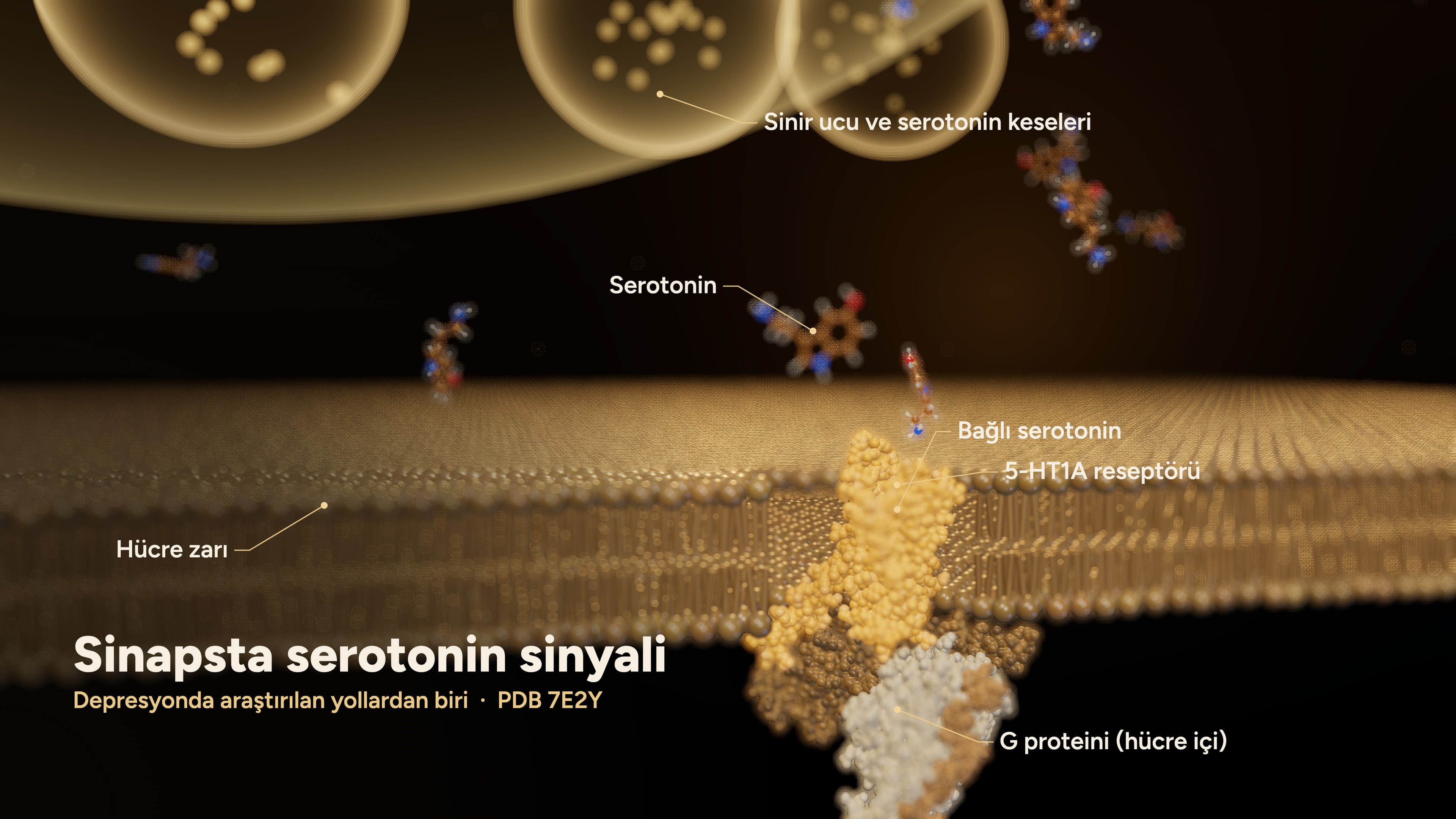
CBD (cannabidiol) is a substance found in cannabis that does not cause a high. In an analysis combining 123 animal studies, CBD moderately reduced depression- and anxiety-like behaviors; lab data point to pathways such as serotonin and the endocannabinoid system . The authors of the same analysis stress, however, that the evidence in humans is "limited and inconclusive" (Jantsch 2026). An effect seen in animals does not mean CBD will improve depression in people; only studies in patients can show that.
What does the research say?
The best way to show whether a treatment works is a controlled study: participants are randomly assigned to groups, and one group takes CBD while the other takes a medicine that looks the same but has no active effect (a placebo). In depression, there are still very few studies of this kind.
Comprehensive reviews
In 2019, an analysis of 83 studies looking at cannabinoids in mental disorders reported that evidence that cannabinoids improve depression was "scarce"; very few controlled studies looked at pharmaceutical CBD (Black 2019). A recent 2026 analysis of 54 controlled studies (2,477 people) found no controlled-trial evidence for treating depression (Wilson 2026).
Individual studies
- Stressed university students (180 people, 30 days): There was no difference in any outcome between a low-dose, full-spectrum CBD oil sold without a prescription and a placebo oil. Both groups did better than people who took nothing, which shows how strong the placebo effect can be (Winkler 2025).
- Depression in bipolar disorder (35 patients, 8 weeks): CBD added to existing treatment lowered depression scores about as much as placebo; scores dropped by about 15 points in both groups. An exploratory sub-analysis showed a signal in favor of the higher dose; there was no difference in mania symptoms (Pinto 2024).
- Burnout in health care workers (120 people, 28 days): Emotional exhaustion scores went down in people taking CBD. However, the study had no placebo, and what it mainly measured was burnout, not depression (Crippa 2021).
- Treatment-resistant depression: A study planned on this topic was withdrawn before it started; no completed and published controlled study was found.
Products containing THC
Cannabinoid medicines containing THC did not clearly improve depression in mental disorders; compared with placebo, they increased the chance of side effects and of stopping treatment because of side effects (Black 2019). In a study of veterans with PTSD, none of three different types of smoked marijuana reduced symptoms more than placebo (Bonn-Miller 2021). According to a recent review, THC-dominant marijuana can worsen mania symptoms and day-to-day functioning in people with bipolar disorder; the authors recommend that people with bipolar or psychotic disorders stay away from marijuana (Kansagara 2026).
Topic | Strength of evidence (pure CBD) | In brief |
|---|---|---|
No controlled study with a positive result; animal data have not carried over to humans. | ||
In a single small study, there was no difference from placebo. | ||
Some positive signals with a single dose; mixed results with long-term use. |
The idea that "it helps depression by easing anxiety"
Depression and anxiety often occur together. That’s why some articles suggest that CBD could help depression indirectly by easing anxiety. But the evidence for anxiety is weak too: there are some positive results with a single dose, while results with use over several weeks are not consistent. So for now, this idea is an assumption. For details, see our article on anxiety and CBD.
Possible side effects and drug interactions
Someone considering CBD for depression is very likely also taking an antidepressant, which makes interactions an important topic. In an emergency department survey, 69.7% of people who said they used CBD at home were taking at least one medicine with a risk of interaction; antidepressants were the most common group (Geneau 2025).
- Citalopram: In healthy adults, 12 days of CBD use raised the total blood level of a single dose of citalopram by 43% (Salcedo 2026). In patients being treated for anxiety, citalopram levels also rose when CBD was added (Anderson 2021).
- Amitriptyline: Even a single 30 mg dose of CBD slightly raised amitriptyline levels; the authors note that the effect could be larger with ongoing use (Gorbenko 2026).
- Liver: In a controlled study in healthy adults, liver enzymes rose to more than 3 times the normal level in 5.6% of people taking CBD for 28 days; this was not seen in the placebo group (Florian 2025). In the burnout study, raised liver enzymes in 4 people and a severe drug rash in 1 person were also reported in the CBD group (Crippa 2021).
- General side effects: People using cannabinoids were more likely than those on placebo to have any side effect; there was no difference in serious side effects (Wilson 2026).
- Mania: A single case was reported of mania developing in a person with no psychiatric history after vaping and inhaling increasing doses of CBD from a product whose contents could not be verified (Auf 2025). A single case does not give a firm conclusion, but it is important for people with bipolar disorder to talk with their doctor.
See the detailed list on the drug interactions page.
How was it used in the studies?
The following only shows how the research was done (study doses; not personal recommendations):
- In the bipolar depression study, 150–300 mg of CBD a day was given for 8 weeks on top of existing treatment.
- In the burnout study, 300 mg of CBD a day, split into two doses, was used for 28 days.
- In the student study, a "low-dose" full-spectrum oil was placed under the tongue; the dose in milligrams was not reported in the abstract.
There is no CBD dose that has been shown to be effective and safe for depression.
If you are thinking about using CBD
It’s completely understandable to look for new ways to feel better. You can talk with your doctor about these topics:
- The antidepressant and other medicines you take, and whether CBD could change their blood levels.
- Any liver disease, or liver tests that have been raised in the past.
- A history of bipolar disorder, psychosis or substance use.
- Pregnancy, breastfeeding or plans for pregnancy.
- Whether you are getting the benefit you expect from your current treatment, and how it could be adjusted if needed.
Don’t reduce or stop your antidepressant on your own to switch to CBD; plan any medication changes together with your doctor. If you have thoughts of harming yourself, go to the nearest emergency department without delay.
In Turkey, cannabis-derived products, including CBD, can be sold only in pharmacies (Law No. 7557, regulation of January 31, 2026). Those classed as medicines and health products are dispensed with a prescription; for supplement products with a THC content of no more than 0.3%, no prescription requirement is stated. As of October 2026, there is no approved (licensed) CBD medicine in Turkey. For details, see the regulations page.
Conclusion
CBD’s effect on depression is intriguing in animal studies but has not yet been shown in humans: controlled studies targeting depression found no clear difference from placebo. Because it can interact with antidepressants, if you are considering CBD, the safest path is to weigh it together with the doctor managing your treatment.
Frequently asked questions
Does CBD treat depression?
No study shows this. Depression-like behaviors decreased in animal studies, but in controlled studies targeting depression in humans, CBD was not found to be clearly different from placebo. A comprehensive 2026 analysis found no controlled-trial evidence for treating depression.
Can CBD be used together with an antidepressant?
You need to make this decision together with your doctor. In healthy adults, CBD raised the blood level of citalopram by 43%; a single dose of CBD also slightly raised amitriptyline levels. Don’t reduce or stop your antidepressant on your own.
Why do some people who use CBD say they feel better?
The placebo effect can be strong for depressive complaints. In a study of stressed students, both those taking CBD oil and those taking a placebo oil felt better than those who took nothing; but there was no difference between CBD and placebo.
I have bipolar disorder; can I use CBD?
Be sure to talk about this with your doctor. In a small study in bipolar depression, CBD was not found to be different from placebo; products containing THC, on the other hand, can worsen mania symptoms. Don’t stop your mood-stabilizing medicines on your own.
Where can CBD oil be bought in Turkey?
In Turkey, cannabis-derived products, including CBD, can be sold only in pharmacies (Law No. 7557, regulation of January 31, 2026). Those classed as medicines and health products are dispensed with a prescription; for supplement products with a THC content of no more than 0.3%, no prescription requirement is stated. As of October 2026, there is no approved (licensed) CBD medicine in Turkey.
References
Show 16 references
- Jantsch J, et al. Effects of cannabidiol on anxiety- and depressive-like behaviors and cognition: a systematic review and meta-analysis of preclinical studies. Mol Psychiatry. 2026. PMID 42380607
- Black N, et al. Cannabinoids for the treatment of mental disorders and symptoms of mental disorders: a systematic review and meta-analysis. Lancet Psychiatry. 2019. PMID 31672337
- Wilson J, et al. The efficacy and safety of cannabinoids for the treatment of mental disorders and substance use disorders: a systematic review and meta-analysis. Lancet Psychiatry. 2026. PMID 41856154
- Winkler A, et al. Placebo effects in a RCT assessing 30 days of low dose Cannabidiol (CBD) treatment for psychological distress in stressed students at risk for depression. J Cannabis Res. 2025. PMID 41316488
- Pinto JV, et al. Cannabidiol as an Adjunctive Treatment for Acute Bipolar Depression: A Pilot Study: Le cannabidiol comme traitement d'appoint de la dépression bipolaire aiguë : une étude pilote. Can J Psychiatry. 2024. PMID 37920963
- Crippa JAS, et al. Efficacy and Safety of Cannabidiol Plus Standard Care vs Standard Care Alone for the Treatment of Emotional Exhaustion and Burnout Among Frontline Health Care Workers During the COVID-19 Pandemic: A Randomized Clinical Trial. JAMA Netw Open. 2021. PMID 34387679
- Bonn-Miller MO, et al. The short-term impact of 3 smoked cannabis preparations versus placebo on PTSD symptoms: A randomized cross-over clinical trial. PLoS One. 2021. PMID 33730032
- Kansagara D, et al. Cannabis and Mental Health: A Review. JAMA Intern Med. 2026. PMID 41801216
- Geneau H, et al. Prevalence of Cannabidiol (CBD) Use Among Patients Taking Medications with Known Drug-Drug Interactions: A Cross-Sectional Analysis. J Clin Med. 2025. PMID 41227172
- Salcedo P, et al. Clinical Study to Evaluate Drug Interactions of Cannabidiol with Citalopram and Morphine in Healthy Adults. Clin Pharmacol Ther. 2026. PMID 41622700
- Anderson LL, et al. Citalopram and Cannabidiol: In Vitro and In Vivo Evidence of Pharmacokinetic Interactions Relevant to the Treatment of Anxiety Disorders in Young People. J Clin Psychopharmacol. 2021. PMID 34121064
- Gorbenko AA, et al. Low-dose cannabidiol increases plasma concentrations of amitriptyline: A clinical drug-drug interaction study. Br J Clin Pharmacol. 2026. PMID 41398552
- Florian J, et al. Cannabidiol and Liver Enzyme Level Elevations in Healthy Adults: A Randomized Clinical Trial. JAMA Intern Med. 2025. PMID 40622698
- Auf A, et al. Cannabidiol Induced Manic Episode: A Case Report. Psychopharmacol Bull. 2025. PMID 40630971
- ClinicalTrials.gov. NCT04732169: Cannabidiol for Treatment Resistant Depression (status: withdrawn).
- Ministry of Health. Kenevirden Elde Edilen Ürünlere Dair Yönetmelik (Regulation on Products Derived from Hemp). Official Gazette, January 31, 2026, issue 33154. Official Gazette 33154
 Migraine and Cannabinoids: A 2026 Scientific Review
 NewCBD for Pain After Surgery: Randomized Trials
 Tension-Type Headache and CBD: What Does the Research Say?
 Rheumatoid Arthritis and CBD: What Does the Research Say?