
Science: cannabinoids and the body
What Is THC? Differences Between THC and CBD, Their Effects and Legal Status
THC and CBD come from the same plant and are chemically almost twins. We explain side by side why they behave so differently in the body and what research has found.
By: Selçuk GündoğduUpdated: 44 sources
Quick check
This article is prepared in line with our editorial policy.
- We don’t sell products, recommend brands or give personal doses.
- We base health information on peer-reviewed studies or official bodies. If the evidence is weak, we say so clearly: How do we rate the strength of evidence?
- If you spot an error, write to us through the contact form. We check it against the source, correct it if it’s right and update the page’s date.
More detail: Editorial Policy. Our content is for information only; it is not a substitute for diagnosis or treatment.
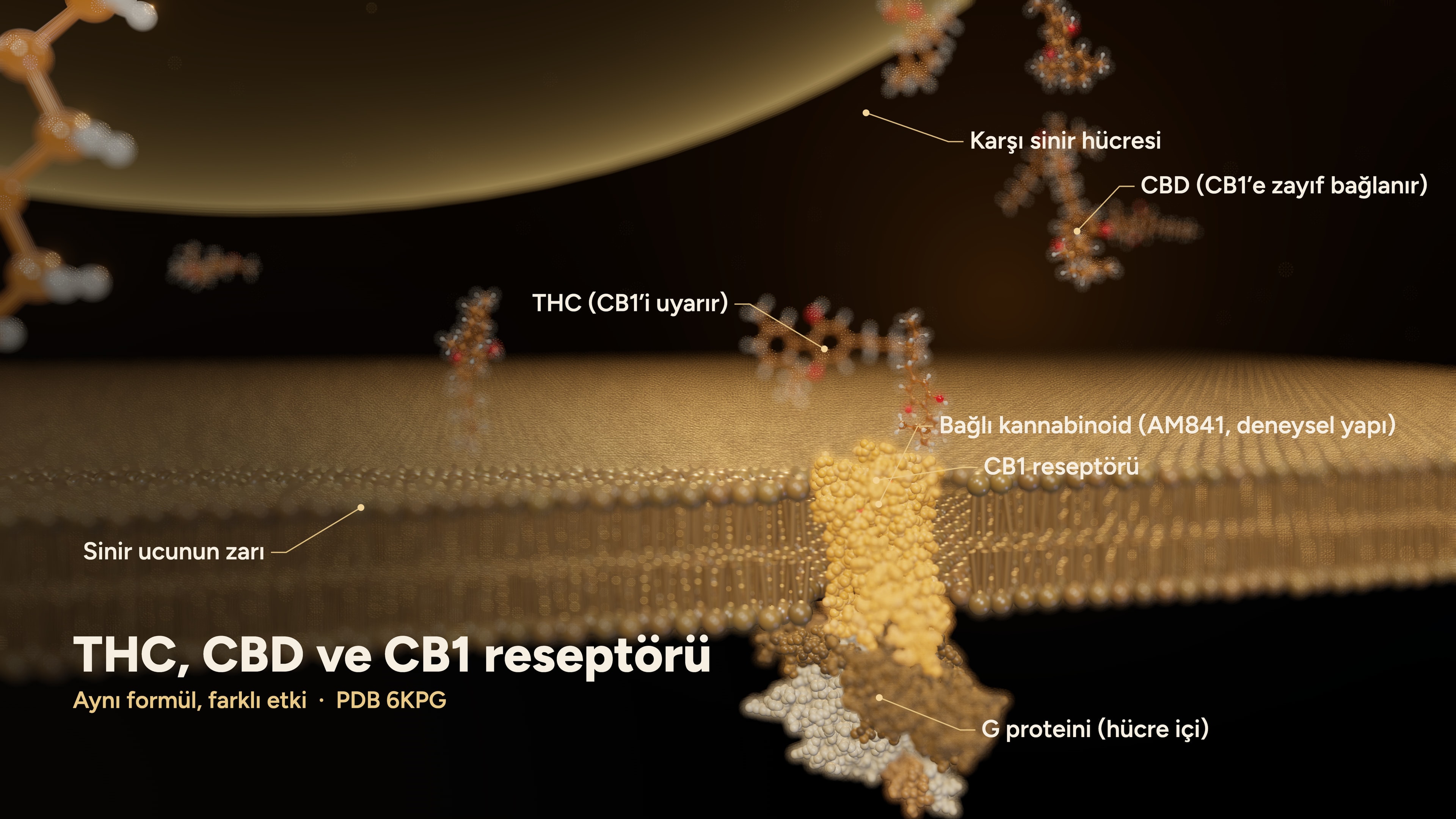
When people hear "cannabis," most think of one thing; yet the plant’s two main compounds, THC and CBD, are quite different from each other. You may be wondering which one gets you high, which one has been studied for which conditions, or what it means when a product contains THC. In this article, we put the two compounds side by side and explain in plain language how they work, what research has found, their risks and their legal status in Turkey.
What’s in this article?13 sections
At a glance: THC and CBD
THC (tetrahydrocannabinol) | CBD (cannabidiol) | |
|---|---|---|
Chemical formula | C21H30O2 | C21H30O2 |
Intoxication (high) | Yes | No |
Dependence | Can develop in regular users | No dependence potential shown in humans (WHO) |
Approved uses (in some countries) | Chemotherapy nausea, muscle stiffness due to MS (medicines containing THC) | Seizures in Dravet, Lennox–Gastaut and tuberous sclerosis |
Drug testing | Tests look for THC | Pure CBD is not expected to cause a positive test |
In Turkey | Covered by narcotics law | Only through pharmacies; no approved CBD medicine (October 2026) |
What are THC and CBD?
Both are found in the cannabis plant (Cannabis sativa) and belong to the cannabinoid family. Their chemical formula is the same: 21 carbon, 30 hydrogen and 2 oxygen atoms (PubChem: THC; PubChem: CBD). The difference lies in how the atoms are arranged: in THC one ring is closed, while in CBD it is open. This small difference completely changes their effects in the body.
What does THC stand for?
THC is short for tetrahydrocannabinol (in English, tetrahydrocannabinol). The compound mainly responsible for marijuana’s intoxicating effect is, by its full name, delta-9-tetrahydrocannabinol (Δ9-THC) (Grotenhermen 2003). THC made in the lab as a medicine is called dronabinol (Huestis 2007).
In the plant, both are first present in an "acid" form (THCA, CBDA); over time or with heat, they turn into THC and CBD. About 125 cannabinoids have been identified in cannabis so far (Radwan 2021). The amount of THC in the plant varies greatly by variety: in marijuana samples seized in the US, the THC content rose from about 4% in 1995 to about 12% in 2014; over the same period, the ratio of THC to CBD went from 14-fold to about 80-fold (ElSohly 2016). On plant types: the difference between hemp and marijuana.
How do they work differently in the body?
Our bodies have a system made up of their own cannabinoid-like compounds, the receptors these compounds bind to and the enzymes that make and break them down: the endocannabinoid system. The best known of these compounds made by the body are anandamide and 2-AG. The system’s most common receptor is CB1, which is plentiful in the brain; THC produces its effects by binding to these receptors (Lu and Mackie 2016).
- THC directly activates the CB1 and CB2 receptors (Pertwee 2008). THC’s intoxicating effect comes largely through these receptors in the brain.
- CBD does not activate these receptors the way THC does. In cell experiments, it was shown to bind to a different site on the CB1 receptor and dampen the receptor’s response (Laprairie 2015); in the lab, it also acts on many other targets (Pertwee 2008). It is still not known exactly which pathway is behind the effects of CBD we see in patients.
Does CBD soften the effects of THC?
This is a common idea, but research doesn’t support it. In a study of 46 volunteers, adding 1, 2 or 3 times as much CBD to the same amount of THC did not reduce THC’s impairment of memory or its temporary psychosis-like symptoms (Englund 2023). In an on-road driving study, a mix with equal amounts of THC and CBD impaired driving at least as much as THC alone, while a mix containing only CBD was no different from placebo (Arkell 2020). In other words, having CBD in a product does not make the THC in it safe.
What does the research say?
Both compounds are being studied intensively: as of October 19, 2026, 539 studies testing cannabidiol alone are registered on ClinicalTrials.gov (ClinicalTrials.gov). The results for pure CBD and for products containing THC differ, so we cover them separately. In the most reliable studies, patients are randomly assigned to groups: one group takes the product being tested, and the other takes an inactive look-alike (placebo).
Pure CBD
- Epilepsy: The approved CBD medicine reduced seizures when added to the medicines patients were already taking. In Dravet syndrome, the median number of seizures per month fell from 12.4 to 5.9, compared with 14.9 to 14.1 in the placebo group (Devinsky 2017); in Lennox–Gastaut syndrome, drop seizures fell by 43.9% with the medicine and by 21.8% with placebo (Thiele 2018).
- Pain and sleep: In 15 of 16 pain studies using pharmaceutical-grade CBD, there was no clear difference between people taking CBD and those taking placebo (Moore 2024). Products containing only CBD also showed no clear difference from placebo in sleep quality (da Silva 2025).
- Anxiety: In small studies using a public speaking test in people with social anxiety disorder, anxiety decreased; the US National Academies rate this as "limited evidence" (NASEM 2017). In longer and larger studies, results are mixed; research is ongoing. More detail: anxiety and CBD.
Products containing THC
- Chemotherapy nausea: In studies done between 1975 and 1991, THC-like medicines reduced nausea and vomiting more than placebo; but they were not compared with today’s anti-nausea medicines, and people stopped treatment because of side effects more often (Smith 2015). In patients whose nausea continued despite standard medicines, a THC:CBD capsule added to standard treatment raised the complete response rate from 8% to 24%; drowsiness and dizziness were more common (Grimison 2024).
- Muscle stiffness due to MS: A mouth spray containing both THC and CBD (nabiximols) increases the number of people reporting a meaningful reduction in muscle stiffness compared with placebo (moderate certainty) (Filippini 2022).
- Chronic pain: Medical cannabis products taken by mouth brought a small improvement in pain; side effects such as sleepiness and dizziness increased (Wang 2021).
- Sleep: In the analysis pooling studies, self-reported sleep quality was better with products that also contained THC than with placebo (da Silva 2025). But in a small study of 20 people diagnosed with insomnia, a single dose of a THC and CBD mix shortened total sleep measured in a sleep lab by about 25 minutes and dream sleep (REM) by about 34 minutes (Suraev 2026).
- Cancer, appetite and glaucoma: According to the US National Academies, there is not enough evidence that cannabinoids treat cancer or improve loss of appetite and weight loss in cancer; for eye pressure in glaucoma and for dementia symptoms, the limited evidence available suggests they are not effective (NASEM 2017).
The US National Academies’ 2017 report paints a similar picture for products containing THC: while it found strong evidence for chronic pain in adults, chemotherapy nausea and patient-reported muscle stiffness in MS, the report also stresses that there is no accepted standard for safe use or dosing of marijuana (NASEM 2017). These results belong to specific medicines of known content; they cannot be applied to unregulated products. Evidence topic by topic: CBD Guide.
Possible side effects and risks
THC
- In the short term: Impaired short-term memory and coordination and altered judgment; at high amounts, paranoia and psychotic symptoms can occur. It impairs the ability to drive (Volkow 2014).
- Dependence: Dependence develops in about 9% of people who try marijuana, about one in six of those who start in their teens and 25–50% of daily users (Volkow 2014). According to an analysis pooling many studies, about 22% of people who use marijuana have cannabis use disorder (Leung 2020).
- Mental health: There is strong evidence of a link between marijuana use and schizophrenia and other psychoses; the risk is highest in the most frequent users (NASEM 2017). In a European study, daily users of high-THC marijuana were about 5 times more likely to have psychosis than people who had never used it (Di Forti 2019).
- Young people: Frequent use in adolescence has been linked to changes in brain development, declining school performance and lower IQ scores (Volkow 2014). Starting at an early age is a known risk factor for problem use (NASEM 2017).
- Traffic and pregnancy: Marijuana use is linked to an increased risk of traffic accidents; smoking marijuana during pregnancy is linked to low birth weight (NASEM 2017).
CBD
- According to the World Health Organization, CBD is generally well tolerated and has shown no dependence potential in humans (WHO 2018).
- The most common side effects are drowsiness, diarrhea and decreased appetite (Epidiolex label).
- Liver: In healthy adults, with 5 mg of CBD per kilogram of body weight a day, liver values rose above 3 times normal within 4 weeks in 5.6% of participants (Florian 2025).
- Drug interactions: CBD can slow the breakdown of some medicines in the liver; interactions have been reported with epilepsy medicines such as clobazam and valproate, the blood thinner warfarin and transplant medicines such as tacrolimus (Epidiolex label). For the medicine you take: Check CBD drug interactions.
Pregnancy and breastfeeding: The US Food and Drug Administration (FDA) strongly advises against any use of CBD, THC and marijuana during this time (FDA 2019). More detail: CBD in pregnancy and breastfeeding.
Drug testing and sports
Urine tests look for traces of THC, not CBD. Even so, products sold as "CBD" can contain THC that isn’t listed on the label. In one study, an oil containing only 0.5 mg of THC turned a urine test positive with regular use; one sample also tested positive in one of 10 people taking pure CBD (Wolinsky 2026). The World Anti-Doping Agency (WADA) does not ban CBD, while THC is banned in competition (WADA 2027 list). More detail: drug testing, athletes and CBD.
What is THC-COOH?
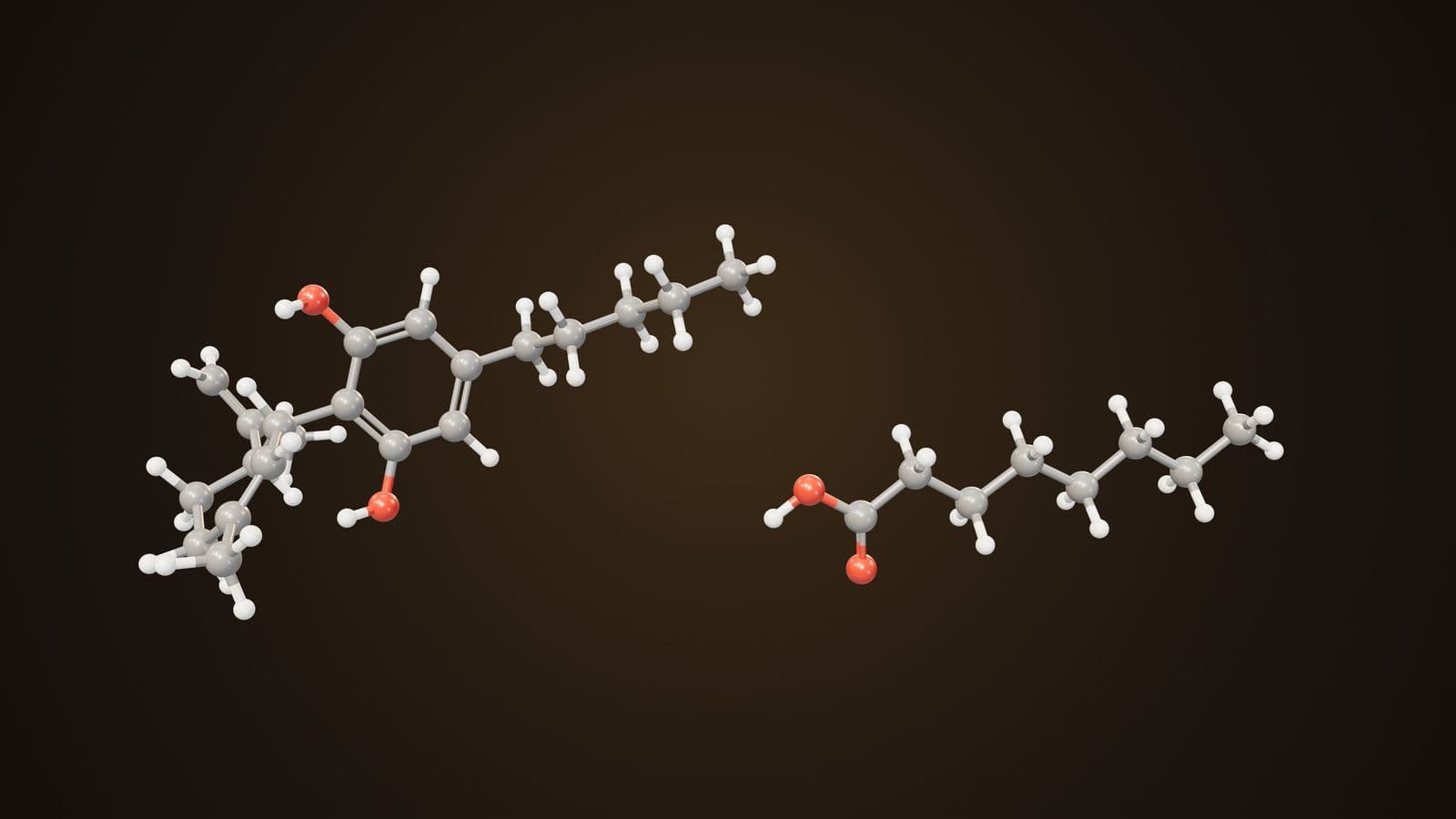
In the liver, THC is first converted into 11-OH-THC, which is still active, and then into inactive THC-COOH (Huestis 2007). THC-COOH does not get you high, but because it stays in the body much longer than THC, urine tests look for it. So finding THC-COOH on a test does not point to a separate drug; it indicates that the person was exposed to THC. We explain how many days it shows up in urine, blood and hair in our drug testing guide.
Can a CBD product contain THC?
Yes. Products sold as "full-spectrum" contain small amounts of THC by definition; THC can also turn up in "broad-spectrum" products (CBD spectrum guide). THC was found in 21% of 84 CBD products bought online (Bonn-Miller 2017); in the US, 26% of 202 products did not match the type stated on their label (Gidal 2024). Even hemp seed oil is not exempt: THC was measured in all but one of 20 seed oil samples sold in Turkey (Kacargil 2026). In Turkey, support products and cosmetics that may be sold in pharmacies can contain no more than 0.3% THC; the product’s certificate of analysis shows this.
How has it been used in studies?
We don’t recommend personal doses on this site; the following only describes what was done in studies (study doses; not personal recommendations).
- In the epilepsy studies, the approved CBD medicine was given at 20 milligrams per kilogram of body weight a day, and patients were monitored under a doctor’s supervision (Devinsky 2017; Thiele 2018).
- In the chemotherapy nausea study, each capsule contained 2.5 mg of THC and 2.5 mg of CBD; the capsules were taken three times a day in addition to standard anti-nausea medicines, starting one day before chemotherapy and continuing until day five (Grimison 2024).
- Only about 6% of CBD taken by mouth on an empty stomach reaches the bloodstream (Perucca and Bialer 2020). When it was taken with a high-fat meal, the amount reaching the blood rose about 4-fold (Crockett 2020). There was no difference in blood levels between drops under the tongue and capsules (Johnson 2024).
- With products applied to the skin, the amount reaching the blood is small but not zero: in a study of 46 healthy adults, CBD passed from the skin into the blood with three of five products. No THC was detected in the blood and urine tests were not positive; even so, nine people went over the THC threshold on a saliva test (Zamarripa 2024).
Legal status in Turkey
In Turkey, marijuana containing THC counts as a narcotic substance. Under Law No. 2313, planting cannabis to obtain marijuana and growing cannabis without a permit are prohibited (Law No. 2313). The Turkish Penal Code treats buying, possessing or using narcotics for personal use as a separate offense punishable by two to five years in prison; for this offense, the filing of a public prosecution is deferred for five years, the person is placed on probation for at least one year, and treatment is provided if needed (TCK Art. 191).
Hemp-derived products, including CBD, on the other hand, may be sold only in pharmacies (Law No. 7557; January 31, 2026 regulation). Products in the medicine and health product classes are dispensed with a prescription; no prescription requirement is stated for support products with a THC content of no more than 0.3%. As of October 2026, there is no approved CBD medicine in Turkey; the list of licensed medicines published by TİTCK (Turkish Medicines and Medical Devices Agency) on October 16, 2026 contains no medicine with CBD (TİTCK). More detail: CBD laws in Turkey (not legal advice).
If you are considering CBD
You can talk with your doctor or pharmacist about the following:
- The complaint you’re considering it for, and what pure CBD and products containing THC have shown for it
- All the medicines and supplements you take; liver disease or regular alcohol use
- Any history of psychosis, bipolar disorder or a substance use problem (important when it comes to THC)
- Pregnancy, breastfeeding, driving and drug or doping tests
- Whether the product’s certificate of analysis states the amount of THC: how to read a label
If you are worried about marijuana use for yourself or someone close to you, the 115 counseling line of the Yeşilay Counseling Center (YEDAM) offers free psychological and social support to people with addiction and their families (YEDAM).
Conclusion
THC and CBD are two compounds that come from the same plant and share the same formula but behave very differently in the body. THC gets you high and carries well-known risks for dependence, mental health and driving; CBD does not get you high, but it calls for caution with drug interactions and the liver. Both have a place in research; the healthiest approach is to talk with your doctor about which one might be suitable, in which situation and for whom.
This article is for information only; it is not a diagnosis or treatment recommendation and does not encourage substance use. We don’t sell products or recommend any product or brand. How we prepare our content: Editorial Policy. If you spot an error, write to [email protected].
Frequently asked questions
What does THC stand for?
THC is short for tetrahydrocannabinol. It refers to delta-9-tetrahydrocannabinol (Δ9-THC), the main intoxicating compound in marijuana. Synthetic THC made as a medicine is called dronabinol.
What is THC-COOH, and which drug is it a trace of?
THC-COOH is a breakdown product formed when THC is broken down in the liver; it does not get you high itself. Urine tests look for it; finding it on a test shows exposure to THC, that is, to marijuana or another product containing THC. A CBD product that contains THC can give the same result.
What is the main difference between THC and CBD?
Both come from cannabis and have the same chemical formula, but their atoms are arranged differently. THC gets you high by activating CB1 receptors in the brain; CBD does not activate these receptors the way THC does and does not get you high. Their approved medicines are also used for different conditions.
Does CBD reduce the effects of THC?
Research does not support this common idea. In one study, adding 1–3 times as much CBD to THC did not reduce memory impairment or temporary psychosis-like symptoms; in a driving study, a mix with equal amounts of THC and CBD impaired driving as much as THC alone.
Does THC have medical uses?
In some countries, medicines containing THC are used for chemotherapy nausea that continues despite standard medicines and for muscle stiffness due to MS; the effect in chronic pain is small. These medicines also increase side effects such as drowsiness and dizziness. The results belong to specific medicines and cannot be applied to unregulated products.
Will using a CBD product make a drug test come back positive?
Tests look for THC, so pure CBD is not expected to make a test positive. But many CBD products can contain THC that isn’t listed on the label, and even a small amount of THC could make a test positive with regular use. If testing matters for you, talk about it with your doctor.
Are THC and CBD legal in Turkey?
Marijuana containing THC counts as a narcotic substance; buying, possessing or using it for personal use is a crime under the Turkish Penal Code. Hemp-derived products, including CBD, on the other hand, may be sold only in pharmacies (Law No. 7557, January 31, 2026 regulation); products in the medicine and health product classes are dispensed with a prescription, and no prescription requirement is stated for support products with a THC content of no more than 0.3%. As of October 2026, there is no approved CBD medicine in Turkey.
References
Show 44 references
- PubChem. Tetrahydrocannabinol (CID 16078): molecular formula C21H30O2 (accessed October 20, 2026).
- PubChem. Cannabidiol (CID 644019): molecular formula C21H30O2 (accessed October 20, 2026).
- Grotenhermen F. Pharmacokinetics and pharmacodynamics of cannabinoids. Clin Pharmacokinet. 2003. PMID 12648025
- Huestis MA. Human cannabinoid pharmacokinetics. Chem Biodivers. 2007. PMID 17712819
- Radwan MM, et al. Cannabinoids, Phenolics, Terpenes and Alkaloids of Cannabis. Molecules. 2021. PMID 34066753
- ElSohly MA, et al. Changes in Cannabis Potency Over the Last 2 Decades (1995-2014): Analysis of Current Data in the United States. Biol Psychiatry. 2016. PMID 26903403
- Lu HC, Mackie K. An Introduction to the Endogenous Cannabinoid System. Biol Psychiatry. 2016. PMID 26698193
- Pertwee RG. The diverse CB1 and CB2 receptor pharmacology of three plant cannabinoids: delta9-tetrahydrocannabinol, cannabidiol and delta9-tetrahydrocannabivarin. Br J Pharmacol. 2008. PMID 17828291
- Laprairie RB, et al. Cannabidiol is a negative allosteric modulator of the cannabinoid CB1 receptor. Br J Pharmacol. 2015. PMID 26218440
- Englund A, et al. Does cannabidiol make cannabis safer? A randomised, double-blind, cross-over trial of cannabis with four different CBD:THC ratios. Neuropsychopharmacology. 2023. PMID 36380220
- Arkell TR, et al. Effect of Cannabidiol and Δ9-Tetrahydrocannabinol on Driving Performance: A Randomized Clinical Trial. JAMA. 2020. PMID 33258890
- ClinicalTrials.gov. Studies testing cannabidiol (539 records as of October 19, 2026; recounted on October 20, 2026).
- Devinsky O, et al. Trial of Cannabidiol for Drug-Resistant Seizures in the Dravet Syndrome. N Engl J Med. 2017. PMID 28538134
- Thiele EA, et al. Cannabidiol in patients with seizures associated with Lennox-Gastaut syndrome (GWPCARE4): a randomised, double-blind, placebo-controlled phase 3 trial. Lancet. 2018. PMID 29395273
- Moore A, et al. Cannabidiol (CBD) Products for Pain: Ineffective, Expensive, and With Potential Harms. J Pain. 2024. PMID 37863344
- da Silva GHS, et al. Effectiveness of cannabinoids on subjective sleep quality in people with and without insomnia or poor sleep: A systematic review and meta-analysis of randomised studies. Sleep Med Rev. 2025. PMID 40929927
- Smith LA, et al. Cannabinoids for nausea and vomiting in adults with cancer receiving chemotherapy. Cochrane Database Syst Rev. 2015. PMID 26561338
- Grimison P, et al. Oral Cannabis Extract for Secondary Prevention of Chemotherapy-Induced Nausea and Vomiting: Final Results of a Randomized, Placebo-Controlled, Phase II/III Trial. J Clin Oncol. 2024. PMID 39151115
- Filippini G, et al. Cannabis and cannabinoids for symptomatic treatment for people with multiple sclerosis. Cochrane Database Syst Rev. 2022. PMID 35510826
- Wang L, et al. Medical cannabis or cannabinoids for chronic non-cancer and cancer related pain: a systematic review and meta-analysis of randomised clinical trials. BMJ. 2021. PMID 34497047
- Suraev A, et al. Acute Effects of Oral Cannabinoids on Sleep and High-Density EEG in Insomnia: A Pilot Randomised Controlled Trial. J Sleep Res. 2026. PMID 40631525
- National Academies of Sciences, Engineering, and Medicine. The Health Effects of Cannabis and Cannabinoids: The Current State of Evidence and Recommendations for Research. National Academies Press. 2017. PMID 28182367
- Volkow ND, et al. Adverse health effects of marijuana use. N Engl J Med. 2014. PMID 24897085
- Leung J, et al. What is the prevalence and risk of cannabis use disorders among people who use cannabis? a systematic review and meta-analysis. Addict Behav. 2020. PMID 32485547
- Di Forti M, et al. The contribution of cannabis use to variation in the incidence of psychotic disorder across Europe (EU-GEI): a multicentre case-control study. Lancet Psychiatry. 2019. PMID 30902669
- World Health Organization (ECDD). Cannabidiol (CBD) Critical Review Report. 2018.
- US FDA / DailyMed. EPIDIOLEX (cannabidiol) prescribing information, revision 05/2026.
- Florian J, et al. Cannabidiol and Liver Enzyme Level Elevations in Healthy Adults: A Randomized Clinical Trial. JAMA Intern Med. 2025. PMID 40622698
- US FDA. What You Should Know About Using Cannabis, Including CBD, When Pregnant or Breastfeeding. 2019.
- Wolinsky D, et al. The acute and chronic pharmacokinetics and pharmacodynamics of oral cannabidiol with and without low doses of delta-9-tetrahydrocannabinol. J Anal Toxicol. 2026. PMID 40704705
- WADA. 2027 Prohibited List.
- Bonn-Miller MO, et al. Labeling Accuracy of Cannabidiol Extracts Sold Online. JAMA. 2017. PMID 29114823
- Gidal BE, et al. Product labeling accuracy and contamination analysis of commercially available cannabidiol product samples. Front Pharmacol. 2024. PMID 38562466
- Kacargil CU, et al. Determination of cannabinoids in commercial hemp seeds and hemp seed oil products in Türkiye by LC-MS/MS. Forensic Sci Int. 2026. PMID 41621128
- Perucca E, Bialer M. Critical Aspects Affecting Cannabidiol Oral Bioavailability and Metabolic Elimination, and Related Clinical Implications. CNS Drugs. 2020. PMID 32504461
- Crockett J, et al. A phase 1, randomized, pharmacokinetic trial of the effect of different meal compositions, whole milk, and alcohol on cannabidiol exposure and safety in healthy subjects. Epilepsia. 2020. PMID 32012251
- Johnson DA, et al. Cannabidiol Oil Ingested as Sublingual Drops or Within Gelatin Capsules Shows Similar Pharmacokinetic Profiles in Healthy Males. Cannabis Cannabinoid Res. 2024. PMID 37733294
- Zamarripa CA, et al. Pharmacokinetics and pharmacodynamics of five distinct commercially available hemp-derived topical cannabidiol products. J Anal Toxicol. 2024. PMID 38217086
- Law No. 2313, Uyuşturucu Maddelerin Murakabesi Hakkında Kanun (Law on the Control of Narcotic Substances) (current text, mevzuat.gov.tr).
- Turkish Penal Code No. 5237, Art. 191 (current text, mevzuat.gov.tr; accessed October 20, 2026).
- Law No. 7557. Official Gazette 32965, July 24, 2025.
- Republic of Turkey Ministry of Health. Kenevirden Elde Edilen Ürünlere Dair Yönetmelik (Regulation on Products Derived from Hemp). Official Gazette 33154, January 31, 2026.
- TİTCK. List of Licensed Human Medicinal Products (October 16, 2026).
- Yeşilay Counseling Center (YEDAM). 115 Counseling Line (accessed October 20, 2026).
Change log
- October 23, 2026: Added explanations of "What does THC stand for?" and "What is THC-COOH?", an image showing how THC is broken down in the body and two questions; the title and description were updated to match the search query.
 What Is THCV (Tetrahydrocannabivarin)? The Molecule, the Research and Its Legal Status
 What Is Cannabinol (CBN)? Sleep Claims and Research
 NewWhat Is HHC (Hexahydrocannabinol)? Effects, Risks and Legal Status
 NewWhat Is Delta-8 THC (Δ8-THC)? Effects, Risks and Legal Status