
Science: cannabinoids and the body
What Is THCV (Tetrahydrocannabivarin)? The Molecule, the Research and Its Legal Status
How can a molecule so similar to THC behave so differently? We explain THCV, nicknamed "diet weed," where research stands today and its legal status.
By: Selçuk GündoğduUpdated: 14 sources
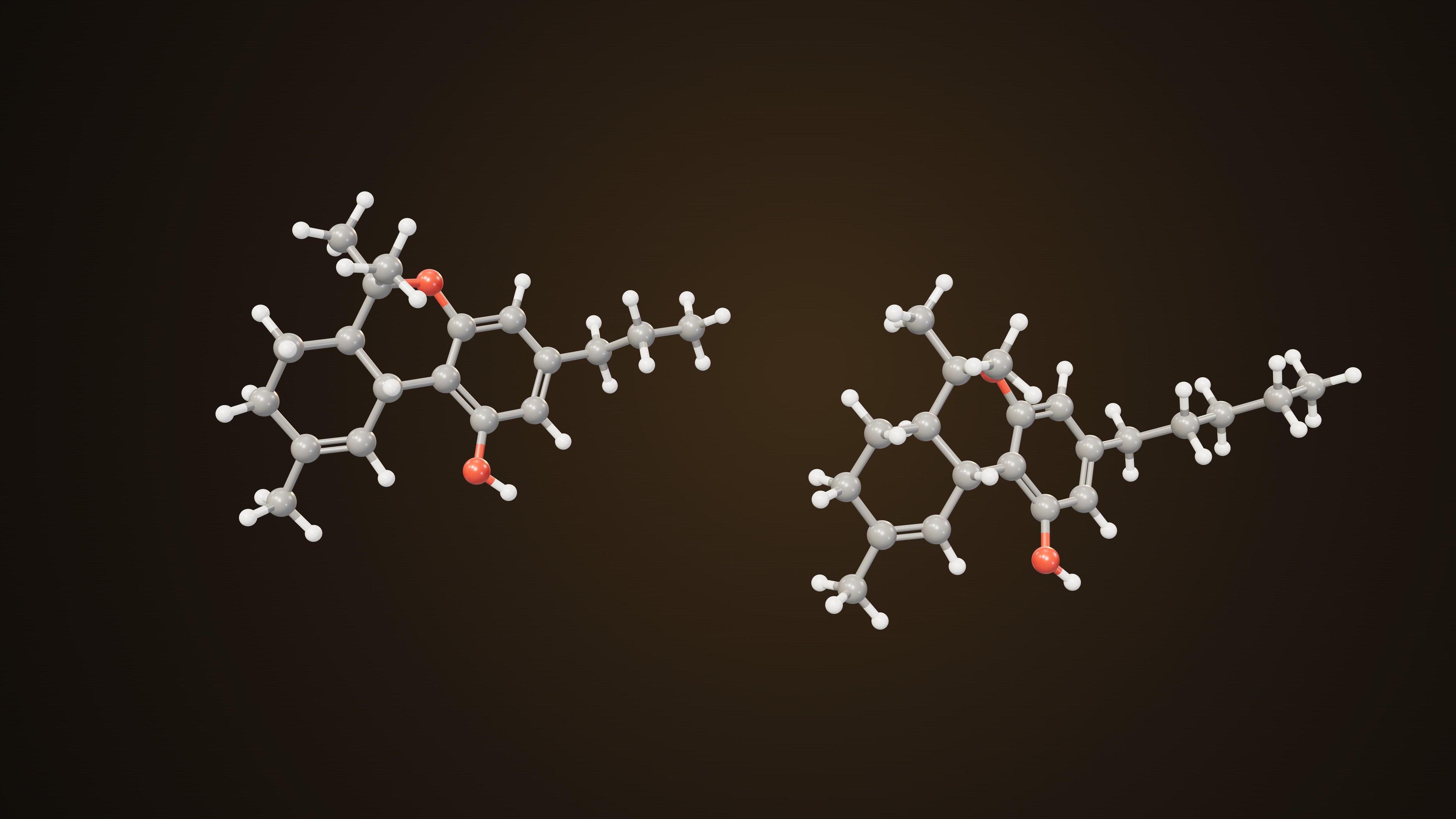
You may have heard of THCV through a nickname like "diet weed," or in a news story about weight or blood sugar. It is completely natural to be curious: What is this molecule, how is it different from THC, and what does research actually show? In this article we explain in plain language the chemistry of THCV, how it acts in the body, what human studies have found and its legal status in Turkey. We do not cover plant strains or products.
What’s in this article?11 sections
What is THCV?
THCV is one of the hundreds of compounds found in the cannabis plant (Cannabis sativa) and belongs to the cannabinoid family (we introduce the family in our article on cannabinoids). Its name is very similar to THC (tetrahydrocannabinol), the best-known cannabinoid, because the two molecules have almost the same skeleton.
The difference is small but important: THC has a five-carbon side chain at one end, while in THCV this chain has three carbons. The "-varin" ending refers to this shorter chain; the same family also includes other "varin" cannabinoids such as CBDV (cannabidivarin). The molecular formula of THCV is C19H26O2, and that of THC is C21H30O2.
Like other cannabinoids, THCV first forms in the plant in its acid form (THCVA); it turns into THCV when the plant is heated or dried and stored. In most cannabis plants it is found in much smaller amounts than THC and CBD.
How does it act in the body?
Our body has a signaling system that helps regulate many functions, from appetite to mood: the endocannabinoid system (more in this article). The two best-known "locks" of this system are the CB1 and CB2 receptors. CB1 is found mostly in the brain, and CB2 mostly in immune cells.
- THC activates the CB1 receptor. The high and the increase in appetite largely come from this effect.
- THCV, by contrast, in laboratory studies bound to CB1 and blocked the effect of substances that activate it, instead of activating it. In animals, this blocking effect was seen at low doses, while at higher doses an activating effect on CB1 was seen. It partly activated the CB2 receptor (Pertwee 2008).
An important reason for scientists' interest in THCV is this: there was a medicine called rimonabant that blocked CB1 and was developed for weight loss, but it was withdrawn because of psychiatric side effects such as depression. Rimonabant also suppressed the receptor's own natural activity. THCV, on the other hand, is thought to be a "neutral" blocker that only blocks stimulation coming from outside (Tudge 2015; Wargent 2013). Whether this difference would lead to a safer outcome in humans is not yet known.
Does THCV cause a high?
At the doses used in human studies, THCV has not been seen to cause a high or mental fog. In a study of ten healthy men, participants who took 10 mg of THCV every day for five days (study dose; not a personal recommendation) could not tell THCV apart from an inactive pill (placebo) (Englund 2016). Because THCV is known to be able to activate CB1 at higher doses in animals, however, the effect of high doses in humans is not well known. Claims such as "it never gets you high" or "it gives you energy" are not backed by human studies.
What does the research say?
Most of what we know about THCV comes from laboratory and animal studies. Human studies are few, small and mostly short. The important ones are:
Blood sugar and type 2 diabetes
The most important human study in this area was done in 62 people with type 2 diabetes who were not using insulin. Participants were randomly assigned to five groups: CBD alone, THCV alone, two different CBD-THCV mixtures, or placebo, so each group had about 12 people. In the group taking 5 mg of THCV twice a day (study dose; not a personal recommendation), fasting blood sugar fell compared with placebo after 13 weeks, and a measure of how well insulin-producing cells work improved. The study's main outcome, "good cholesterol" (HDL), did not change. There was no clear difference between those taking CBD alone and those taking placebo, and the mixtures did not change the results (Jadoon 2016).
This is promising, but it is a single, small pilot study; its results have not been repeated in larger studies. In a study in mice, THCV also improved blood sugar balance and insulin sensitivity; interestingly, it did not clearly change food intake or weight gain (Wargent 2013). We look at the role of CBD in diabetes separately in our diabetes and metabolism guide.
Weight and appetite
THCV's "diet weed" nickname arose mainly from animal studies and laboratory findings; human studies are limited. The most direct human data on appetite come from a brain imaging study in which 20 healthy volunteers were given a single 10 mg dose of THCV: THCV increased the brain's response to rewarding images such as chocolate and to unpleasant ones such as moldy strawberries, but how much participants liked or wanted these foods did not change (Tudge 2015).
In a weight loss study, 44 people used mouth-dissolving strips containing THCV and CBD, or a placebo, for 90 days. Reductions in weight and waist size were reported in the THCV-CBD groups compared with placebo (Smith 2025). However, the study was carried out by a single author who is affiliated with a company; 44 of the 56 people who started completed the study, and the high-dose and placebo groups had only ten people each. That is why the results need to be confirmed by independent, larger studies. We discuss weight and CBD in our article Can CBD help with weight loss?.
Together with THC
In the ten-person study mentioned earlier, participants who had taken THCV for five days were then given a small amount of THC into a vein. THCV reduced the rise in heart rate caused by THC and the impairment on a memory test; nine of the ten participants felt the effect of THC more weakly. On the other hand, THCV increased some memory errors. The authors stress that the sample was small and the results should be interpreted with caution (Englund 2016).
Parkinson's and other areas
In animal models of Parkinson's disease, THCV was reported to have protective effects on nerve cells and to reduce involuntary movements caused by levodopa treatment (Espadas 2020). These findings come only from mice; it has not been tested in humans. There are no well-designed human studies of THCV in areas such as anxiety, focus or pain; there is not yet enough research on these topics, and studies are ongoing.
Possible side effects and safety
In small human studies, THCV was generally well tolerated; no serious side effects were reported (Jadoon 2016; Englund 2016). However, these studies involved few people and lasted a few months at most. There is not enough research on the safety of long-term use, the effect of high doses, or THCV's interactions with other medicines. Because it is thought to be able to affect blood sugar, it is especially important for people taking diabetes medicines to talk with their doctor about this.
THCV, THC and CBD compared
Feature | THCV | THC | CBD |
|---|---|---|---|
Side chain | 3 carbons | 5 carbons | 5 carbons |
CB1 receptor | Blocks it in the laboratory; activates it at high doses in animals | Activates it | In the laboratory, blocks the effect of substances that activate it |
High | Not seen at the doses studied; high doses not well understood | Yes | No |
Human evidence | A few small pilot studies | Used in approved medicines | An approved CBD medicine exists in some countries (for some severe forms of epilepsy; not approved in Turkey) |
We explain the difference between THC and CBD in detail in our article on THC vs. CBD.
Legal status
Turkey: THCV was brought under Law No. 2313, the Uyuşturucu Maddelerin Murakabesi Hakkında Kanun (Law on the Control of Narcotic Substances), by Presidential Decree No. 10129, published in the Official Gazette on July 30, 2025. The list annexed to the decree includes both the form found in cannabis (Δ9-THCV) and Δ8-THCV by their chemical names (Presidential Decree 10129). Decrees of this kind determine which substances fall under this law (Law No. 2313, Art. 19). The Turkish Penal Code covers the manufacture and trade of narcotics in Article 188, and buying, possessing or using them for personal use in Article 191.
The Ministry of Health's Kenevirden Elde Edilen Ürünlere Dair Yönetmelik (Regulation on Products Derived from Hemp) of January 31, 2026 defines "cannabinoid" as the general name for plant cannabinoids obtained naturally from cannabis and gives THC, CBD, CBN and CBG as examples; it does not mention THCV separately. In supplement and personal care products, THC can be at most 0.3%, and cannabinoids must be present at levels that do not cause a narcotic effect. We did not find an official statement on whether a cannabis product containing THCV could be licensed under this regulation.
Cannabis-derived products, including CBD, can be sold only in pharmacies and only with a license (Law No. 7557, regulation of January 31, 2026). Products sold online, on social media or in stores are outside this channel. Those classed as medicines and health products are dispensed with a prescription; no prescription requirement is stated for supplement products with a THC content of at most 0.3%. As of October 2026, there is no approved (licensed) CBD medicine in Turkey. Growing cannabis without a permit is also prohibited in Turkey. Details: Regulation guide.
Other countries: The rules vary from country to country. In the United Kingdom, for example, THCV is considered a Class B controlled substance, like THC (UK Home Office). THCV is not listed by name in the UN's 1971 Convention on Psychotropic Substances (INCB Green List 2025); Turkey added THCV to its list by its own decision.
If you are thinking about using a product containing CBD or THCV
You can talk with your doctor about the following:
- What research shows for your situation, and that the data on THCV are still very limited,
- The medicines you take, especially diabetes medicines (see drug interactions),
- Whether the product contains THC and whether it is licensed.
Do not stop the treatment you use for diabetes or weight on your own; THCV is not a substitute for these treatments.
Conclusion
THCV is an interesting cannabinoid that is very similar to THC but interacts with receptors differently. Although the early results on blood sugar and weight are striking, they rest on a few small studies; today it is too early to say "it works." Scientists are continuing to look for answers to these questions with larger, independent studies.
Frequently asked questions
What is THCV?
THCV (tetrahydrocannabivarin) is a cannabinoid usually found in small amounts in cannabis. Its chemical skeleton is very similar to THC; the difference is that THCV's side chain has three carbons instead of five. This small difference makes the molecule interact with the body's cannabinoid receptors differently from THC.
Does THCV cause a high?
At the doses used in human studies, it has not been seen to cause a high; volunteers who took 10 mg of THCV a day for five days could not tell it apart from placebo. Because a THC-like receptor effect was seen at high doses in animals, the effect of high doses in humans is not well known.
Does THCV cause weight loss?
It is too early to say. The 'diet weed' nickname arose mainly from animal studies. The only human weight study was done with 44 people using THCV and CBD together, and it was carried out by a single author affiliated with a company; the results need to be confirmed by independent, larger studies.
Does THCV help with diabetes?
In a small pilot study of 62 people with type 2 diabetes, fasting blood sugar fell in the THCV group compared with placebo, but the study's main outcome did not change, and the finding has not been repeated. THCV is not a substitute for diabetes medicines; if you take diabetes medicine, talk with your doctor about any cannabinoid product.
Is THCV legal in Turkey?
Since July 30, 2025, THCV has been among the substances covered by Law No. 2313, the Uyuşturucu Maddelerin Murakabesi Hakkında Kanun (Law on the Control of Narcotic Substances) (Presidential Decree No. 10129). The regulation of January 31, 2026 on cannabis products does not mention THCV separately; we did not find an official statement on whether a product containing THCV could be licensed. Cannabis-derived products, including CBD, can be sold only in pharmacies and only with a license; as of October 2026, there is no approved (licensed) CBD medicine in Turkey.
References
Show 14 references
- Pertwee RG. The diverse CB1 and CB2 receptor pharmacology of three plant cannabinoids: delta9-tetrahydrocannabinol, cannabidiol and delta9-tetrahydrocannabivarin. Br J Pharmacol. 2008;153(2):199-215. PMID 17828291
- Jadoon KA et al. Efficacy and Safety of Cannabidiol and Tetrahydrocannabivarin on Glycemic and Lipid Parameters in Patients With Type 2 Diabetes: A Randomized, Double-Blind, Placebo-Controlled, Parallel Group Pilot Study. Diabetes Care. 2016;39(10):1777-86. PMID 27573936
- Englund A et al. The effect of five day dosing with THCV on THC-induced cognitive, psychological and physiological effects in healthy male human volunteers: A placebo-controlled, double-blind, crossover pilot trial. J Psychopharmacol. 2016;30(2):140-51. PMID 26577065
- Tudge L, Williams C, Cowen PJ, McCabe C. Neural effects of cannabinoid CB1 neutral antagonist tetrahydrocannabivarin on food reward and aversion in healthy volunteers. Int J Neuropsychopharmacol. 2015;18(6):pyu094. PMID 25542687
- Smith GL. Weight Loss and Therapeutic Metabolic Effects of Tetrahydrocannabivarin (THCV)-Infused Mucoadhesive Strips. Cannabis. 2025;8(1):109-120. PMID 39968488
- Wargent ET et al. The cannabinoid Δ9-tetrahydrocannabivarin (THCV) ameliorates insulin sensitivity in two mouse models of obesity. Nutr Diabetes. 2013;3(5):e68. PMID 23712280
- Espadas I et al. Beneficial effects of the phytocannabinoid Δ9-THCV in L-DOPA-induced dyskinesia in Parkinson's disease. Neurobiol Dis. 2020;141:104892. PMID 32387338
- UK Home Office. Drug licensing factsheet: cannabis, CBD and other cannabinoids (updated October 3, 2024). gov.uk
- Ministry of Health. Kenevirden Elde Edilen Ürünlere Dair Yönetmelik (Regulation on Products Derived from Hemp). Official Gazette, January 31, 2026, issue 33154. Official Gazette 33154
- Law No. 7557 Amending Certain Health-Related Laws and Decree-Law No. 663, Article 9. Official Gazette, July 24, 2025, issue 32965. Official Gazette 32965
- Presidential Decree 10129 (July 29, 2025). Official Gazette, July 30, 2025, issue 32971. Official Gazette 32971
- Uyuşturucu Maddelerin Murakabesi Hakkında Kanun No. 2313 (Law on the Control of Narcotic Substances), Art. 19 (current text). mevzuat.gov.tr
- Turkish Penal Code No. 5237, Art. 188 and 191 (current text). mevzuat.gov.tr
- INCB. Green List, 36th edition (2025), Schedule I. incb.org
Change log
- October 23, 2026: Legal status corrected: added that THCV has been covered by Law No. 2313 since July 30, 2025 under Presidential Decree No. 10129. The statement "it is subject to the same rules as other cannabis products" was removed.
 What Is Cannabinol (CBN)? Sleep Claims and Research
 NewWhat Is HHC (Hexahydrocannabinol)? Effects, Risks and Legal Status
 NewWhat Is Delta-8 THC (Δ8-THC)? Effects, Risks and Legal Status
 NewWhat Are Synthetic Cannabinoids? What’s in the Liquids, Puffs and Gummies Sold as "THC"?