
Science: cannabinoids and the body
CBD and the Immune System
The answer to "Does CBD support immunity?" is a little different from what many people think. We explain in plain language what is known, from the lab to human studies.
By: cbd.school editorial teamUpdated: 12 sources
Quick check
This article follows our editorial policy.
- We don't sell products, recommend brands or give personal doses.
- We base health information on peer-reviewed studies or official bodies. When the evidence is weak, we say so plainly: How do we rate the strength of evidence?
- If you spot an error, write to us through the contact form. We check it against the source, correct it if it is wrong, and update the page date.
Details: Editorial Policy. Our content is for information only; it does not replace diagnosis or treatment.
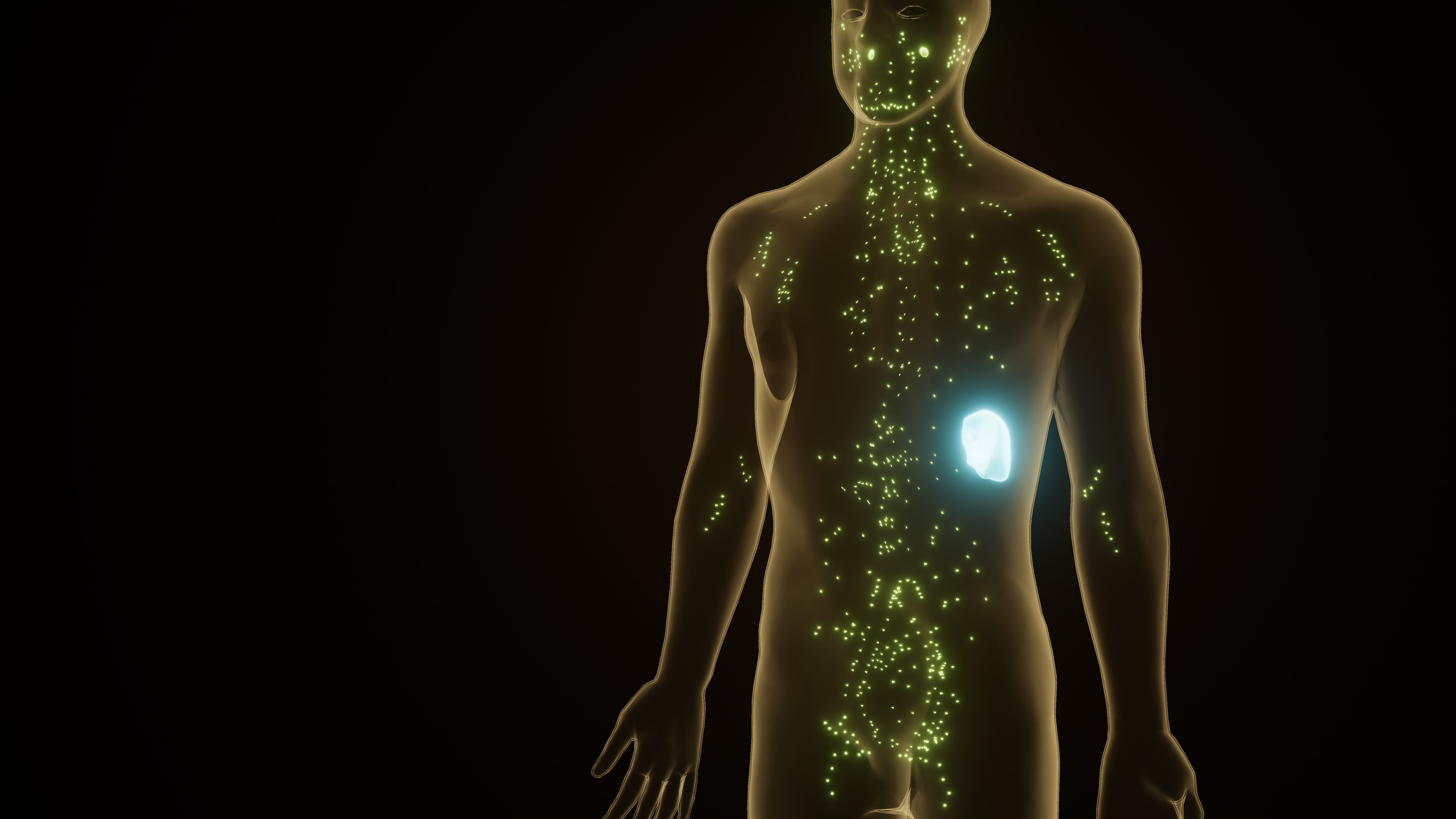
Getting sick often, an inflammation that won't go away, or living with a rheumatic disease... The immune system is the invisible guardian of our health, working every moment; that is why "Does CBD support immunity?" is such a common question. In this article we explain in plain language how CBD affects immune cells in the lab, what human studies show, how it interacts with drugs that suppress the immune system, and what you can talk about with your doctor.
What’s in this article?9 sections
How does the immune system work?
The immune system is made up of cells, tissues and organs that protect the body against germs and harmful substances. Roughly speaking, it has two layers:
- Innate immunity: The fast-acting first line of defense, made up of the skin, mucous membranes and some white blood cells.
- Adaptive immunity: Cells such as T and B cells that recognize a specific germ, mount a response tailored to it, and "remember" it.
A healthy immune system is balanced: it responds strongly when needed and calms down when the job is done. When this balance is upset, two kinds of problems can arise. When immunity is too weak, infections take hold more easily; when it is overactive or misdirected, diseases in which the immune system attacks the body's own tissues (autoimmune diseases), such as rheumatoid arthritis, Crohn's disease or multiple sclerosis, can develop. That is why "boosting immunity" is not always desirable.
How does CBD affect immune cells?
CBD (cannabidiol) is a compound found in the cannabis plant that does not cause a high or mental fog. Some receptors of the body's endocannabinoid system are also found on immune cells, and how CBD interacts with these cells has been studied for years.
According to a review summarizing lab and animal studies, the findings consistently point toward CBD suppressing the immune system: CBD reduces the activation of various immune cells, speeds up the death of some of them, and increases "regulatory" cells that keep other cells in check (Nichols 2020). Another review also stresses that CBD shows anti-inflammatory effects in cell cultures and animals, but that clinical results in humans are still lacking (Aziz 2023).
This picture highlights an important point: lab findings suggest CBD may be a substance that calms inflammation and the immune response rather than one that "boosts" immunity. This explains why it is being studied for autoimmune diseases; but effects seen in cell cultures or mice do not mean it will have the same result in humans. We cover the findings on inflammation separately in our article on CBD and inflammation.
What do human studies say?
Whether a treatment really works is best shown by controlled studies: participants are randomly assigned to groups; one group gets the treatment and the other a drug that looks the same but has no active ingredient (placebo). In immune-related diseases, studies of this kind are few, and most are small.
Autoimmune and inflammatory diseases
- Crohn's disease (Naftali 2017): In a controlled study of 20 patients, low-dose pure CBD did not affect disease activity differently from placebo; it was found safe but not effective. In studies of products that also contain THC, some patients felt better, but measurements of inflammation in the gut did not change. Details are on our inflammatory bowel disease page.
- Rheumatoid arthritis (Blake 2006): In a study of 58 patients, a prescription mouth spray containing THC and CBD gave small but significant improvements over placebo in pain on movement and at rest, in sleep quality and in disease activity scores. The product contained THC and the study lasted 5 weeks; this result cannot be taken to apply to pure CBD. Details are in our article on rheumatoid arthritis and CBD.
- Multiple sclerosis (Filippini 2022): The evidence in this disease concerns a prescription spray that contains both THC and CBD. According to a Cochrane review, this spray increases the number of patients who report a clear reduction in muscle stiffness in the short term; it has little or no effect on quality of life. This result concerns symptoms, not the course of the disease or immunity. No controlled study with pure CBD was found (see the MS page).
After transplantation
In a study of 48 adults who had a bone marrow transplant, CBD was added to standard preventive treatment, starting 7 days before the transplant and continuing until day 30. In these patients, "graft-versus-host" disease, a common complication after transplantation in which the transplanted cells attack the body, was seen less often than in patients treated in previous years (Yeshurun 2015). But the study had no randomized comparison group, and the authors also write that the result needs to be confirmed in a controlled study.
Infections
In a controlled study of patients with mild to moderate COVID-19, CBD added to standard treatment for 14 days did not change the course of the illness; the time for symptoms to resolve was similar to the placebo group (Crippa 2022). In a small pilot study of 10 people living with HIV, immune cell counts and viral suppression stayed stable while they were taking CBD or THC-CBD capsules; one participant taking high-dose CBD developed severe liver inflammation, and a previously unknown cancer was found in this person (Mboumba Bouassa 2022). In short, there is no human study showing that CBD protects against infections or boosts immunity.
Possible side effects and drug interactions
Concern about immune suppression
Because lab findings point toward immune suppression, the question "Does CBD increase the risk of infection?" comes to mind. No study has looked at this in healthy people. In studies of the approved CBD medicine in patients with severe epilepsy, infections occurred in 40–41% of those taking the medicine and 31% of those taking placebo; pneumonia was also more common in the CBD groups, and it increased especially in those also taking an epilepsy drug called clobazam. These patients had severe epilepsy and took many medicines; the result cannot be generalized to everyone, but it is a signal that needs careful monitoring.
Interactions with immunosuppressant drugs
CBD can raise the blood levels of some medicines by slowing how the body breaks them down. This is especially important for drugs used after organ transplantation or in some autoimmune diseases:
- Tacrolimus: In healthy volunteers, after two weeks of CBD use, tacrolimus's peak blood level rose about 4.2-fold and its total exposure about 3.1-fold (So 2025). In an epilepsy patient taking very high doses of CBD, the tacrolimus level, adjusted for dose, was also reported to have risen about 3-fold (Leino 2019). The researchers stress that drug levels should be monitored closely in transplant patients who use CBD.
- Others: According to the approved CBD medicine's prescribing information, CBD increases everolimus exposure about 2.5-fold; levels of similar drugs such as sirolimus may also rise, and monitoring drug levels is recommended. Details are on our drug interactions page.
Other side effects
In studies of the approved CBD medicine, the most common side effects were sleepiness, decreased appetite, diarrhea and fatigue; raised liver enzymes were also among the side effects seen. Details are in our article on CBD and the liver.
How was it used in the studies?
In the studies above, CBD was given by mouth: 10 mg twice a day in the Crohn's study; 300 mg a day in the transplant study, starting 7 days before the transplant and continuing until day 30; 300 mg a day for 14 days in the COVID-19 study; and up to 800 mg a day for 12 weeks in the HIV study. In the tacrolimus study, 5 mg per kilogram twice a day was used. These are study doses, not personal recommendations. There is no established CBD dose for immunity.
If you are considering CBD
It is completely natural to want to do something to protect your immunity. Before deciding, you can talk about the following with your doctor:
- If you have an autoimmune disease, how you monitor the effect of your treatment and whether CBD might interact with it.
- If you have had an organ or bone marrow transplant, your medicines such as tacrolimus, sirolimus or everolimus, and drug level monitoring.
- If you are receiving cancer treatment, especially immunotherapy, your oncologist's opinion.
- Whether you get frequent infections, and looking into the cause.
- Whether you have liver disease or raised liver tests.
Do not reduce or stop your immunosuppressant or rheumatology medicine on your own to switch to CBD. In Turkey, cannabis-derived products, including CBD, can be sold only in pharmacies (Law No. 7557, regulation of January 31, 2026). Those classed as medicines or health products are dispensed on prescription; no prescription requirement is stated for supplement products with at most 0.3% THC. As of October 2026, there is no approved CBD medicine in Turkey. Details are on our regulations page.
Conclusion
CBD shows clear effects on immune cells in the lab; but these effects point more toward calming immunity than boosting it. There is no controlled study in humans showing that it strengthens immunity or improves an autoimmune disease; early results in areas such as transplantation are awaiting confirmation. If you have an immune-related disease or take immunosuppressant drugs, be sure to weigh CBD together with your doctor.
Frequently asked questions
Does CBD boost immunity?
No human study shows this. Lab and animal studies suggest that CBD works less by boosting immunity and more by reducing inflammation and the activity of immune cells. In a controlled study of COVID-19 patients, CBD also did not change the course of the illness.
Is CBD good for autoimmune diseases?
The evidence today is weak and mixed. In Crohn's disease, low-dose pure CBD did no better than placebo. The positive results in rheumatoid arthritis and multiple sclerosis come from a prescription spray that also contains THC and cannot be carried over to pure CBD oil.
Does CBD increase the risk of infection?
No study has looked at this in healthy people. In severe epilepsy studies of the approved CBD medicine, infections and pneumonia were somewhat more common in those taking CBD; these patients took many medicines, and the result cannot be generalized to everyone.
I take medicines after a transplant. Can I take CBD?
Do not start without asking your transplant team. In healthy volunteers, CBD increased tacrolimus blood exposure about 3-fold; drugs such as everolimus and sirolimus can also be affected. Changes in the levels of these drugs can have serious consequences.
Where can CBD products be bought in Turkey?
In Turkey, cannabis-derived products, including CBD, can be sold only in pharmacies (Law No. 7557, regulation of January 31, 2026). Those classed as medicines or health products are dispensed on prescription; no prescription requirement is stated for supplement products with at most 0.3% THC. As of October 2026, there is no approved CBD medicine in Turkey.
References
Show 12 references
- Nichols JM, Kaplan BLF. Immune Responses Regulated by Cannabidiol. Cannabis Cannabinoid Res. 2020. PMID 32322673
- Aziz AI, et al. Cannabinoids as Immune System Modulators: Cannabidiol Potential Therapeutic Approaches and Limitations. Cannabis Cannabinoid Res. 2023. PMID 36413346
- Naftali T, et al. Low-Dose Cannabidiol Is Safe but Not Effective in the Treatment for Crohn's Disease, a Randomized Controlled Trial. Dig Dis Sci. 2017. PMID 28349233
- Blake DR, et al. Preliminary assessment of the efficacy, tolerability and safety of a cannabis-based medicine (Sativex) in the treatment of pain caused by rheumatoid arthritis. Rheumatology (Oxford). 2006. PMID 16282192
- Filippini G, et al. Cannabis and cannabinoids for symptomatic treatment for people with multiple sclerosis. Cochrane Database Syst Rev. 2022. PMID 35510826
- Yeshurun M, et al. Cannabidiol for the Prevention of Graft-versus-Host-Disease after Allogeneic Hematopoietic Cell Transplantation: Results of a Phase II Study. Biol Blood Marrow Transplant. 2015. PMID 26033282
- Crippa JAS, et al. Cannabidiol for COVID-19 Patients with Mild to Moderate Symptoms (CANDIDATE Study): A Randomized, Double-Blind, Placebo-Controlled Clinical Trial. Cannabis Cannabinoid Res. 2022. PMID 34619044
- Mboumba Bouassa RS, et al. Safety and Tolerability of Oral Cannabinoids in People Living with HIV on Long-Term ART: A Randomized, Open-Label, Interventional Pilot Clinical Trial (CTNPT 028). Biomedicines. 2022. PMID 36551926
- So GC, et al. A Phase I Trial of the Pharmacokinetic Interaction Between Cannabidiol and Tacrolimus. Clin Pharmacol Ther. 2025. PMID 39601108
- Leino AD, et al. Evidence of a clinically significant drug-drug interaction between cannabidiol and tacrolimus. Am J Transplant. 2019. PMID 31012522
- US FDA / DailyMed. EPIDIOLEX (cannabidiol) oral solution prescribing information, sections 5, 6.1 and 7.2 (accessed October 20, 2026).
- Ministry of Health. Kenevirden Elde Edilen Ürünlere Dair Yönetmelik (Regulation on Products Derived from Hemp). Official Gazette, January 31, 2026, issue 33154. Official Gazette 33154
 What Is Marijuana?
 Your Body's Hidden Balancing System: The Endocannabinoid System (ECS) and CBD's Role
 What Is THC? Differences Between THC and CBD, Their Effects and Legal Status
 What Is THCV (Tetrahydrocannabivarin)? The Molecule, the Research and Its Legal Status