
Anxiety and Cannabidiol (CBD): What Does the Research Say?
If you are curious about CBD for anxiety, we have brought together in plain language what research has found, possible side effects and the topics you can discuss with your doctor.
By: cbd.school editorial teamUpdated: 20 sources
Quick check
This article is prepared according to our editorial policy.
- We do not sell products, recommend brands or give personal doses.
- We base health information on peer-reviewed studies or official institutions. When the evidence is weak, we say so clearly: How do we determine the level of evidence?
- If you see an error, write to us through the contact form. We check it against the source, correct it if it is right and update the page's date.
More: Editorial Policy. Our content is for information only; it does not replace diagnosis or treatment.
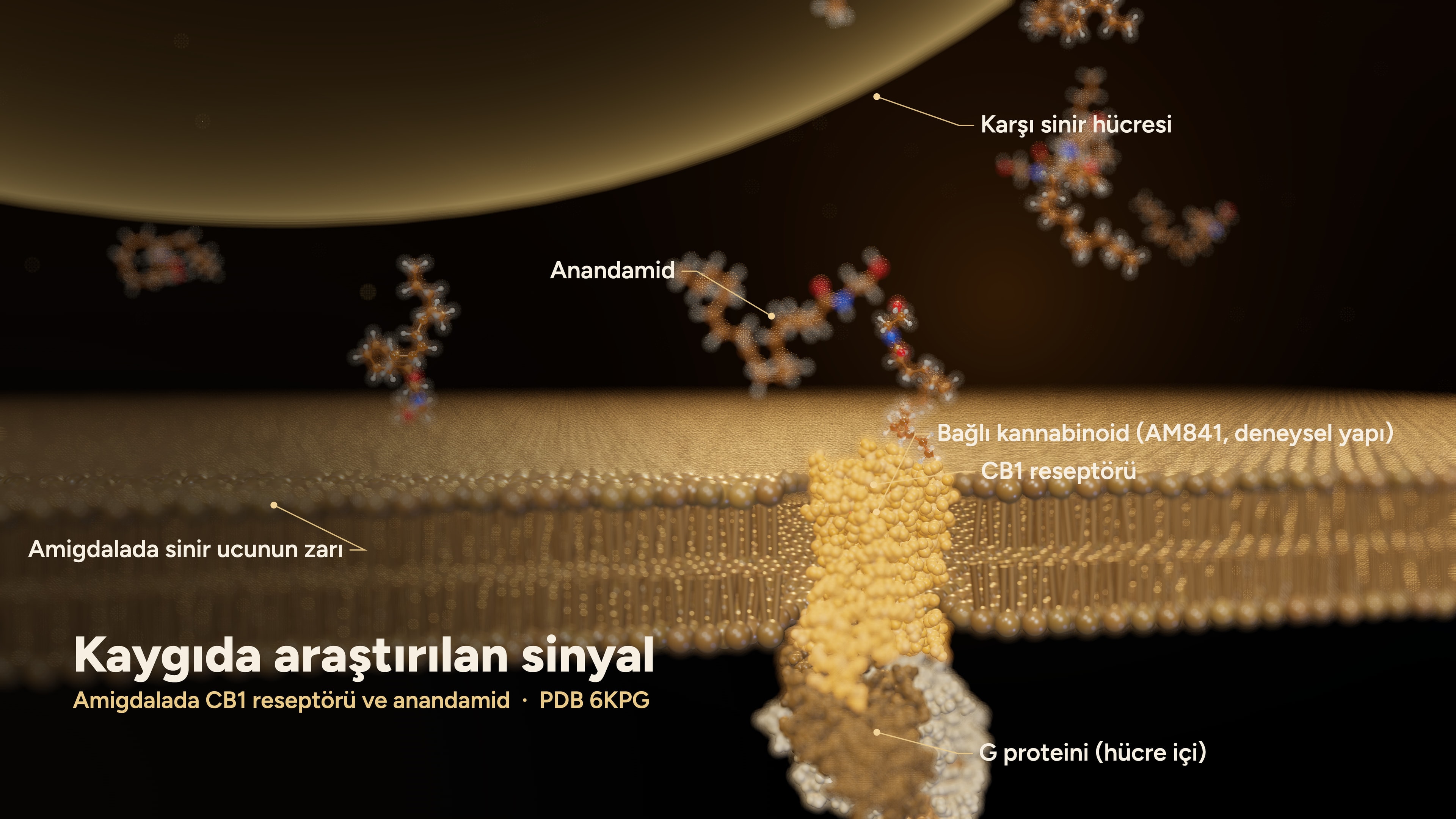
Anxiety is a feeling we all know, but sometimes it lasts for weeks and makes sleep, work and relationships harder. At times like these, it is very understandable to be curious about CBD and wonder, "could something natural help?" In this article we have gathered in plain language how CBD has been studied in different types of anxiety, what the studies found, possible side effects and the topics you can discuss with your doctor. A detailed table of the studies is on the anxiety page of the CBD Guide.
What’s in this article?9 sections
What is an anxiety disorder?
Anxiety is the body's natural alarm when it senses danger: the heart speeds up, muscles tense and the mind focuses on possible problems. When this alarm goes off often without any real danger, lasts a long time and disrupts daily life, doctors speak of an "anxiety disorder." The main types are:
- Generalized anxiety disorder: Worry about many things that lasts for months and is hard to control.
- Social anxiety disorder: Intense fear in situations such as speaking in front of others or being judged.
- Panic disorder: Sudden, short but very intense attacks of fear.
- Post-traumatic stress disorder (PTSD): Ongoing distress after a traumatic experience, with memories and nightmares.
Today these disorders are treated with psychotherapy (especially cognitive behavioral therapy) and medicines the doctor considers appropriate, such as certain antidepressants. CBD is not an alternative that replaces these treatments; it is a substance still being studied.
Why is CBD of interest for anxiety?
CBD (cannabidiol) is a substance found in the cannabis plant that, unlike THC, does not cause a high. Animal studies and experiments with healthy volunteers showed signs that it may reduce anxiety, and laboratory work suggested that it may affect some of the brain's signaling systems involved in anxiety, including the endocannabinoid system. These findings led researchers to studies in patients.
However, an effect seen in the laboratory does not mean that it reduces anxiety in humans. In a review of 87 studies covering both human and animal research, CBD had no clear effect on anxiety measures in 70.3% of observations, and no consistent relationship was found between blood CBD levels and effect (Kwee 2022).
What does the research say?
Whether a substance really works is best shown by controlled studies: participants are randomly assigned to groups, one group takes CBD and the other takes a look-alike pill with no effect (placebo), and often neither the participants nor the researchers know who is taking what. There are many studies of this kind in anxiety, most of them small; their results vary depending on the type of anxiety and how long CBD is used.
Single dose: some positive results for in-the-moment anxiety
The best-known studies were done with public speaking tests. In 24 patients with social anxiety who had not been treated before, a single dose of CBD taken before speaking reduced anxiety and discomfort during the speech more than placebo (Bergamaschi 2011). In two studies with healthy volunteers, however, only a medium dose seemed effective; lower and higher doses were no different from placebo (Zuardi 2017; Linares 2019). This "inverted U" finding could not be repeated in other anxiety settings: in university students with high test anxiety, none of three different single doses had an effect (Stanley 2023).
Use over several weeks: the results do not agree
- 178-person study in India (15 weeks): In mild to moderate anxiety disorder, anxiety scores fell clearly in the CBD group. However, the effect was much larger than in other studies, the dose used was not reported in the abstract, and the result has not been repeated by an independent team (Gundugurti 2024).
- 63 people with high levels of worry (2 weeks): Worry did not decrease at any dose; at the high dose (300 mg) there was some reduction in anxiety symptoms (Gournay 2023).
- 80 patients who had not responded to treatment: In patients with social anxiety and panic disorder, CBD taken before therapy sessions did not change the outcome of therapy any differently from placebo (Kwee 2022). This is the largest and longest controlled study in social anxiety.
No clear difference in controlled studies in PTSD
In patients with PTSD, a single dose of CBD did not reduce anxiety while recalling the trauma any differently from placebo (Bolsoni 2022). In people exposed to trauma, one week of use also did not change the anxiety and distress response to a text recalling the trauma (Gournay 2024). Positive results come only from small case series without a control group.
What do pooled analyses say?
An analysis combining eight studies (316 people) found a reduction in anxiety, but the confidence interval of the result was very wide and the authors urged caution (Han 2024). In a more recent analysis of 21 placebo-controlled studies, the pooled effect of CBD products was not significant; a moderate effect was seen only in the pure CBD subgroup. The authors summarized the evidence for social anxiety and generalized anxiety as "low quality, limited efficacy" (Raminelli 2025).
Type of anxiety | Level of evidence (pure CBD) | In brief |
|---|---|---|
The single large positive study has not been repeated; other results are mixed. | ||
A single dose reduced speaking anxiety; in the largest study, no added benefit to therapy. | ||
No positive controlled study in patients. | ||
No clear difference in controlled studies. |
Products containing THC are a separate matter
So-called "full-spectrum" products may also contain small amounts of THC. Anxiety studies with these products included only 12–14 people and had no control group; they reported a reduction in anxiety, but there was no comparison with placebo (Dahlgren 2022; Smith 2025). On the other hand, THC itself can increase anxiety: in an experiment with vaporized marijuana, THC and a THC+CBD mixture increased anxiety; adding CBD reduced anxiety somewhat but did not prevent THC-induced anxiety in those who were highly anxious at the start (Hutten 2022). For the differences between product types, see our spectrum guide.
Possible side effects and drug interactions
In short-term studies, most people tolerated CBD well, but it is not free of side effects:
- Tiredness and sleepiness: The most commonly reported complaints. In an open-label study of young people aged 12–25, 80.6% of participants had at least one side effect; the most common were tiredness, low mood and hot flashes/chills (Berger 2022).
- Liver: In a 28-day study of health care workers, liver enzymes rose in 4 people in the CBD group (one seriously), and 1 person developed a severe drug rash (Crippa 2021).
- Antidepressants: In 6 patients taking citalopram or escitalopram, adding CBD clearly raised blood levels of citalopram; in the laboratory, CBD slowed the breakdown of this medicine (Anderson 2021). For sertraline, fluoxetine and mirtazapine, the laboratory effect was very small and was not measured in patients.
- Sedatives: Levels of clobazam, which is also used as an epilepsy medicine, rise clearly with CBD (Geffrey 2015). No direct interaction study was found with other benzodiazepines such as alprazolam and clonazepam; this does not mean there is no interaction.
Extra caution is needed for people with a history of bipolar disorder or psychosis, women who are pregnant or breastfeeding, and people who drive. Details are on the drug interactions, pregnancy and breastfeeding and driving pages.
How was it used in the studies?
The information below only describes how the studies were done (study dose; not a personal recommendation):
- In the speaking tests, CBD was given by mouth as a single dose before the test (1.5 hours before in one study); doses between 100 and 900 mg were tried across studies.
- In controlled studies lasting several weeks, 50–300 mg a day was used; in the open-label study with young people, the dose was increased up to 800 mg a day.
- It cannot be said that "300 mg is the best dose": the medium dose seemed more effective only in two small studies of healthy volunteers, and this was not repeated in other situations.
These doses were given as pharmaceutical-grade pure CBD with known content. The content of products on the market may not always match the label; our label reading guide can help with this.
If you are thinking about using CBD
It is completely natural to want to try something new while trying to cope with anxiety. Before deciding, you can talk with your doctor about the following:
- All the medicines you take, especially antidepressants, sedatives and epilepsy medicines.
- Whether you have liver disease or have had raised liver tests before.
- Any history of bipolar disorder, psychosis or substance use.
- Pregnancy, breastfeeding or plans for pregnancy.
- Your access to options with proven effects, such as psychotherapy.
Do not reduce or stop your prescription medicine on your own to switch to CBD. In Turkey, cannabis-derived products, including CBD, can be sold only in pharmacies (Law No. 7557, regulation of January 31, 2026). Those classed as medicines and health products are dispensed with a prescription; no prescription requirement is stated for supplement products with a THC content of at most 0.3%. As of October 2026, there is no approved (licensed) CBD medicine in Turkey. Details are on the regulation page.
Conclusion
CBD is being studied intensively for anxiety because of promising early results, but today's evidence is weak: there are some positive signals with a single dose, and the results for long-term use are not consistent. If anxiety is making daily life hard, talking with a doctor or psychologist is the safest first step; if you are thinking about CBD, you can bring that up in that conversation too.
Frequently asked questions
Does CBD help with anxiety?
In some small studies, a single dose of CBD reduced in-the-moment anxiety, such as when speaking in public. In studies looking at use over several weeks, the results are mixed; in a study of 80 patients who had not responded to treatment, CBD added to therapy made no difference. That is why the evidence is considered weak today.
How much CBD should be used for anxiety?
We cannot recommend a personal dose; an effective and safe dose of CBD for anxiety has not been established. Studies used 100–900 mg as a single dose and 50–300 mg a day in controlled studies lasting several weeks (study dose; not a personal recommendation). It is best to discuss this with your doctor, together with the medicines you take.
Can I take CBD while using an antidepressant?
You need to assess this together with your doctor. In patients taking citalopram or escitalopram, adding CBD raised blood levels of the medicine. Interactions with other antidepressants have not been studied enough in humans; do not reduce or stop your medicine on your own.
Is full-spectrum CBD more effective for anxiety than isolate CBD?
No controlled study shows this. Anxiety studies with full-spectrum products included 12–14 people and had no placebo group. These products may contain small amounts of THC, and THC can increase anxiety in some people.
Is CBD oil sold in pharmacies in Turkey?
In Turkey, cannabis-derived products, including CBD, can be sold only in pharmacies (Law No. 7557, regulation of January 31, 2026). Those classed as medicines and health products are dispensed with a prescription; no prescription requirement is stated for supplement products with a THC content of at most 0.3%. As of October 2026, there is no approved (licensed) CBD medicine in Turkey.
References
Show 20 references
- Raminelli AO, et al. Effects of Different Cannabinoid Formulations on Anxiety-Related Disorders, and Tourette Syndrome: A Systematic Review and Meta-Analysis. Cannabis Cannabinoid Res. 2025. PMID 40956670
- Han K, et al. Therapeutic potential of cannabidiol (CBD) in anxiety disorders: A systematic review and meta-analysis. Psychiatry Res. 2024. PMID 38924898
- Kwee CM, et al. Cannabidiol in clinical and preclinical anxiety research. A systematic review into concentration-effect relations using the IB-de-risk tool. J Psychopharmacol. 2022. PMID 36239014
- Bergamaschi MM, et al. Cannabidiol reduces the anxiety induced by simulated public speaking in treatment-naïve social phobia patients. Neuropsychopharmacology. 2011. PMID 21307846
- Zuardi AW, et al. Inverted U-Shaped Dose-Response Curve of the Anxiolytic Effect of Cannabidiol during Public Speaking in Real Life. Front Pharmacol. 2017. PMID 28553229
- Linares IM, et al. Cannabidiol presents an inverted U-shaped dose-response curve in a simulated public speaking test. Braz J Psychiatry. 2019. PMID 30328956
- Stanley TB, et al. A Double-Blind, Randomized, Placebo-Controlled Test of the Effects of Cannabidiol on Experiences of Test Anxiety Among College Students. Cannabis Cannabinoid Res. 2023. PMID 35861792
- Gundugurti PR, et al. Evaluation of the efficacy, safety, and pharmacokinetics of nanodispersible cannabidiol oral solution (150 mg/mL) versus placebo in mild to moderate anxiety subjects: A double blind multicenter randomized clinical trial. Asian J Psychiatr. 2024. PMID 38797087
- Gournay LR, et al. The effects of cannabidiol on worry and anxiety among high trait worriers: a double-blind, randomized placebo controlled trial. Psychopharmacology (Berl). 2023. PMID 37552290
- Kwee CM, et al. Cannabidiol enhancement of exposure therapy in treatment refractory patients with social anxiety disorder and panic disorder with agoraphobia: A randomised controlled trial. Eur Neuropsychopharmacol. 2022. PMID 35561538
- Bolsoni LM, et al. Effects of cannabidiol on symptoms induced by the recall of traumatic events in patients with posttraumatic stress disorder. Psychopharmacology (Berl). 2022. PMID 35029706
- Gournay LR, et al. The effects of acute versus repeated cannabidiol administration on trauma-relevant emotional reactivity: A double-blind, randomized, placebo-controlled trial. J Trauma Stress. 2024. PMID 38959155
- Dahlgren MK, et al. Clinical and cognitive improvement following full-spectrum, high-cannabidiol treatment for anxiety: open-label data from a two-stage, phase 2 clinical trial. Commun Med (Lond). 2022. PMID 36352103
- Smith RT, et al. Clinical and Cognitive Improvement Following Treatment with a Hemp-Derived, Full-Spectrum, High-Cannabidiol Product in Patients with Anxiety: An Open-Label Pilot Study. Biomedicines. 2025. PMID 40868129
- Hutten NRPW, et al. Cannabis containing equivalent concentrations of delta-9-tetrahydrocannabinol (THC) and cannabidiol (CBD) induces less state anxiety than THC-dominant cannabis. Psychopharmacology (Berl). 2022. PMID 36227352
- Berger M, et al. Cannabidiol for Treatment-Resistant Anxiety Disorders in Young People: An Open-Label Trial. J Clin Psychiatry. 2022. PMID 35921510
- Crippa JAS, et al. Efficacy and Safety of Cannabidiol Plus Standard Care vs Standard Care Alone for the Treatment of Emotional Exhaustion and Burnout Among Frontline Health Care Workers During the COVID-19 Pandemic: A Randomized Clinical Trial. JAMA Netw Open. 2021. PMID 34387679
- Anderson LL, et al. Citalopram and Cannabidiol: In Vitro and In Vivo Evidence of Pharmacokinetic Interactions Relevant to the Treatment of Anxiety Disorders in Young People. J Clin Psychopharmacol. 2021. PMID 34121064
- Geffrey AL, et al. Drug-drug interaction between clobazam and cannabidiol in children with refractory epilepsy. Epilepsia. 2015. PMID 26114620
- Ministry of Health. Kenevirden Elde Edilen Ürünlere Dair Yönetmelik (Regulation on Products Derived from Hemp). Official Gazette, January 31, 2026, issue 33154. Official Gazette 33154
 Fibromyalgia and CBD: Current Research and Clinical Trials
 Cannabidiol (CBD) and Depression: The Latest Scientific Evidence
 Migraine and Cannabinoids: A 2026 Scientific Review
 NewCBD for Pain After Surgery: Randomized Trials