
CBD Spectrum Guide: The Differences Between Full-Spectrum, Broad-Spectrum and Isolate
What do full-spectrum, broad-spectrum and isolate mean? We explain how the three types differ, the research behind the "more effective together" idea, and what to know about drug testing.
By: cbd.school editorial teamUpdated: 18 sources
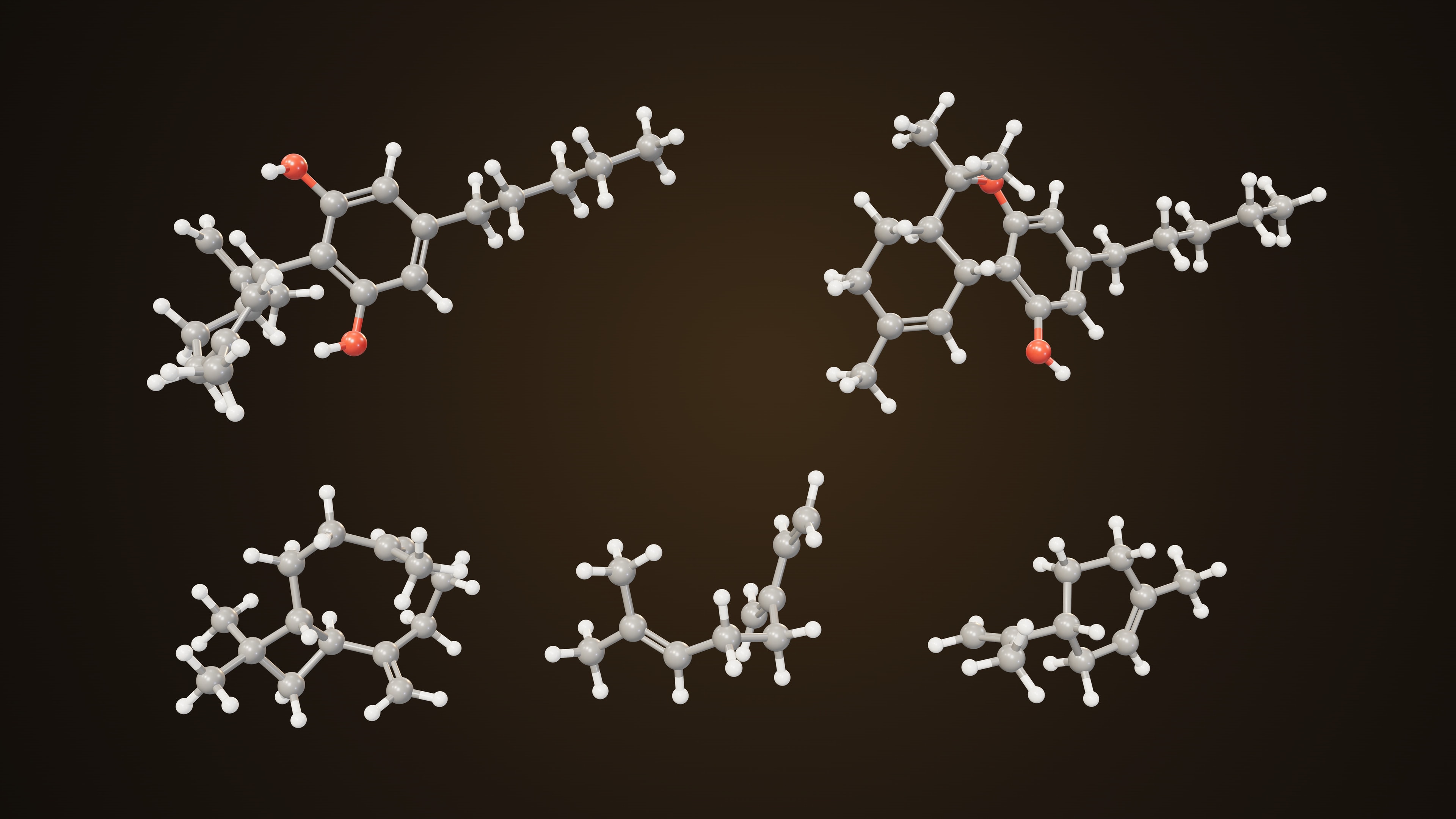
While looking at CBD products, you may have come across terms such as "full spectrum," "broad spectrum" or "isolate" and wondered what each one means. These terms describe what the product contains besides CBD, and they matter when you read a label. In this article, we explain in plain language how the three types differ, the research behind the "more effective together" idea, what to know about drug and doping tests, and the rules in Turkey.
What’s in this article?9 sections
What does "spectrum" mean?
A raw extract made from cannabis is not made up of CBD alone; it also contains other cannabinoids, terpenes that give the plant its smell, flavonoids and other compounds. More than 500 substances have been reported in cannabis; 125 of them are cannabinoids (Radwan 2021). Depending on how refined the extract is, products are sold under three names:
Full-spectrum | Broad-spectrum | Isolate | |
|---|---|---|---|
What is it said to contain? | CBD, other cannabinoids, terpenes and a small amount of THC | CBD and other plant substances; THC is said to have been removed | Purified CBD on its own |
THC | Yes (a small amount) | May be present, even if in small amounts (Gidal 2024) | Not expected to be present |
Drug and doping tests | Highest risk of testing positive | Risk is not zero | Lowest risk, but not zero |
More effective? | Controlled studies in humans have not shown that any one is more effective than another. The approved (licensed) CBD medicine is purified CBD. | ||
An important note: these terms have no binding official definition, and the type stated on the label is not always accurate. In a US study that examined 202 CBD products, 26% of the products did not match the type stated on their label (Gidal 2024). Plain explanations of terms: CBD glossary.
The "entourage effect": what does research say?
Full-spectrum products are usually marketed with an idea called the entourage effect: the notion that the substances in the plant work better together than they do on their own. This idea may sound logical, but what does the research say?
- Origin of the term: The "entourage effect" was first used in 1998, not for the plant but for cell and mouse experiments with fatty acid derivatives that the body makes itself (Ben-Shabat 1998). A 2011 review put forward the idea, based on lab data, that cannabinoids and terpenes might act together (Russo 2011).
- Observational data in epilepsy: The most often cited study is an analysis that combined 11 studies in drug-resistant epilepsy with no control group. Patients reported "improvement" more often with plant extracts (71% vs. 46%). But by the measure of seizures dropping by at least half, there was no difference between the two groups (37% vs. 42%); the authors write that the result needs to be confirmed by controlled studies (Pamplona 2018).
- Reviews: A review of the literature on this topic says the evidence that the entourage effect is a stable and predictable phenomenon is limited (Simei 2024). Another review stresses that the concept is poorly defined, rests on unproven effects, and is mostly used to sell products (Cogan 2020).
- Does CBD soften the effects of THC? This common claim isn’t supported either. In a study of 46 volunteers, adding 1–3 times as much CBD to THC did not reduce the memory impairment or the temporary psychosis-like symptoms caused by THC (Englund 2023). In a driving study, a mix with equal amounts of THC and CBD impaired driving as much as THC alone (Arkell 2020).
In short, there are not enough human studies today to say that "full-spectrum is more effective." Research is ongoing; we will update this page as new results come in.
How many drops of CBD oil?
Turn the dose your doctor prescribed into drops.
1. How many mg of CBD are in the bottle?
2. How many ml is the bottle?
3. How many mg did your doctor prescribe?
For 25 mg
5 drops
Each drop contains about 5 mg of CBD.
Your doctor decides the dose. This tool only shows how many drops that is.
For another bottle, a percentage (%) or a syringeIs the type stated on the label accurate?
Not always. When 202 CBD products in the US were examined, including products sold as full-spectrum (84), broad-spectrum (28) and isolate (37), 26% of the products did not meet the definition of the type stated on their label, and in 74%, the amount of CBD differed from the label by at least 10% (Gidal 2024). Three of this study’s authors work at the company that makes the approved CBD medicine, but the findings point in the same direction as independent studies. Of 29 CBD products sold in the UK, the amount of CBD was within 10% of the label in only 38%, and controlled THC or CBN was measured in 55% of the products (Liebling 2022). That’s why you need to tell a product’s type from the certificate of analysis for the same batch, not from the word on the label.
Drug and doping tests
Urine tests look for THC, not CBD. That’s why the type of product matters for testing:
- Full-spectrum: In one study, an oil containing only 0.5 mg of THC led to a positive urine test with regular use (Wolinsky 2026).
- Broad-spectrum: In the urine of volunteers who used a broad-spectrum product for 10 weeks, CBG and CBDV, which the World Anti-Doping Agency (WADA) banned at the time, were detected; exercise increased these levels (Gillham 2026).
- Isolate: The risk is lowest but not zero; in the same study, one urine sample also came back positive in one of 10 people taking pure CBD (Wolinsky 2026). Labeling errors also increase the risk: THC was found in 21% of 84 CBD products bought online (Bonn-Miller 2017).
WADA does not ban CBD; THC, however, is banned in competition (WADA 2027 list). More: drug testing, athletes and CBD.
Possible side effects and drug interactions
Because all three types contain CBD, CBD’s known side effects and interactions apply to all of them: drowsiness, diarrhea and decreased appetite can occur; by slowing down how some medicines are broken down in the liver, CBD can change the blood levels of clobazam, valproate, warfarin and some organ transplant medicines (Epidiolex label). In addition, products containing THC can cause a high and make driving risky (Arkell 2020). For the medicine you take: check CBD drug interactions. All safety topics: Is CBD oil safe?
If you are thinking about using CBD
On this site, we don’t recommend products or types; it’s best to talk with your doctor about which product might be right for you. When you talk, these points can help:
- All the medicines and supplements you take, and your liver health
- Whether you have concerns about drug or doping tests because of your job, your sport or driving
- Whether you are pregnant or breastfeeding
- Whether THC, THCA and other cannabinoids were measured in an independent lab’s certificate of analysis for the same batch of the product: how to read a label?
In Turkey, cannabis-derived products, including CBD, can be sold only in pharmacies (Law No. 7557; regulation of January 31, 2026). Those classed as medicines and health products are dispensed with a prescription; for supplement products with a THC content of no more than 0.3%, no prescription requirement is stated. As of October 2026, there is no approved (licensed) CBD medicine in Turkey (TİTCK, the Turkish Medicines and Medical Devices Agency). Products sold online and outside pharmacies are outside the legal sales channel. More: CBD regulations in Turkey.
Conclusion
Full-spectrum, broad-spectrum and isolate are terms that describe how refined a CBD extract is; the real difference is whether THC and other cannabinoids are present. The idea that the substances in the plant work better together has not yet been proven in humans; the testing risk of products containing THC, on the other hand, is clearly known. When assessing a product, the healthiest approach is to look at the certificate of analysis rather than the type on the label, and to make the decision with your doctor. To learn more: What is CBD oil?
This article is for information only; it is not a diagnosis or treatment recommendation. We don’t sell products or recommend products or brands. How we prepare our content: Editorial Policy. If you spot an error, write to [email protected] .
Frequently asked questions
What do full-spectrum, broad-spectrum and isolate mean?
These terms describe how refined a CBD extract is. Full-spectrum contains other cannabinoids and a small amount of THC alongside CBD; in broad-spectrum, THC is said to have been removed; and isolate is purified CBD on its own. They have no binding official definitions.
Is full-spectrum CBD more effective?
There are not enough human studies to show this. In an analysis combining uncontrolled data in epilepsy, there was no difference between plant extracts and pure CBD by the measure of seizures dropping by at least half. Reviews say the 'entourage effect' should not be presented as a proven fact.
Can a broad-spectrum product cause problems on a drug or doping test?
It can. Broad-spectrum products may also contain small amounts of THC; in one study, CBG and CBDV, which WADA banned at the time, were detected in the urine of people who used a broad-spectrum product for 10 weeks. If testing matters to you, talk about this with your doctor and check the certificate of analysis.
Can a test never come back positive with CBD isolate?
The risk is lowest but not zero. In one study, a urine sample came back positive in one of 10 people taking pure CBD; labeling errors also increase the risk. For no CBD product can anyone say "you will definitely test clean."
Which CBD products can be sold in Turkey?
Cannabis-derived products, including CBD, can be sold only in pharmacies (Law No. 7557, regulation of January 31, 2026). Those classed as medicines and health products are dispensed with a prescription; for supplement products with a THC content of no more than 0.3%, no prescription requirement is stated. As of October 2026, there is no approved (licensed) CBD medicine in Turkey.
References
Show 18 references
- Radwan MM, et al. Cannabinoids, Phenolics, Terpenes and Alkaloids of Cannabis. Molecules. 2021. PMID 34066753
- Gidal BE, et al. Product labeling accuracy and contamination analysis of commercially available cannabidiol product samples. Front Pharmacol. 2024. PMID 38562466
- Ben-Shabat S, et al. An entourage effect: inactive endogenous fatty acid glycerol esters enhance 2-arachidonoyl-glycerol cannabinoid activity. Eur J Pharmacol. 1998. PMID 9721036
- Russo EB. Taming THC: potential cannabis synergy and phytocannabinoid-terpenoid entourage effects. Br J Pharmacol. 2011. PMID 21749363
- Pamplona FA, et al. Potential Clinical Benefits of CBD-Rich Cannabis Extracts Over Purified CBD in Treatment-Resistant Epilepsy: Observational Data Meta-analysis. Front Neurol. 2018. PMID 30258398
- Simei JLQ, et al. Does the "Entourage Effect" in Cannabinoids Exist? A Narrative Scoping Review. Cannabis Cannabinoid Res. 2024. PMID 37535820
- Cogan PS. The 'entourage effect' or 'hodge-podge hashish': the questionable rebranding, marketing, and expectations of cannabis polypharmacy. Expert Rev Clin Pharmacol. 2020. PMID 32116073
- Englund A, et al. Does cannabidiol make cannabis safer? A randomised, double-blind, cross-over trial of cannabis with four different CBD:THC ratios. Neuropsychopharmacology. 2023. PMID 36380220
- Arkell TR, et al. Effect of Cannabidiol and Δ9-Tetrahydrocannabinol on Driving Performance: A Randomized Clinical Trial. JAMA. 2020. PMID 33258890
- Liebling JP, et al. An Analysis of Over-the-Counter Cannabidiol Products in the United Kingdom. Cannabis Cannabinoid Res. 2022. PMID 33998849
- Wolinsky D, et al. The acute and chronic pharmacokinetics and pharmacodynamics of oral cannabidiol with and without low doses of delta-9-tetrahydrocannabinol. J Anal Toxicol. 2026. PMID 40704705
- Gillham SH, et al. Daily Use of a Broad-Spectrum Cannabidiol Supplement Produces Detectable Concentrations of Cannabinoids in Urine Prohibited by the World Anti-Doping Agency: An Effect Amplified by Exercise. Med Sci Sports Exerc. 2026. PMID 40920736
- Bonn-Miller MO, et al. Labeling Accuracy of Cannabidiol Extracts Sold Online. JAMA. 2017. PMID 29114823
- WADA. 2027 Prohibited List.
- US FDA / DailyMed. EPIDIOLEX (cannabidiol) prescribing information, revision 05/2026.
- Law No. 7557. Official Gazette 32965, July 24, 2025.
- Ministry of Health of the Republic of Turkey. Kenevirden Elde Edilen Ürünlere Dair Yönetmelik (Regulation on Products Derived from Hemp). Official Gazette 33154, January 31, 2026.
- TİTCK (Turkish Medicines and Medical Devices Agency). List of Licensed Human Medicinal Products (October 16, 2026).
 What Are CBD Edibles? When Do They Start Working?
 CBD Creams: What Do They Do, and What Are the Side Effects?
 What Is Hemp Seed Oil? Nutrition Facts and Side Effects
 Topical CBD and Skin Conditions: Research on Hives and Eczema