
Epilepsy and Cannabidiol: Scientific Evidence and Clinical Use
Epilepsy is the area where CBD has raised the most hope and has been studied best. In plain language, we explain which epilepsies the approved CBD medicine helps and by how much, how it differs from CBD oils, and how it can be obtained in Turkey.
By: cbd.school editorial teamUpdated: 18 sources
Quick check
This article follows our editorial policy.
- We don't sell products, recommend brands or give personal doses.
- We base health information on peer-reviewed studies or official bodies. When the evidence is weak, we say so plainly: How do we rate the strength of evidence?
- If you spot an error, write to us through the contact form. We check it against the source, correct it if it is wrong, and update the page date.
Details: Editorial Policy. Our content is for information only; it does not replace diagnosis or treatment.
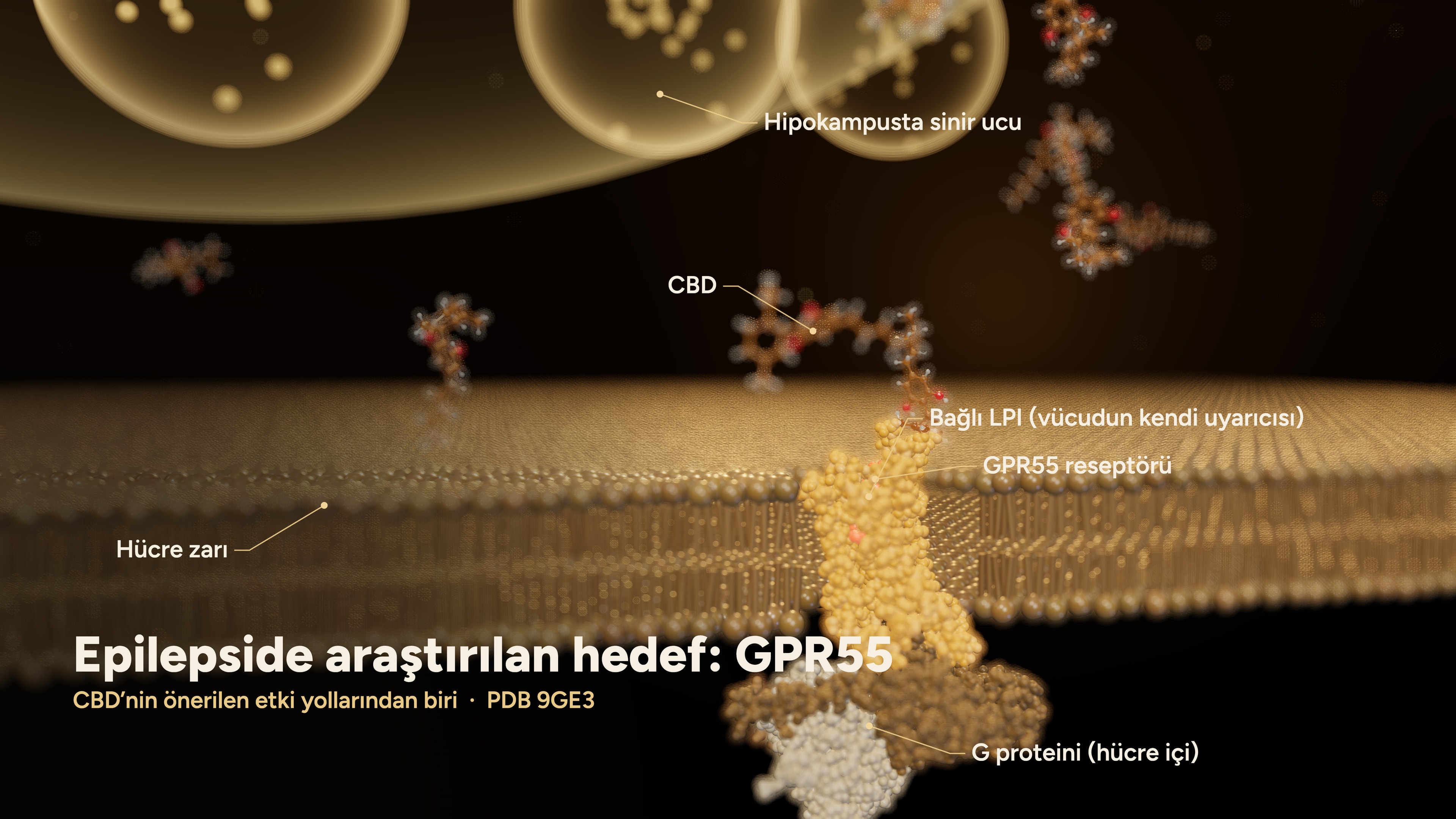
Seizures that continue despite medication are very hard on patients and on the families who care for them. That is why many families who hear about CBD's success in epilepsy look into it with hope. In this article we explain in plain language which epilepsies the approved CBD medicine has been found to help and how much, how it differs from the CBD oils on the market, its side effects, and how it can be obtained in Turkey. The study tables are on the CBD Guide's epilepsy pages.
What’s in this article?10 sections
What are drug-resistant epilepsy and these syndromes?
In some people with epilepsy, seizures continue even after well-chosen medicines have been tried; this is called drug-resistant epilepsy. The three conditions for which the CBD medicine is approved belong to this group:
- Dravet syndrome: A genetic epilepsy that starts in infancy, with drug-resistant seizures and developmental difficulties.
- Lennox–Gastaut syndrome: A severe epilepsy that starts in childhood, with many seizure types, including "drop seizures" that cause sudden falls.
- Tuberous sclerosis complex: A genetic disease that causes benign growths in the brain and other organs and often comes with epilepsy.
Is the approved CBD medicine the same as CBD oil?
No. The medicine used in the studies is an oral solution, extracted from the plant and purified, with 100 mg of CBD in every milliliter. It is approved as an add-on treatment for these three conditions from age 1 in the US and from age 2 in the European Union; in Europe it is approved for use together with a drug called clobazam in Dravet and Lennox–Gastaut syndromes (EMA). Because it is made to pharmaceutical quality, its content is standardized, and it is also checked for THC and contaminants.
In CBD oils on the market, by contrast, the amount of CBD may not match the label, and the product may contain THC or contaminants. So the results obtained with the medicine cannot be carried over to these products. For more on what these products contain, see our What is CBD oil? article.
What does the research say?
The approval rests on controlled studies: patients were randomly assigned to groups; one group took the CBD medicine on top of their usual drugs, the other took a liquid that looked the same but had no active ingredient (placebo), and neither the families nor the doctors knew who was taking what.
Dravet syndrome
- 120 patients, 14 weeks: The median number of convulsive seizures per month fell from 12.4 to 5.9 in the CBD group and from 14.9 to 14.1 in the placebo group. The share of patients whose seizures dropped by half or more was 43% versus 27%; the share who became completely seizure-free was 5% versus 0% (Devinsky 2017).
- 199 patients, 14 weeks: Convulsive seizures fell by 48.7% and 45.7% in two different dose groups and by 26.9% in the placebo group (Miller 2020).
Lennox–Gastaut syndrome
- 225 patients, 14 weeks: Drop seizures fell by 41.9% and 37.2% in the two dose groups and by 17.2% in the placebo group (Devinsky 2018).
- 171 patients, 14 weeks: Drop seizures fell by 43.9% in the CBD group and by 21.8% in the placebo group (Thiele 2018).
Tuberous sclerosis complex
In a single controlled study of 224 patients, seizures fell over 16 weeks by 48.6% and 47.5% in the two dose groups and by 26.5% in the placebo group. The higher dose gave no extra benefit but increased side effects (Thiele 2021). Because the evidence rests on one study, it is rated moderate.
Realistic expectations
In an analysis combining four studies (550 patients), the share of patients whose seizures fell by more than half was 37.2% with CBD and 21.2% with placebo (Lattanzi 2018). In other words, the medicine clearly reduces seizures in many patients, but not in everyone; becoming completely seizure-free is rare. The fact that seizures also fell in the placebo group shows why comparative studies matter. All of these studies lasted 14–16 weeks and were funded by the manufacturer.
Condition | Strength of evidence | In short |
|---|---|---|
In two controlled studies, seizures fell more than with placebo. | ||
In two controlled studies, drop seizures fell more than with placebo. | ||
In one controlled study, seizures fell more than with placebo. | ||
Only studies without a comparison group; not approved. | ||
Response rate at placebo level; seizure increases have been reported. |
Other drug-resistant epilepsies
In other drug-resistant epilepsies, the CBD medicine has only been tried in open-label studies without a comparison group. For example, in a study of 137 patients whose response was assessed, motor seizures fell by a median of 36.5% over 12 weeks (Devinsky 2016); a larger expanded access program reported similar reductions (Szaflarski 2018). But since seizures also fell by about 17–27% in the placebo groups of the controlled studies, these results alone cannot be counted as an effect of the medicine. There is no approval for these epilepsies.
Unregulated CBD and cannabis oils
Data on oils that families obtain on their own come mostly from retrospective parent reports. In one such study, 47% of families who had moved to Colorado for this treatment reported a 50% drop in seizures, compared with 22% of families who already lived there; this gap suggests that expectations can affect the results. In the same study, 13% of children were reported to have more seizures (Press 2015). Among 21 children followed prospectively, the response rate was 24%; the authors found this similar to placebo rates in controlled studies, and the oil was stopped early in 3 children because their seizures were thought to have increased (Knupp 2019). In 17 of 58 product samples used in Australia, solvent residues were above the accepted limit (Suraev 2022).
Possible side effects and drug interactions
- Common side effects: Sleepiness, decreased appetite, diarrhea, fever, vomiting and fatigue. The share of people who stopped the medicine because of side effects was 8.9% with CBD and 1.8% with placebo (Lattanzi 2018).
- Liver: In the tuberous sclerosis study, liver enzymes rose in 18.9% of those taking CBD and in none of the placebo group (Thiele 2021). In one Dravet study, all patients whose liver enzymes rose were also taking valproate (Miller 2020). That is why liver tests are done regularly before and during treatment (EMA).
- Clobazam: In 13 children who added CBD, the blood level of clobazam rose by an average of 60% and that of its active byproduct by 500%; side effects seen in 10 children went away when the clobazam dose was lowered (Geffrey 2015).
- Everolimus and sirolimus: Blood levels of these drugs, used in tuberous sclerosis, rose significantly in 76% of 25 patients who added CBD; in some they doubled or tripled (Ebrahimi-Fakhari 2020).
- Stopping suddenly: The medicine is stopped by tapering it gradually; stopping suddenly can increase seizures (EMA).
For other interactions, see the drug interactions page and our article on CBD and the liver.
How was it used in the studies?
For this medicine, the dose is calculated in milligrams per kilogram of body weight per day. The following are only the doses used in studies (study doses; not a personal recommendation):
- In the Dravet and Lennox–Gastaut studies, 10 or 20 mg per kilogram per day was given, split into two doses; the two doses had similar effects, and the lower dose was better tolerated.
- In the tuberous sclerosis study, 25 or 50 mg per kilogram per day was used; the higher dose gave no extra benefit.
In approved use, the neurologist sets the dose, adjusts it gradually over several weeks and monitors it with blood tests. Trying to reach these doses with oils on the market is not safe, because their content is uncertain.
How can this medicine be obtained in Turkey?
The approved medicines list of TİTCK (Turkish Medicines and Medical Devices Agency) dated October 16, 2026, includes no medicine containing CBD. A medicine not licensed in Turkey can, however, be imported through an official route:
- The patient's doctor applies to TİTCK.
- The first application requires a health board report from a tertiary care hospital, signed by three physicians, at least one of them from the relevant specialty.
- This route is for patients for whom the approved treatments in Turkey have been tried or cannot be used.
- If approved, the medicine is supplied on prescription through authorized bodies such as the Turkish Pharmacists' Association or SGK (Social Security Institution).
TİTCK's list of active substances imported from abroad (September 28, 2026) includes "cannabidiol oral solution"; it is among the drugs that require a red prescription (the controlled-drug prescription in Turkey) and cannot be imported without TİTCK's written approval.
In Turkey, cannabis-derived products, including CBD, can be sold only in pharmacies (Law No. 7557, regulation of January 31, 2026). Those classed as medicines or health products are dispensed on prescription; no prescription requirement is stated for supplement products with at most 0.3% THC. As of October 2026, there is no approved CBD medicine in Turkey. Details are on our regulations page.
If you are considering CBD
The neurologist who follows you or your child is best placed to judge whether the CBD medicine is suitable. Topics you can discuss at the appointment:
- Whether the diagnosis matches one of the approved uses (Dravet, Lennox–Gastaut, tuberous sclerosis).
- All the medicines being taken, especially clobazam, valproate, stiripentol, everolimus and sirolimus.
- How and how often liver tests will be monitored.
- How the application process for importing the medicine will work.
Do not reduce or stop your epilepsy medicines on your own. Unregulated CBD oils are not a substitute for the approved medicine; if you use one, be sure to tell your neurologist.
Conclusion
Added to existing treatment, the approved CBD medicine reduces seizures, with strong evidence in Dravet and Lennox–Gastaut syndromes and moderate evidence in tuberous sclerosis complex; this is the only area where CBD's effect has been shown. The same result does not apply to the CBD oils on the market. Although the medicine is not licensed in Turkey, it can be imported on a doctor's application with TİTCK approval.
Frequently asked questions
Does CBD cure epilepsy?
It does not make epilepsy go away. Added to existing drugs, the approved CBD medicine reduced seizures more than placebo in Dravet and Lennox–Gastaut syndromes and in tuberous sclerosis complex. Becoming completely seizure-free is rare, and some patients see no benefit.
Can CBD oil from the market replace epilepsy medicine?
No. The study results belong to the approved medicine, whose content and dose are standardized. In studies of unregulated oils, the response rate stayed at placebo level, some children were reported to have more seizures, and contaminants were found in some products.
Does the CBD medicine interact with other epilepsy drugs?
Yes, some interactions are well known. CBD clearly raises the blood levels of clobazam and its active byproduct; liver enzyme increases are more common when it is taken with valproate; and everolimus and sirolimus levels can also rise. That is why treatment is monitored by a neurologist and with blood tests.
How can the CBD medicine be obtained in Turkey?
As of October 2026, there is no approved CBD medicine in Turkey. An unlicensed medicine can be imported after the patient's doctor applies to TİTCK and approval is given; the first application requires a health board report from a tertiary care hospital. If approved, the medicine is supplied on prescription through authorized bodies.
Is CBD oil sold in pharmacies in Turkey?
In Turkey, cannabis-derived products, including CBD, can be sold only in pharmacies (Law No. 7557, regulation of January 31, 2026). Those classed as medicines or health products are dispensed on prescription; no prescription requirement is stated for supplement products with at most 0.3% THC. As of October 2026, there is no approved CBD medicine in Turkey.
References
Show 18 references
- Devinsky O, et al. Trial of Cannabidiol for Drug-Resistant Seizures in the Dravet Syndrome. N Engl J Med. 2017. PMID 28538134
- Miller I, et al. Dose-Ranging Effect of Adjunctive Oral Cannabidiol vs Placebo on Convulsive Seizure Frequency in Dravet Syndrome: A Randomized Clinical Trial. JAMA Neurol. 2020. PMID 32119035
- Devinsky O, et al. Effect of Cannabidiol on Drop Seizures in the Lennox-Gastaut Syndrome. N Engl J Med. 2018. PMID 29768152
- Thiele EA, et al. Cannabidiol in patients with seizures associated with Lennox-Gastaut syndrome (GWPCARE4): a randomised, double-blind, placebo-controlled phase 3 trial. Lancet. 2018. PMID 29395273
- Thiele EA, et al. Add-on Cannabidiol Treatment for Drug-Resistant Seizures in Tuberous Sclerosis Complex: A Placebo-Controlled Randomized Clinical Trial. JAMA Neurol. 2021. PMID 33346789
- Lattanzi S, et al. Efficacy and Safety of Cannabidiol in Epilepsy: A Systematic Review and Meta-Analysis. Drugs. 2018. PMID 30390221
- Devinsky O, et al. Cannabidiol in patients with treatment-resistant epilepsy: an open-label interventional trial. Lancet Neurol. 2016. PMID 26724101
- Szaflarski JP, et al. Long-term safety and treatment effects of cannabidiol in children and adults with treatment-resistant epilepsies: Expanded access program results. Epilepsia. 2018. PMID 29998598
- Press CA, et al. Parental reporting of response to oral cannabis extracts for treatment of refractory epilepsy. Epilepsy Behav. 2015. PMID 25845492
- Knupp KG, et al. Prospective evaluation of oral cannabis extracts in children with epilepsy. Seizure. 2019. PMID 31550641
- Suraev A, et al. Determination of contaminants in artisanal cannabis products used for childhood epilepsy in the Australian community: A sub-analysis of the 'PELICAN' study. Epilepsy Behav. 2022. PMID 34954507
- Geffrey AL, et al. Drug-drug interaction between clobazam and cannabidiol in children with refractory epilepsy. Epilepsia. 2015. PMID 26114620
- Ebrahimi-Fakhari D, et al. Cannabidiol Elevates Mechanistic Target of Rapamycin Inhibitor Levels in Patients With Tuberous Sclerosis Complex. Pediatr Neurol. 2020. PMID 31924480
- European Medicines Agency. Epidyolex (cannabidiol): EPAR – product information. EMA EPAR
- Regulation on the Supply of Medicines from Abroad. mevzuat.gov.tr. Legislation No 40063
- TİTCK. List of Active Substances Supplied from Abroad (September 28, 2026).
- TİTCK. List of Licensed Medicinal Products for Human Use (October 16, 2026).
- Ministry of Health. Kenevirden Elde Edilen Ürünlere Dair Yönetmelik (Regulation on Products Derived from Hemp). Official Gazette, January 31, 2026, issue 33154. Official Gazette 33154
 Anxiety and Cannabidiol (CBD): What Does the Research Say?
 Fibromyalgia and CBD: Current Research and Clinical Trials
 Cannabidiol (CBD) and Depression: The Latest Scientific Evidence
 Migraine and Cannabinoids: A 2026 Scientific Review