
Venous Insufficiency and CBD: The Research
We explain in plain language why CBD is being studied in relation to blood vessels for heavy, swollen legs, and where human studies stand today.
By: cbd.school editorial teamUpdated: 11 sources
Quick check
This article is prepared according to our editorial policy.
- We do not sell products, recommend brands or give personal doses.
- We base health information on peer-reviewed studies or official bodies. When the evidence is weak, we say so clearly: How do we rate the strength of evidence?
- If you spot an error, write to us through the contact form. We check it against the source, correct it if it is right, and update the page's date.
Details: Editorial Policy. Our content is for information only; it does not replace diagnosis or treatment.
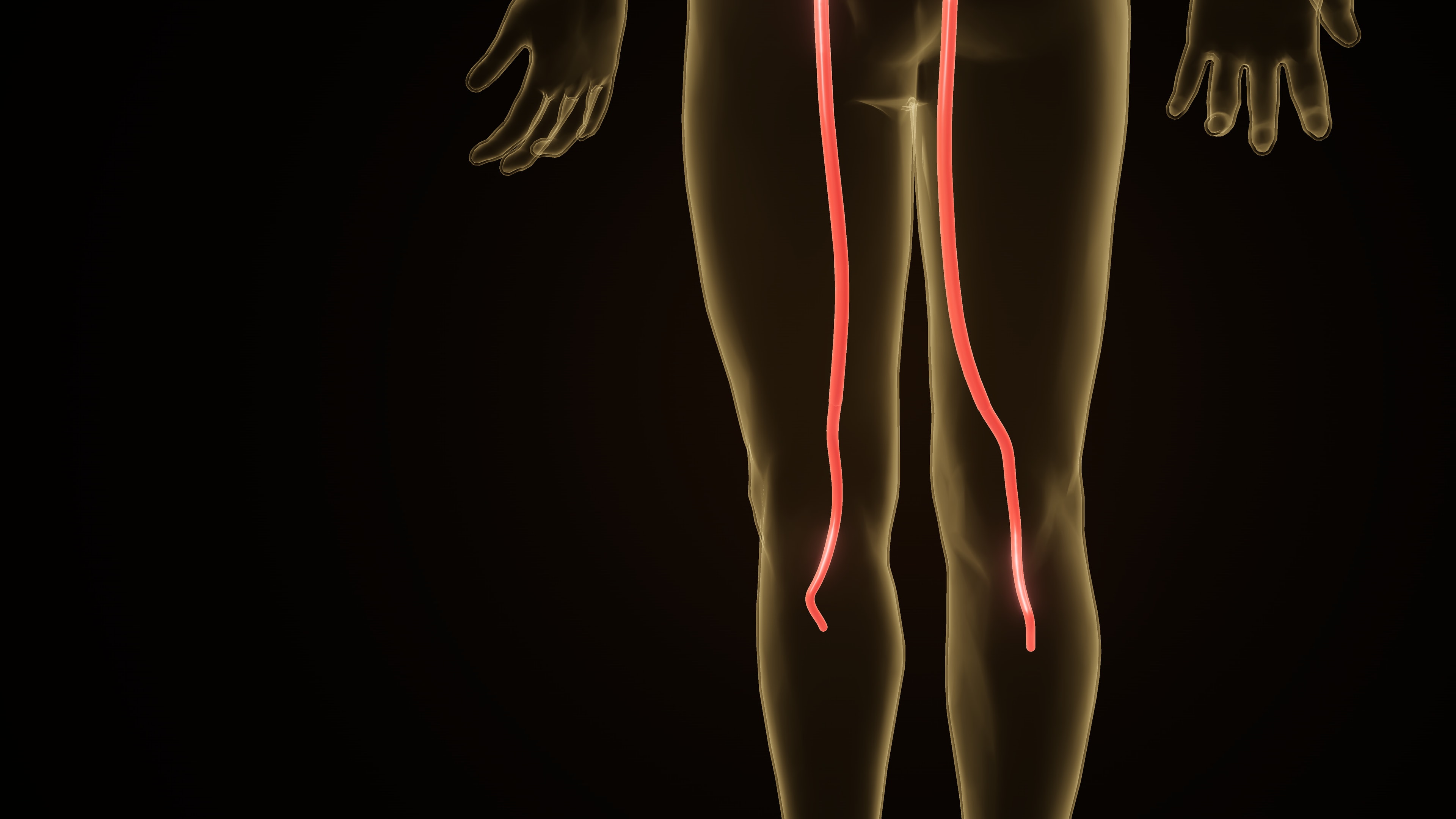
Legs that feel heavy, swollen and achy by evening; varicose veins that become more noticeable over time... Venous insufficiency is a common problem that quietly makes daily life harder. So it is very understandable to wonder about CBD as a natural option to ease the veins. In this article, we have gathered what venous insufficiency is, why CBD is being studied in relation to blood vessels, what human studies show, the possible side effects, and topics you can discuss with your doctor. A summary of studies on the heart and blood vessels is on the blood pressure and cardiovascular page of the CBD Guide.
What’s in this article?9 sections
What is venous insufficiency?
The job of the leg veins is to carry blood back to the heart against gravity. Inside these veins are small valves that stop blood from flowing backward. When the valves do not close properly, or when a vein is damaged by a clot, blood starts to pool in the legs. This is called chronic venous insufficiency.
Symptoms vary from person to person:
- Heaviness, tiredness, pain and cramps in the legs,
- Swelling around the ankles, especially in the evening,
- Varicose veins and fine spider veins,
- Later on, skin discoloration, hardening and itching,
- In some people, slow-healing sores around the ankle (venous ulcers).
Treatment for venous insufficiency is planned with a vascular specialist. In 2022, the European Society for Vascular Surgery published a comprehensive guideline on managing diseases of the leg veins (De Maeseneer 2022). Compression therapy (stockings or bandages that apply pressure) is one of the core evidence-based treatments, especially for leg ulcers; procedures and medicines are also used alongside it.
Why are people curious about CBD for blood vessels?
CBD (cannabidiol) is a substance found in the cannabis plant that does not make you high or cloud your thinking. According to a review summarizing laboratory and animal studies, CBD relaxed isolated arteries; reduced the damage that high blood sugar, inflammation or diabetes caused to blood vessels in animals; and also showed effects on white blood cells and platelets. The review's authors attribute much of these effects to CBD's anti-inflammatory and antioxidant properties (Stanley 2013).
The same review stresses that it is not yet known whether these results also occur in people. In addition, most of the studies concern arteries and the heart, not the vein valves that are the core problem in venous insufficiency.
What does the research say?
No direct studies in venous insufficiency
In a PubMed search we carried out on October 20, 2026, we found no human study of CBD in venous insufficiency or varicose veins. So there are no data today showing that CBD reduces leg swelling, the feeling of heaviness or varicose veins; this question is still waiting to be studied.
Small studies on blood pressure
In the area of the heart and blood vessels, what has been studied most in people is CBD's effect on blood pressure. In these studies, participants were assigned to groups by chance, and one group received CBD while the other received an inactive pill (placebo):
- Healthy men, single dose (Jadoon 2017): In 9 people, a single dose of CBD lowered resting systolic blood pressure by about 6 mmHg; heart rate, however, went up.
- Healthy men, 7 days (Sultan 2020): In 26 people, the drop seen with the first dose disappeared by the end of a week of use; the body seemed to have adapted. The drop in blood pressure under stress, however, persisted.
- Mild to moderate high blood pressure (Dujic 2024): In 70 patients, 24-hour systolic blood pressure fell by an average of 4.76 mmHg. Increasing the dose gave no extra benefit; arterial stiffness did not change.
These effects are small, and in some studies short-lived. There are no data showing an effect on outcomes such as heart attack or stroke, and no conclusion about vein disease can be drawn from these studies.
Venous leg ulcers: a preliminary study
In a small study in Canada, cannabis-derived creams were applied every other day, along with bandages, to 14 patients with an average age of 76 whose leg ulcers had not healed despite compression therapy. In 11 of the patients (79%), the wound closed completely within a median of 34 days; the remaining three patients dropped out of follow-up (Maida 2021). The result looks promising, but the study had no comparison group, the patients also continued compression, and the authors state that controlled studies are needed. It is also noted that the study's first author held a role at a company developing such wound treatments. A review of 18 studies on cannabis products and wounds also stresses that human studies are few and small and that higher-quality research is needed (Niyangoda 2024). We cover what is known about wounds separately in our article on wound healing and CBD.
Possible side effects and drug interactions
CBD was well tolerated in most studies; however, care is needed because of some medicines that people with venous insufficiency often take.
- Blood thinners: People who have had a clot in the leg (deep vein thrombosis) often take blood thinners. In patients taking warfarin, the clotting value (INR) was reported to rise after starting CBD, and the warfarin dose had to be lowered (Grayson 2018, Cortopassi 2020). There are no clinical data with other blood thinners.
- Blood pressure medicines: Because CBD can lower blood pressure by a few mmHg, people taking blood pressure medicine or with low blood pressure may experience dizziness.
- Liver: In a controlled study of healthy adults, liver enzymes exceeded 3 times the normal level in 5.6% of those taking 5 mg of CBD per kilogram of body weight a day (Florian 2025).
- Other: In studies of the approved CBD medicine, the most common side effects were sleepiness, decreased appetite and diarrhea.
Details are on the drug interactions page.
How was it used in studies?
In the blood pressure studies, CBD was given by mouth: 600 mg as a single dose (Jadoon 2017), 600 mg a day for one week (Sultan 2020) and 225–450 mg a day in 5-week periods (Dujic 2024). In the leg ulcer study, the creams were applied to the wound and the surrounding skin every other day when the compression bandage was changed. These are study doses, not personal recommendations. No CBD dose has been established for venous insufficiency.
If you are thinking about using CBD
It is very natural to want to try something new for your leg symptoms. Before deciding, you can talk with your doctor about:
- Whether you take blood thinners, blood pressure medicines or heart medicines.
- Whether you have had a clot in your leg before.
- If you have a leg ulcer, your compression therapy and wound care plan.
- Whether you have liver disease or raised liver test results.
Do not stop your compression stockings or your blood thinner on your own to switch to CBD. In Turkey, cannabis-derived products, including CBD, may be sold only in pharmacies (Law No. 7557; regulation of January 31, 2026). Those classed as medicines or health products are dispensed with a prescription; the regulation does not state a prescription requirement for supplement products with a THC content of at most 0.3%. As of October 2026, there is no approved (licensed) CBD medicine in Turkey. For details, see our regulations page.
Conclusion
CBD's effects on blood vessels are intriguing in the laboratory, but they have not been tested in people with venous insufficiency. The small effects on blood pressure and a preliminary study in leg ulcers show where research might look; controlled studies are needed for a firm conclusion. For your symptoms, the soundest path today is to make a treatment plan that suits you together with your vascular specialist.
Frequently asked questions
Does CBD help varicose veins?
No study shows this. We found no human study of CBD in varicose veins or venous insufficiency. The findings on blood vessels come mostly from laboratory and animal experiments.
Does CBD cream reduce leg swelling?
We don't know; no study has measured this. In a small study of cannabis-derived creams in leg ulcers that had not healed despite compression, most ulcers closed, but there was no comparison group and swelling was not assessed separately.
I take a blood thinner. Can I take CBD?
Ask your doctor first. In patients taking warfarin, the clotting value (INR) was reported to rise after starting CBD, and the dose had to be lowered. There are no clinical data with other blood thinners; do not change your medicine on your own.
Does CBD lower blood pressure?
In small studies, CBD lowered systolic blood pressure by a few mmHg; in healthy men, this effect disappeared within a week. This is not evidence of a treatment, but it matters because it may cause dizziness in people taking blood pressure medicine.
Where can you buy CBD products in Turkey?
In Turkey, cannabis-derived products, including CBD, may be sold only in pharmacies (Law No. 7557; regulation of January 31, 2026). Those classed as medicines or health products are dispensed with a prescription; the regulation does not state a prescription requirement for supplement products with a THC content of at most 0.3%. As of October 2026, there is no approved (licensed) CBD medicine in Turkey.
References
Show 11 references
- Stanley CP, et al. Is the cardiovascular system a therapeutic target for cannabidiol? Br J Clin Pharmacol. 2013. PMID 22670794
- De Maeseneer MG, et al. European Society for Vascular Surgery (ESVS) 2022 Clinical Practice Guidelines on the Management of Chronic Venous Disease of the Lower Limbs. Eur J Vasc Endovasc Surg. 2022. PMID 35027279
- Jadoon KA, et al. A single dose of cannabidiol reduces blood pressure in healthy volunteers in a randomized crossover study. JCI Insight. 2017. PMID 28614793
- Sultan SR, et al. The effects of acute and sustained cannabidiol dosing for seven days on the haemodynamics in healthy men: A randomised controlled trial. Br J Clin Pharmacol. 2020. PMID 32128848
- Dujic G, et al. Chronic Effects of Oral Cannabidiol Delivery on 24-h Ambulatory Blood Pressure in Patients with Hypertension (HYPER-H21-4): A Randomized, Placebo-Controlled, and Crossover Study. Cannabis Cannabinoid Res. 2024. PMID 37093160
- Maida V, et al. Topical cannabis-based medicines - A novel adjuvant treatment for venous leg ulcers: An open-label trial. Exp Dermatol. 2021. PMID 34013652
- Niyangoda D, et al. Cannabinoids in Integumentary Wound Care: A Systematic Review of Emerging Preclinical and Clinical Evidence. Pharmaceutics. 2024. PMID 39204426
- Grayson L, et al. An interaction between warfarin and cannabidiol, a case report. Epilepsy Behav Case Rep. 2018. PMID 29387536
- Cortopassi J. Warfarin dose adjustment required after cannabidiol initiation and titration. Am J Health Syst Pharm. 2020. PMID 33016308
- Florian J, et al. Cannabidiol and Liver Enzyme Level Elevations in Healthy Adults: A Randomized Clinical Trial. JAMA Intern Med. 2025. PMID 40622698
- Ministry of Health. Kenevirden Elde Edilen Ürünlere Dair Yönetmelik (Regulation on Products Derived from Hemp). Official Gazette, January 31, 2026, issue 33154. Official Gazette 33154
 Does CBD Harm the Liver? Research and Drug Interactions
 Wound Healing and CBD: What the Research Shows
 Menopause and CBD: What Does the Research Say?
 NewCBD Before Surgery: What Should You Tell Your Anesthesia Team?