
CBD and Weight: What Does the Research Say?
People wonder how CBD affects appetite and weight. We have brought together the findings, from the lab to human studies, including some surprising ones.
By: cbd.school editorial teamUpdated: 12 sources
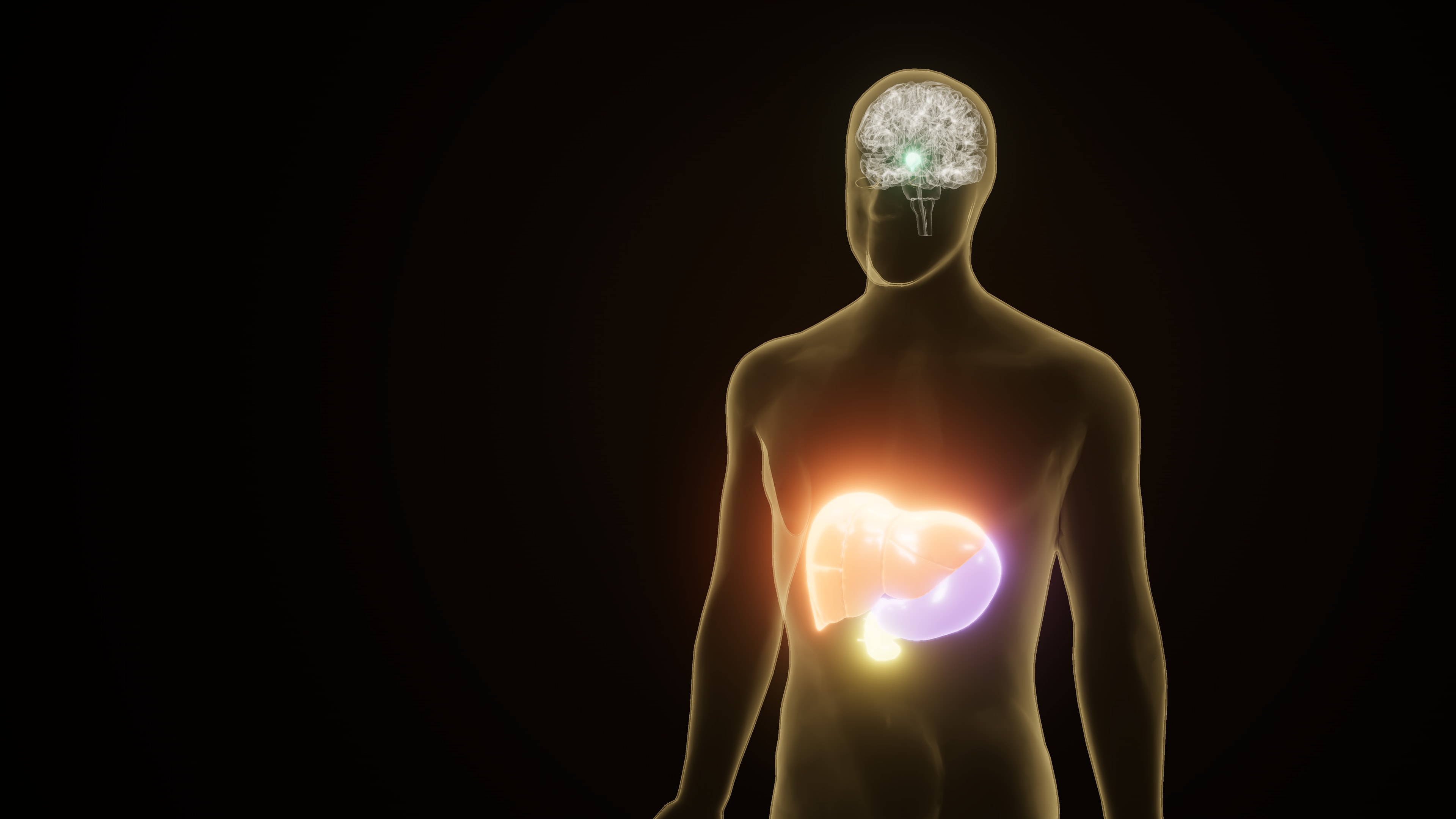
Losing weight is often a long and tiring journey. Along the way, it is very understandable to wonder whether there is something natural that "curbs appetite" or "speeds up metabolism," and in recent years CBD has become one of the things people ask about most. In this article, we have gathered in plain language how CBD has been studied in relation to weight and appetite, what human studies have found, possible side effects and what you can discuss with your doctor. For a scientific summary of the topic, see the diabetes and metabolism page of the CBD Guide.
What’s in this article?8 sections
What is CBD, and what does it have to do with weight?
CBD (cannabidiol) is one of more than a hundred compounds found in the cannabis plant. Unlike THC, the main substance in cannabis that makes you high, CBD does not make you high or cloud your thinking. It is sold in many forms, such as oil drops, capsules, gum and creams.
The body has a signaling network called the "endocannabinoid system"; appetite and energy balance are among the things this system is involved in. The fact that substances from the cannabis plant interact with this system led researchers to ask, "Does CBD affect weight?" We explained how the system works in our article on the endocannabinoid system .
What does the research say?
The findings on weight come from four different types of studies. It is important to read them separately, because an effect seen in the lab may not show up the same way in humans.
Lab: "browning" in fat cells
The body has two types of fat tissue: white fat, which stores energy, and brown fat, which burns energy by turning it into heat. In a lab study published in 2016, when CBD was added to fat cells of mouse origin, some genes and proteins typical of brown fat increased (Parray 2016). This was an experiment on cells in a culture dish; it did not measure calorie burning in a living animal or in humans.
Animals: weight gain slowed in rats
In one study, rats were given 2.5 or 5 mg of CBD per kilogram of body weight by injection into the abdomen every day for 14 days. At both doses, the rats gained weight more slowly; the effect was clearer at the higher dose (Ignatowska-Jankowska 2011). The rats did not lose weight; they only gained weight more slowly. The effect of an injected substance in animals cannot be directly applied to the effect of an oil taken by mouth in humans.
Survey studies: are people who use cannabis thinner?
In two large national surveys in the US, the obesity rate was 14.3% and 17.2% among people who said they used cannabis at least 3 days a week, compared with 22.0% and 25.3% among those who had not used it at all in the past year (Le Strat 2011). These data are about the use of cannabis that contains THC, such as marijuana, not CBD. Moreover, survey studies do not show cause and effect; these people may also be thinner because of other lifestyle habits.
Controlled human studies: results go both ways
Controlled studies are the best way to show whether a substance really works: participants are randomly assigned to groups, and one group takes CBD while the other takes an inactive pill that looks the same (placebo). We did not find any such study aimed at weight loss with CBD. The information we have comes from studies done for other purposes:
- Systematic review (Pinto 2022): 11 controlled studies that measured appetite or weight were reviewed. None was designed for weight loss; most were high-dose epilepsy studies. In most of these studies, decreased appetite or weight loss was seen as a side effect; in some there was no change, and in one, appetite increased. The authors note that a substantial share of the studies had a risk of bias.
- Approved CBD medicine: In the US prescribing information for the approved CBD medicine used in severe childhood epilepsies, decreased appetite was seen in 16–22% of those taking the medicine and 5% of those taking placebo, and weight loss in 3–5% vs. 1%. These results apply to patients taking high doses, such as 10–20 mg per kilogram of body weight a day, who were also taking other epilepsy medicines.
- Single dose, healthy adults (Johnson 2026): In a crossover study of 15 people, participants took CBD on one day and placebo on another. On the CBD day, they ate an average of 193 kcal more at lunch. No difference was seen in feelings of hunger, blood sugar or the energy the body used. The researchers interpreted this as the first evidence that CBD may increase the amount of food people eat.
- Adults with overweight (Ewell 2026): In 16 people, four weeks of low-dose CBD did not affect the response to a sugar load or gut bacteria any differently from placebo.
- Type 2 diabetes (Jadoon 2016): In a study of 62 patients, body weight was among the outcomes measured; the abstract reported no significant change with CBD compared with placebo.
There is also information from parent surveys: 30% of 117 parents who gave their children with epilepsy a CBD-rich cannabis extract said appetite increased (Hussain 2015). Because it was an uncontrolled survey, this does not count as a firm result, but it shows that the effect on appetite can differ from person to person.
In short, CBD seems to decrease appetite in some people and increase it in others; there is not yet a human study showing what happens when it is used for weight loss.
Possible side effects and drug interactions
CBD was well tolerated in most studies, but it is not completely risk-free. In studies of the approved medicine, the most common side effects were drowsiness, decreased appetite, diarrhea, tiredness and raised liver enzymes.
- Liver: In a controlled study by the US Food and Drug Administration (FDA) in healthy adults, liver enzymes went above 3 times the normal level in 5.6% of those taking 5 mg of CBD per kilogram of body weight a day; this was not seen in the placebo group (Florian 2025). For details, see our article on CBD and the liver .
- Drug interactions: CBD can slow the breakdown of some medicines in the body and change their blood levels. If you take medicine for diabetes, cholesterol or weight, it is important to talk with your doctor about this; CBD does not replace these medicines. Details on the drug interactions page.
- Product contents: Only 31% of 84 CBD products bought online had labels that matched their contents; THC was found in 21% (Bonn-Miller 2017).
How was it used in studies?
In the human studies above, CBD was given by mouth as an oil or capsule. The amounts used varied widely: 298 mg in a single dose (Johnson 2026), 30 mg twice a day for four weeks (Ewell 2026), and 100 mg twice a day for 13 weeks (Jadoon 2016). For the epilepsy medicine, the dose is calculated as "milligrams per kilogram of body weight per day"; the doses in the prescribing information are 10–20 mg per kilogram a day. These are study doses, not a personal recommendation. No effective or safe CBD dose for weight has been established.
If you are thinking about using CBD
It is only natural to look for a new way to lose weight. Before you decide, you can talk with your doctor about:
- All the medicines you take, especially medicines for diabetes, blood pressure, cholesterol and weight.
- Whether you have liver disease or have had raised liver test results before.
- Pregnancy, breastfeeding or plans to become pregnant.
- Eating, activity and, if needed, treatment options that suit you for weight management; you can also get support from a dietitian on this.
In Turkey, products made from cannabis, including CBD, can be sold only in pharmacies (Law No. 7557, regulation of January 31, 2026). Those classified as medicines or health products are dispensed with a prescription; no prescription requirement is stated for supplement products with a THC content of at most 0.3%. As of October 2026, there is no approved CBD medicine in Turkey. Details on our page on the rules.
Conclusion
The effect of CBD on weight is not clear today. Lab and animal experiments are interesting, but no study shows that it causes weight loss in humans; the fact that healthy adults ate more after a single dose shows that the topic is more mixed than expected. If you want to lose weight, the most solid step is to make a plan that suits you together with your doctor or dietitian.
Frequently asked questions
Does CBD help you lose weight?
No human study shows this. Interesting results were seen in fat cells in the lab and in rats, but there is no controlled human study aimed at weight loss. So today there is not enough basis to see CBD as a way to lose weight.
Does CBD increase or decrease appetite?
Both have been seen. In high-dose epilepsy studies, decreased appetite was a common side effect. In a study of 15 healthy adults, on the other hand, people ate an average of 193 kcal more at lunch on the day they took a single dose of CBD. The effect can vary by person, dose and situation.
Does CBD speed up metabolism?
No study shows this in humans. In healthy adults given a single dose of CBD, the energy the body used was no different from placebo. The "fat burning" findings come from mouse fat cells in a culture dish.
Can I use CBD with my diabetes medicine?
Be sure to talk with your doctor about this. In small studies of people with type 2 diabetes and people with overweight, CBD did not affect blood sugar results any differently from placebo. Because CBD can change the blood levels of some medicines, it does not replace your diabetes medicine, and you should not cut down your medicine on your own.
Where can CBD products be bought in Turkey?
In Turkey, products made from cannabis, including CBD, can be sold only in pharmacies (Law No. 7557, regulation of January 31, 2026). Those classified as medicines or health products are dispensed with a prescription; no prescription requirement is stated for supplement products with a THC content of at most 0.3%. As of October 2026, there is no approved CBD medicine in Turkey.
References
Show 12 references
- Pinto JS, Martel F. Effects of Cannabidiol on Appetite and Body Weight: A Systematic Review. Clin Drug Investig. 2022. PMID 36180814
- Johnson DA, et al. A single dose of cannabidiol increases ad libitum energy intake in healthy adults but does not affect postprandial glucose or lipid metabolism. Appetite. 2026. PMID 41825697
- Ewell TR, et al. Short-Term Low Dose Cannabidiol Does Not Influence Glucose Tolerance or the Gut Microbiome in Sedentary Adults with Overweight and Obesity: Pilot Study. Cannabis Cannabinoid Res. 2026. PMID 41167732
- Jadoon KA, et al. Efficacy and Safety of Cannabidiol and Tetrahydrocannabivarin on Glycemic and Lipid Parameters in Patients With Type 2 Diabetes: A Randomized, Double-Blind, Placebo-Controlled, Parallel Group Pilot Study. Diabetes Care. 2016. PMID 27573936
- Parray HA, Yun JW. Cannabidiol promotes browning in 3T3-L1 adipocytes. Mol Cell Biochem. 2016. PMID 27067870
- Ignatowska-Jankowska B, et al. Cannabidiol decreases body weight gain in rats: involvement of CB2 receptors. Neurosci Lett. 2011. PMID 21172406
- Le Strat Y, Le Foll B. Obesity and cannabis use: results from 2 representative national surveys. Am J Epidemiol. 2011. PMID 21868374
- Hussain SA, et al. Perceived efficacy of cannabidiol-enriched cannabis extracts for treatment of pediatric epilepsy: A potential role for infantile spasms and Lennox-Gastaut syndrome. Epilepsy Behav. 2015. PMID 25935511
- Florian J, et al. Cannabidiol and Liver Enzyme Level Elevations in Healthy Adults: A Randomized Clinical Trial. JAMA Intern Med. 2025. PMID 40622698
- Bonn-Miller MO, et al. Labeling Accuracy of Cannabidiol Extracts Sold Online. JAMA. 2017. PMID 29114823
- US FDA / DailyMed. EPIDIOLEX (cannabidiol) oral solution prescribing information, section 6.1 (accessed October 20, 2026).
- Ministry of Health. Regulation on Products Derived from Hemp. Official Gazette, January 31, 2026, issue 33154. Official Gazette 33154
 Nausea and CBD: What Does the Research Say?
 Venous Insufficiency and CBD: The Research
 Does CBD Harm the Liver? Research and Drug Interactions
 Wound Healing and CBD: What the Research Shows