
Science: cannabinoids and the body
What Is Delta-8 THC (Δ8-THC)? Effects, Risks and Legal Status
We explain what Delta-8 THC, marketed as "light THC," is, how it differs from THC and CBD, what controlled studies and poisoning records show, and its legal status, with sources.
By: Selçuk GündoğduUpdated: 34 sources
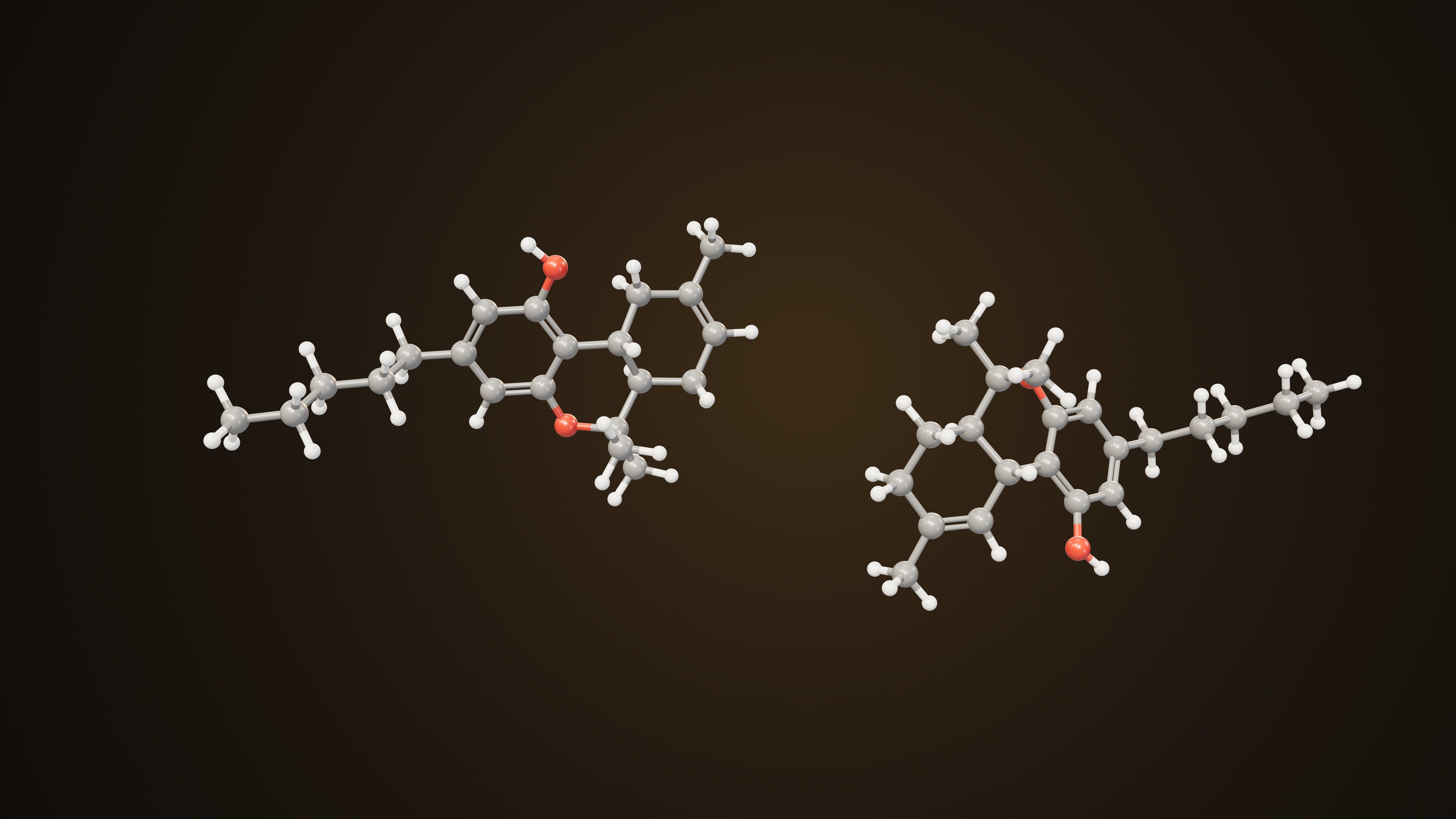
You may have seen the name "Delta-8" in news from the US or on gummies and vapes marketed online as "light THC." The "delta" and the number in its name may not mean much to you, and that is completely natural. In this article we explain in plain language what Δ8-THC is, how it differs from THC and CBD, what controlled studies and poisoning records show, and its legal status in Turkey. We do not give product, brand or usage information.
What’s in this article?11 sections
At a glance
Δ8-THC | |
|---|---|
Where does it come from? | Very small amounts in cannabis; the Δ8-THC in products is mostly made chemically from CBD |
Does it cause a high? | Yes; milder than the same amount of Δ9-THC, similar at higher amounts |
Human research | Two small, double-blind, controlled studies (19 and 20 people, single dose); long-term use has not been studied |
Drug test | Can make a urine cannabis test positive |
Turkey | Listed by name in Schedule I of the 1971 UN Convention; not listed by name itself in Turkey's decree lists, but its derivatives are |
EU | Substances in the 1971 Convention fall under the EU definition of "drug" |
What is Δ8-THC and how is it made?
Δ8-THC and Δ9-THC, the main intoxicating substance in marijuana, are made of the same atoms. The only difference is the position of one double bond in the molecule; the "Δ" (delta) sign and the number in their names show where this bond is. In chemistry, relatives like these are called "isomers" (Tagen 2022).
The cannabis plant does not make Δ8-THC itself; very small amounts form as the plant's Δ9-THC breaks down over time (Meehan-Atrash 2022). The concentrated Δ8-THC in products on the market, however, is made by chemically converting CBD extracted from hemp. The US Food and Drug Administration (FDA) warns that some manufacturers may use unsafe household chemicals in this process, and the US Centers for Disease Control and Prevention (CDC) notes that harmful by-products can form during this conversion (FDA 2022; CDC 2021).
Δ8-THC products became most widespread in the US. The farm bill passed in 2018 defined hemp only by its Δ9-THC content (0.3%); because Δ8-THC fell outside this definition, products were sold by taking advantage of this loophole (Pub. L. 115-334). In 2023, 11.4% of high school seniors in the US said they had used Δ8-THC in the past year (Harlow 2024).
How is it different from THC and CBD?
CBD does not cause a high. Δ8-THC, however, activates CB1 receptors in the brain like Δ9-THC; because it binds to the receptor more weakly, its effect is considered milder (Tagen 2022). According to the CDC, Δ8-THC produces a high roughly half to three-quarters as strong as Δ9-THC (CDC 2021).
Two controlled studies show more clearly what this difference means:
- By mouth: In a double-blind, crossover study of 19 healthy adults, the same amount of Δ8-THC produced less "feeling of drug effect," less impairment of attention and movement, and a smaller rise in heart rate than Δ9-THC. When the amount of Δ8-THC was doubled, however, there was no longer a difference between the two substances. Participants' "liking" scores for the substances were similar; the researchers wrote that the potential for misuse may also be similar (Zamarripa 2025).
- Vaped: In a double-blind study of 20 people, different amounts of Δ8-THC produced subjective effects largely similar to Δ9-THC. On an attention test resembling driving, however, only Δ9-THC caused clear impairment. Participants inhaled lower amounts more deeply (Spindle 2025).
So the idea that "Δ8 is light THC" is partly true but can be misleading: when more is used, the difference disappears.
Strength of evidence: moderate to low. The studies were well designed but small and single-dose; long-term use and dependence have not been studied. For the general difference between THC and CBD: THC vs. CBD.
Poisoning reports
Almost all the available data come from the US:
- FDA: Between December 2020 and February 2022, it received 104 adverse event reports; 66% followed edible products. In the same period, 2,362 cases were reported to poison centers. 41% of the cases were children, and 82% of those accidentally exposed were children. 70% of the cases were evaluated at a health facility; 8% of these were admitted to intensive care (FDA 2022).
- 2021–2022 national poison data: 98.1% of 5,022 cases involved Δ8-THC. 30.1% of cases were children under 6; the most common age was 2. The most common effects were drowsiness and confusion (25%), palpitations (23%) and agitation (15.6%). A serious medical outcome developed in 38.4% of cases, and 5.3% were admitted to intensive care (Burgess 2024).
- Young children: In 2023–2024, among children aged 5 and under, the intensive care rate was 11.3% for poisonings with hemp-derived cannabinoids of this kind and 8.58% for poisonings with Δ9-THC products; there were no deaths (Weigel 2026).
- Effect of bans: Exposure rates were lower in states that banned Δ8-THC (Smith 2024).
- Death: The records include one child case that ended in death; whether the death was due to Δ8-THC was not confirmed (FDA 2022; Smith 2024).
In 2023 and 2024, the FDA and the US Federal Trade Commission sent warning letters to companies selling Δ8-THC products in packaging that imitated snacks and candy familiar to children (FDA 2023; FTC 2024). We did not find a poison center series on Δ8-THC in Europe; the European Monitoring Centre notes that Δ8-THC is seen only occasionally in Europe (EMCDDA 2023).
Strength of evidence: poison center records. They clearly show that accidental ingestion by young children can have serious consequences; they do not show how common it is overall.
Is what's on the label what's inside?
Product analyses in the US found large differences:
- Of 27 Δ8-THC vapes from 10 brands, none had the correct amount of Δ8-THC stated on the label. 11 contained additives not listed on the label; all contained by-products left over from chemical manufacturing and heavy metals, and a previously unidentified cannabinoid was also detected (Meehan-Atrash 2022).
- In 20 products, the measured amount of Δ8-THC matched the label poorly; 35% of the products also contained Δ9-THC (Kaczor 2024).
- In 12 edible products, the actual amount ranged from much less to much more than the label stated (Beneke 2025).
- In "Δ8" products examined by an FDA laboratory, seven different THC isomers were found, and some contained THCP or HHC (Ciolino 2026).
We explain what to look for in a certificate of analysis in our label reading guide.
Drug tests
The substances Δ8-THC is broken down into in the body reacted on all six commercial urine screening tests that were tried (Wolf 2023). Laboratory confirmation tests can tell Δ8 apart from Δ9 (Baird 2023), but the initial screening test can come back positive. In Sweden in 2020, a Δ8-THC breakdown product was found in 5.3% of urine samples that screened positive for THC, which caused confusion in confirmation testing (Helander 2022). Details: drug tests. The World Anti-Doping Agency's 2027 list names Δ8-THC among its examples of prohibited substances (athletes).
Legal status in Turkey
- International list: Δ8-THC is listed by its chemical name among the "tetrahydrocannabinol isomers" in Schedule I of the 1971 UN Convention on Psychotropic Substances (INCB Green List 2025). Turkey ratified this convention in 1981 (UN Treaty Collection). Under Article 90 of the Constitution, international agreements duly put into effect have the force of law.
- Turkey's own lists: We did not find Δ8-THC itself listed by name in the presidential decrees that add substances to Law No. 2313. However, many substances derived from Δ8-THC were listed by name, for example Δ8-THCP (2024), Δ8-THC acetate (2025) and 2-allyl-Δ8-THC (2026) (Decrees No. 8994, 10129 and 11418). Decree No. 10851 of January 10, 2026 introduced a general definition for "THC and HHC analogue cannabinoid compounds" that also includes the chemical skeleton of Δ8-THC (Presidential Decree 10851). We did not find an official statement on whether Δ8-THC itself falls under this definition.
- Cannabis products: Cannabis-derived products, including CBD, can be sold only in pharmacies and only with a license. In supplement and personal care products, THC can be at most 0.3%, and the cannabinoids in products must be present "at levels that do not cause a narcotic effect" (Law No. 7557; Kenevirden Elde Edilen Ürünlere Dair Yönetmelik (Regulation on Products Derived from Hemp)). Δ8-THC, on the other hand, is an intoxicating substance. Details: CBD regulation in Turkey.
The situation in Europe and the US
- European Union: The definition of "drug" in EU law also covers substances in the 1971 Convention (Framework Decision 2004/757/JHA); because Δ8-THC is in this convention, it falls under the definition. According to the European Monitoring Centre, unlike HHC, Δ8-THC is already under international control and is seen only occasionally in Europe (EMCDDA 2023). We did not find an up-to-date country-by-country summary.
- US: In May 2026, the DEA stated explicitly that THC produced by chemical conversion is not considered "hemp," even if it is derived from hemp (Federal Register 2026). A law passed in November 2025 removes cannabinoids synthesized outside the plant from the definition of hemp and limits total THC to 0.4 mg per package. Under a 2026 amendment, the part of the law on cannabinoids that do not occur naturally in the plant will take effect on November 12, 2026, and the rest, including the package limit, on December 11, 2026; as of October 23, 2026, it is not yet in effect (Pub. L. 119-37; Pub. L. 119-103).
When to get help
If symptoms such as chest pain, palpitations, extreme drowsiness, confusion, severe anxiety, or seeing or hearing things that are not there occur after using Δ8-THC or a cannabis product of unknown content, go to a health facility. If a child has eaten a gummy or a similar product, do not wait for symptoms to start; take the product's packaging with you.
Frequently asked questions
Is Delta-8 THC natural?
The cannabis plant does not make Δ8-THC itself; very small amounts form as Δ9-THC breaks down. The Δ8-THC in products is mostly made chemically from CBD (Meehan-Atrash 2022; FDA 2022).
Is Delta-8 THC safer than regular THC?
There is no evidence for this. It has a milder effect at the same amount, but as the amount increases it reaches the same effect as Δ9-THC (Zamarripa 2025). In addition, by-products, heavy metals and other forms of THC not listed on the label have been found in products (Meehan-Atrash 2022; Ciolino 2026).
Are Delta-8 and CBD the same thing?
No. Δ8-THC is mostly made from CBD, but it is a different substance: CBD does not cause a high; Δ8-THC does.
Is Delta-8 THC legal in Turkey?
Δ8-THC is listed by name among the THC isomers controlled under the 1971 UN Convention, to which Turkey is a party; many substances derived from Δ8-THC have also been brought under Law No. 2313 in Turkey. Cannabis-derived products can be sold only in pharmacies, with a license, and only if they contain cannabinoids at levels that do not cause a narcotic effect. Details are above and in our regulation guide.
Does Delta-8 show up on a drug test?
It can. Δ8-THC breakdown products give a positive result on standard urine screening tests (Wolf 2023).
Why are Delta-8 gummies risky for children?
They can be sold in packaging that cannot be told apart from candy, and they can contain a high amount for a child's body weight. About a third of the cases in the US were children under 6 (Burgess 2024).
References
Show 34 references
- FDA 2022: 5 Things to Know about Delta-8 Tetrahydrocannabinol (content dated May 4, 2022)
- CDC 2021: Health Alert Network HAN 00451 (September 14, 2021)
- FDA 2023: FDA, FTC warn six companies for illegally selling copycat food products containing delta-8 THC (July 5, 2023)
- FTC 2024: FTC, FDA send second set of cease-and-desist letters (July 16, 2024)
- Tagen M et al. Review of delta-8-tetrahydrocannabinol (Δ(8) -THC): Comparative pharmacology with Δ(9) -THC. Br J Pharmacol. 2022;179(15):3915-3933. PMID 35523678
- Meehan-Atrash J et al. Novel Δ(8)-Tetrahydrocannabinol Vaporizers Contain Unlabeled Adulterants, Unintended Byproducts of Chemical Synthesis, and Heavy Metals. Chem Res Toxicol. 2022;35(1):73-76. PMID 34889611
- Harlow AF et al. Adolescent Δ8-THC and Marijuana Use in the US. JAMA. 2024;331(10):861-865. PMID 38470384
- Zamarripa CA et al. A within-subject cross-over trial comparing the acute effects of oral delta-8-tetrahydrocannabinol and delta-9-tetrahydrocannabinol in healthy adults. Drug Alcohol Depend. 2025;272:112676. PMID 40288059
- Spindle TR et al. A within-subject cross-over trial comparing the acute effects of vaporized delta-8-tetrahydrocannabinol and delta-9-tetrahydrocannabinol in healthy adults. Drug Alcohol Depend. 2025;272:112684. PMID 40334328
- Burgess A et al. Delta-8 tetrahydrocannabinol, delta-10 tetrahydrocannabinol, and tetrahydrocannabinol-O acetate exposures reported to America's Poison Centers. Clin Toxicol (Phila). 2024;62(4):256-266. PMID 38686923
- Smith GA et al. Delta-8 Tetrahydrocannabinol Exposures Reported to US Poison Centers: Variations Among US States and Regions and Associations with Public Policy. J Med Toxicol. 2024;20(4):389-400. PMID 39168936
- Weigel B et al. Pediatric Hemp-Derived Cannabinoid and Δ9-Tetrahydrocannabinol Exposures: A National Poison Data Study. J Pediatr. 2026;295:115113. PMID 42025788
- Kaczor EE et al. Commercial Delta-8 THC Products: an Analysis of Content and Labeling. J Med Toxicol. 2024;20(1):31-38. PMID 37917314
- Beneke LL et al. Dazed and confused: variability in reported and measured tetrahydrocannabinol content in cannabis edibles. Clin Toxicol (Phila). 2025;63(11):981-986. PMID 41025251
- Ciolino LA et al. HPLC-UV quantitation of synthetically derived THC, THCP, and HHC isomers in commercial vaping liquids and edibles (2019-2024). J Forensic Sci. 2026. PMID 42748050
- Wolf CE et al. The cross-reactivity of cannabinoid analogs (delta-8-THC, delta-10-THC and CBD), their metabolites and chiral carboxy HHC metabolites in urine of six commercially available homogeneous immunoassays. J Anal Toxicol. 2023;47(8):732-736. PMID 37602947
- Baird SN et al. Evaluation of a Delta-9-Tetrahydrocannabinol Carboxylic Acid (Δ9-THC-COOH) Immunoassay and a Gas Chromatography-Mass Spectrometry (GC-MS) Method for the Detection of Delta-8-Tetrahydrocannabinol Carboxylic Acid (Δ8-THC-COOH). J Appl Lab Med. 2023;8(4):665-673. PMID 37071885
- Helander A et al. Analytical and medico-legal problems linked to the presence of delta-8-tetrahydrocannabinol (delta-8-THC): Results from urine drug testing in Sweden. Drug Test Anal. 2022;14(2):371-376. PMID 34734479
- EMCDDA 2023: Hexahydrocannabinol (HHC) and related substances, technical report
- INCB Green List 2025 (36th edition), Schedule I, tetrahydrocannabinol isomers
- UN Treaty Collection, 1971 Convention on Psychotropic Substances, status of parties
- Constitution of the Republic of Turkey, Art. 90
- Presidential Decree 8994 (OG October 4, 2024)
- Presidential Decree 10129 (OG July 30, 2025)
- Presidential Decree 10851 (OG January 10, 2026)
- Presidential Decree 11418 (OG June 13, 2026)
- Law No. 7557, Official Gazette 32965 (July 24, 2025)
- Kenevirden Elde Edilen Ürünlere Dair Yönetmelik (Regulation on Products Derived from Hemp), Official Gazette 33154 (January 31, 2026)
- Framework Decision 2004/757/JHA (as amended by Directive (EU) 2017/2103)
- Pub. L. 115-334 (2018 Farm Bill), 7 U.S.C. 1639o
- Pub. L. 119-37 (November 12, 2025), Division B, Sec. 781
- Pub. L. 119-103 (September 2, 2026), Sec. 2019
- Federal Register 2026 (DEA, May 4, 2026)
- WADA 2026 (2027 Prohibited List)
 NewWhat Are Synthetic Cannabinoids? What’s in the Liquids, Puffs and Gummies Sold as "THC"?
 What Are Cannabinoids? A List of Cannabis Cannabinoids
 Is CBD Considered a Drug? How CBD Oil Differs from Hemp Seed Oil
 CBD and Inflammation: What Does the Research Say?