
Science: cannabinoids and the body
What Is Cannabinol (CBN)? Sleep Claims and Research
If you are curious about CBN products for sleep, we explain in plain language what this cannabinoid is, where its reputation as the "sleep cannabinoid" comes from and what research has found.
By: Selçuk GündoğduUpdated: 11 sources
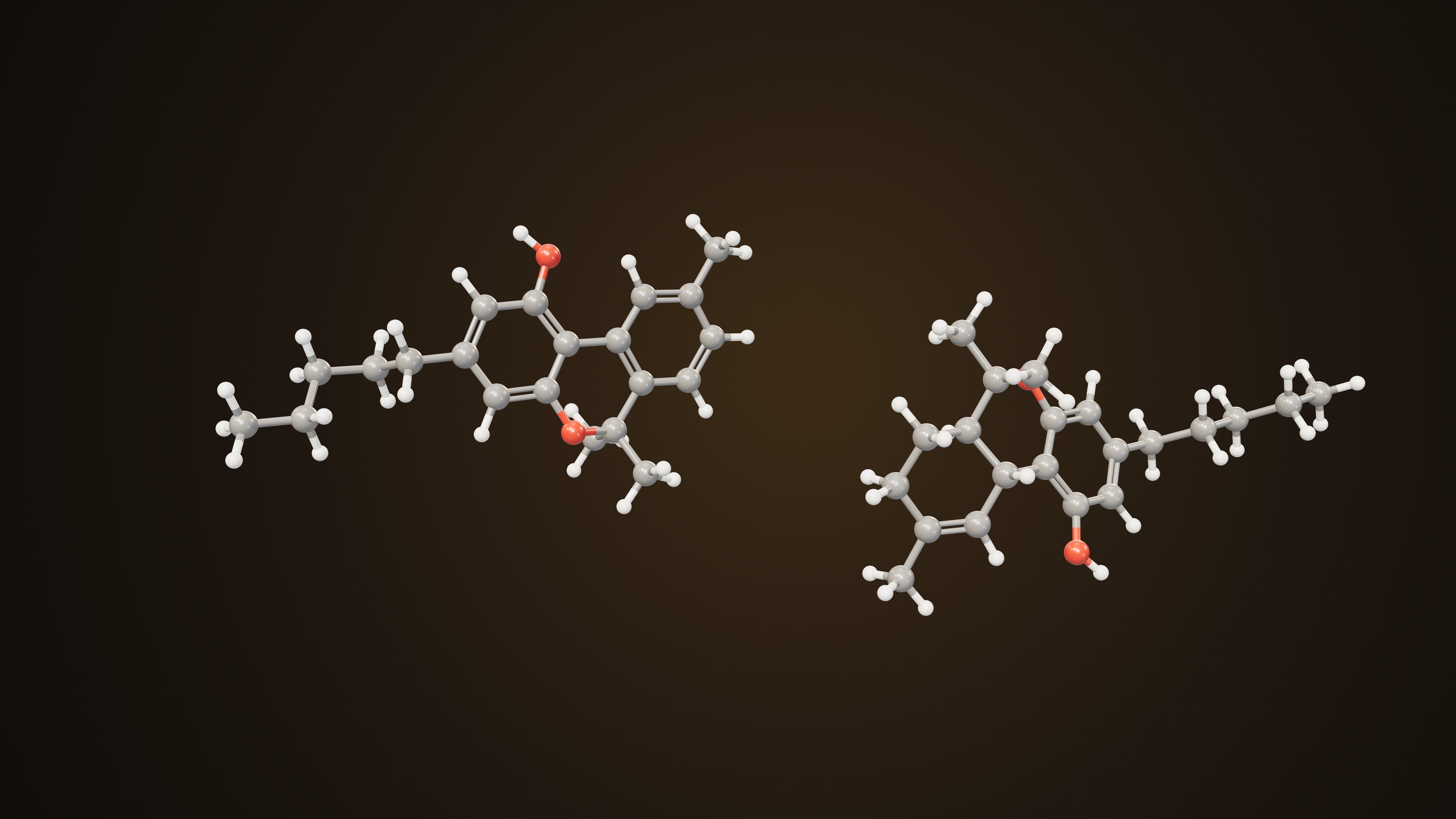
CBN products are being talked about more and more among people with sleep problems. This interest, which grew out of the belief that "old cannabis makes you sleepy," has also spurred researchers into action. In this article, we explain in plain language what CBN is, where the sleep claims come from, what studies have found and what to watch out for. For the other compounds in cannabis, see our list of cannabinoids.
What’s in this article?10 sections
What is CBN?
CBN was the first cannabinoid obtained from cannabis: it was isolated from hashish (cannabis resin) in the late 19th century, but its structure was not fully worked out until 1940. The plant does not make much of it directly; CBN forms mostly when THC oxidizes in air and breaks down. That is why there is more of it in cannabis that has been stored for a long time (Maioli 2022).
CBN also binds to the body's CB1 and CB2 receptors, but it binds about 10 times more weakly than THC to the CB1 receptor in the brain (Maioli 2022). When taken on its own, it was reported not to cause a noticeable high (Karniol 1975). Because there is little of it in the plant, CBN can also be made in the lab by converting THC or CBD (Maioli 2022). For the difference between THC and CBD, take a look at our THC article.
Where does the "sleep cannabinoid" reputation come from?
This reputation grew largely out of user observations that stored cannabis is more "sedating." That is why CBN was marketed as "the sleepy cannabinoid in old cannabis"; but as one review points out, sleep studies have not reached a clear conclusion on whether this claim is true (Maioli 2022).
The oldest study in people was done in 1975 with only five male volunteers. 50 mg of CBN on its own had no noticeable effect; when it was taken together with THC, participants felt slightly more "drugged, muddled and sleepy" than with THC alone. The authors stressed that these effects were small (Karniol 1975). In other words, there is not enough evidence to put the effect of stored cannabis down to CBN alone.
What does the research say?
In recent years, CBN has also started to be studied in controlled trials. In these studies, participants are randomly assigned to groups; one group takes CBN, the other takes an inactive product (placebo) that looks the same.
Study | Who took part? | What was found? |
|---|---|---|
Lavender 2026 | 20 people diagnosed with insomnia, a single night in a sleep lab | The main measure, "time spent awake during sleep," did not change. At the high dose, falling asleep took less time and sleep was perceived as better quality (secondary measures). |
Bonn-Miller 2024 | 293 people who rated their sleep as poor, 7 nights | The improvement in overall sleep quality was not significant; the number of night wakings and overall sleep disturbance decreased. The time to fall asleep did not change; adding CBD gave no extra benefit. |
Kolobaric 2024 | About 1,000 people with sleep problems | Three different CBN doses and melatonin were found better than placebo; there was no difference between CBN and melatonin. Employees of the company that ran the study are among the authors. |
Saleska 2024 | 1,793 people with sleep problems, 4 weeks | There was no placebo group. The products with added CBN were not better than the product containing only CBD. |
Most of these studies are short, the measures used rely largely on people's own ratings, and some were run by companies using commercial products. In an analysis of the effect of cannabinoids on sleep, formulas containing cannabinoids other than CBD, such as THC, improved subjective sleep quality, but CBN's separate contribution cannot be worked out from the abstract (da Silva 2025). As things stand today, the evidence for CBN in sleep is between very weak and weak; larger and longer studies are needed. The full topic of sleep is on our sleep and insomnia page.
Other claims: appetite, nerve cells, bacteria
- Appetite: In rats, CBN shortened the time before they started eating and increased the amount eaten; CBD, by contrast, reduced food intake (Farrimond 2012). Its effect on appetite has not been studied in people.
- Protecting nerve cells: In the lab, CBN protected nerve cells against a particular type of cell death, and it did this through the mitochondria, the cell's power plants (Liang 2022). This is a finding at the cell culture level; any benefit for a disease in people is unknown.
- Bacteria: In the lab, five cannabinoids, including CBN, showed strong activity against an antibiotic-resistant type of bacteria (MRSA) (Appendino 2008). This is not evidence for treating infections.
Possible side effects and drug interactions
- In short-term studies, side effects were mostly mild to moderate; in one study, the rate of side effects was similar to placebo (Kolobaric 2024), and in another, daytime tiredness did not increase (Bonn-Miller 2024).
- When taken together with THC, grogginess and sleepiness can increase (Karniol 1975). Some CBN products may also contain THC; this matters for drug tests and driving (driving page).
- We could not find a human study looking at CBN's interactions with medicines. CBN products often also contain CBD, and CBD can raise the blood levels of some medicines. If you take sleeping pills, sedatives or other regular medicines, see our drug interactions page and talk to your doctor.
How was it used in studies?
The following only shows how the research was done (study doses; not a personal recommendation):
- 30 or 300 mg by mouth for a single night in people diagnosed with insomnia.
- 20 mg every night for 7 nights in people who rated their sleep as poor (alone or together with CBD).
- Doses between 15 and 100 mg in larger studies.
There is no CBN dose shown to be effective and safe for sleep.
If you are thinking about using CBN
Insomnia can wear you down; it is only natural to look for a solution. You can talk with your doctor about:
- How long your sleep problem has lasted and its possible causes (stress, anxiety, sleep apnea, medicines).
- The medicines you take, especially sleeping pills and sedatives.
- Pregnancy, breastfeeding or liver disease.
- Whether the product contains THC and whether there is drug testing at your work.
In Turkey, cannabis-derived products, including CBD, may be sold only in pharmacies (Law No. 7557, regulation of January 31, 2026). Those classed as medicines or health products are dispensed with a prescription; no prescription requirement is stated for supplement products with a THC content of no more than 0.3%. As of October 2026, there is no approved (licensed) CBD medicine in Turkey. We could not find any provision in the regulations specific to CBN. For details, see our regulations page.
Conclusion
CBN is a compound that forms as THC breaks down over time, and it is marketed as the "sleep cannabinoid." In the first controlled studies, some sleep measures improved and others did not; the evidence is still limited. Other topics, such as appetite, protecting nerve cells and antibacterial effects, are at the lab stage.
Frequently asked questions
Does CBN make you sleepy?
It is not clear. In people who rated their sleep as poor, CBN used for 7 nights reduced night wakings but did not change the time it took to fall asleep; in a single-night study in people diagnosed with insomnia, the main measure, time spent awake during sleep, did not change. The evidence is still limited.
What is the difference between CBN and CBD?
CBN forms mostly when THC oxidizes in air and breaks down, and it binds about 10 times more weakly than THC to the CB1 receptor. CBD is a cannabinoid that the plant makes directly and that does not activate CB1. In rats, CBN increased appetite, while CBD reduced it.
Does CBN make you high?
In a small 1975 study, 50 mg of CBN on its own had no noticeable effect. When it was taken together with THC, people felt slightly more groggy and sleepy. Some CBN products may also contain THC.
Is CBN more effective than melatonin?
No study shows this. In a large study, CBN and melatonin were found better than placebo but not different from each other; in another study, products with added CBN were not better than a product containing only CBD.
Are CBN products legal in Turkey?
In Turkey, cannabis-derived products, including CBD, may be sold only in pharmacies (Law No. 7557, regulation of January 31, 2026). Those classed as medicines or health products are dispensed with a prescription; no prescription requirement is stated for supplement products with a THC content of no more than 0.3%. As of October 2026, there is no approved (licensed) CBD medicine in Turkey. We could not find any provision in the regulations specific to CBN.
References
Show 11 references
- Maioli C, et al. Cannabinol: History, Syntheses, and Biological Profile of the Greatest "Minor" Cannabinoid. Plants (Basel). 2022. PMID 36365350
- Karniol IG, et al. Effects of delta9-tetrahydrocannabinol and cannabinol in man. Pharmacology. 1975. PMID 1221432
- Lavender IG, et al. Cannabinol for Acute Treatment of Insomnia Disorder in a Randomized Placebo-Controlled Crossover Trial. J Sleep Res. 2026. PMID 41698831
- Bonn-Miller MO, et al. A double-blind, randomized, placebo-controlled study of the safety and effects of CBN with and without CBD on sleep quality. Exp Clin Psychopharmacol. 2024. PMID 37796540
- Kolobaric A, et al. A Randomized, Double-Blind, Placebo-Controlled Trial to Assess the Effectiveness and Safety of Melatonin and Three Formulations of Floraworks Proprietary TruCBN™ for Improving Sleep. Pharmaceuticals (Basel). 2024. PMID 39204082
- Saleska JL, et al. The Safety and Comparative Effectiveness of Non-Psychoactive Cannabinoid Formulations for the Improvement of Sleep: A Double-Blinded, Randomized Controlled Trial. J Am Nutr Assoc. 2024. PMID 37162192
- da Silva GHS, et al. Effectiveness of cannabinoids on subjective sleep quality in people with and without insomnia or poor sleep: A systematic review and meta-analysis of randomised studies. Sleep Med Rev. 2025. PMID 40929927
- Farrimond JA, et al. Cannabinol and cannabidiol exert opposing effects on rat feeding patterns. Psychopharmacology (Berl). 2012. PMID 22543671
- Liang Z, et al. Cannabinol inhibits oxytosis/ferroptosis by directly targeting mitochondria independently of cannabinoid receptors. Free Radic Biol Med. 2022. PMID 34999187
- Appendino G, et al. Antibacterial cannabinoids from Cannabis sativa: a structure-activity study. J Nat Prod. 2008. PMID 18681481
- Ministry of Health (Turkey). Kenevirden Elde Edilen Ürünlere Dair Yönetmelik (Regulation on Products Derived from Hemp). Official Gazette, January 31, 2026, issue 33154. Official Gazette 33154
 NewWhat Is HHC (Hexahydrocannabinol)? Effects, Risks and Legal Status
 NewWhat Is Delta-8 THC (Δ8-THC)? Effects, Risks and Legal Status
 NewWhat Are Synthetic Cannabinoids? What’s in the Liquids, Puffs and Gummies Sold as "THC"?
 What Are Cannabinoids? A List of Cannabis Cannabinoids