
Making CBD Oil from Hemp in Turkey: The Legal Path from Field to Pharmacy
What steps does a CBD oil go through in Turkey to get from the field to the pharmacy shelf, and who oversees what? We walk through the chain link by link, based on the 2025 law and the 2026 regulations.
By: Selçuk GündoğduUpdated: 9 sources
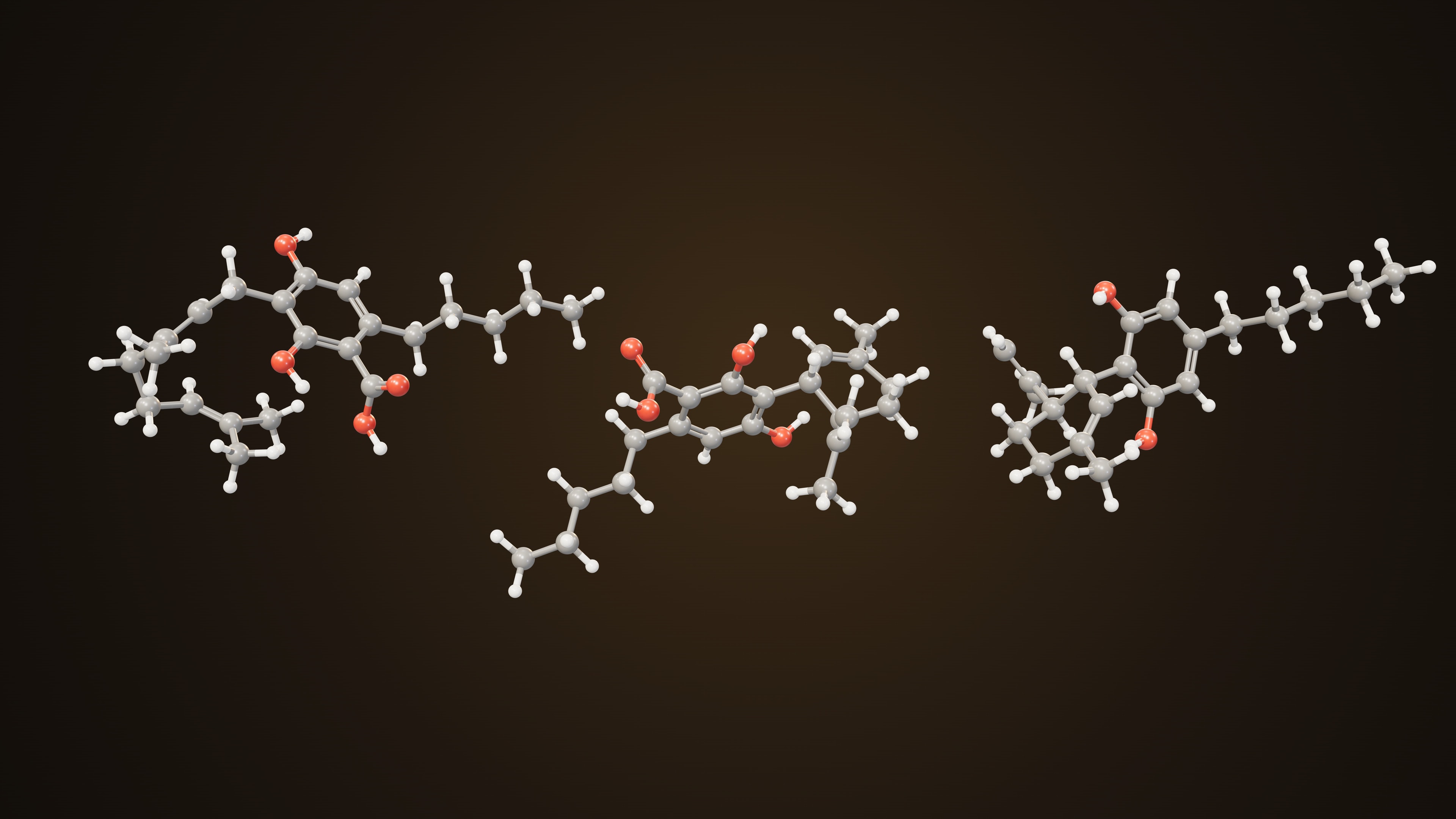
"Is CBD oil made in Turkey, who can make it, and how does the product reach the pharmacy?" These questions have come up a lot over the past two years, because the rules were rewritten from scratch in 2025 and 2026. In this article, we explain the legal path from field to pharmacy step by step, based on official texts. This is not an investment or farming guide; the aim is to make clear how the system works and where it stands today.
What’s in this article?13 sections
Legal basis: which texts apply?
The core law on cannabis is Law No. 2313 of 1933, the Uyuşturucu Maddelerin Murakabesi Hakkında Kanun (Law on the Control of Narcotic Substances). Article 23 of the law has been amended twice:
- 2023 (Law No. 7442): Growing cannabis for its flowers and leaves to obtain raw material for medicines was added to the law; TMO carries out this cultivation itself or has it done under a quota.
- July 2025 (Law No. 7557): Four product types were added to the law: medicinal products, health products, personal care products and supplement products. Licensing and tracking of these products were assigned to the Ministry of Health, and the sentence "These products may be sold only in pharmacies" was added to the law.
The details are set out in two regulations published in the same issue of the Official Gazette on January 31, 2026:
- Regulation on Hemp Cultivation and Control (Ministry of Agriculture and Forestry): the process in the field, from planting to harvest. It repealed the earlier cultivation regulations of 2016 and 2024.
- Regulation on Products Derived from Hemp (Ministry of Health): everything after harvest, that is, processing, licensing, tracking and sale.
Who oversees what?
Stage | Responsible | Key requirements |
|---|---|---|
Growing for fiber, seed and stalk | Ministry of Agriculture and Forestry, provincial/district governor's office | 21 provinces; apply January 1–April 1; certified seed; leaves and flowers are destroyed after harvest |
Growing for flowers and leaves | TMO, Quota Allocation Commission, Ministry of Agriculture and Forestry | Application to TMO; quota set by the President; secure site; production site permit from the Ministry of Health |
Harvest and transport | Inspection Board or Technical Team | Weighing, official report, sealed vehicle, electronic record |
Processing and manufacturing | TİTCK | Production site permit; good manufacturing practices |
Product license or notification | TİTCK | License by product type (medicine, health product, supplement product) or cosmetic notification |
Sale | Pharmacy | Pharmacy only; medicinal products and health products by prescription; tracked by QR code |
Can CBD be produced with a fiber and seed permit?
No. A person growing under a fiber, seed and stalk permit must destroy leftovers such as leaves and flowers right after harvest under the supervision of the technical team. CBD, however, is found mostly in the flowers and leaves. If the same person also wants to produce flowers and leaves, they must meet separate requirements and get a separate permit. We explained the rules for growing for fiber, seed and stalk in our article on the 21 permitted provinces .
Growing flowers and leaves: TMO and the quota
Applications to grow flowers and leaves, from which cannabinoids such as CBD are obtained, are made to TMO. The regulation sets out two separate routes:
- For medicinal products and health products: Cultivation takes place in enclosed, climate-controlled facilities with camera monitoring, alarms and private security guards. The facility can be on the site of TMO's Afyon Alkaloids Factory, in an organized agricultural zone, or in a province where there is a facility that has a production site permit from the Ministry of Health. To start production, a cultivation contract is also signed with TMO.
- For supplement products and personal care products: Cultivation can take place outdoors or indoors, but only in provinces permitted for fiber-seed-stalk growing or provinces where medicinal product cultivation takes place, and in areas that can be inspected and that third parties cannot enter. Growing can begin with a cultivation permit and a production site permit from the Ministry of Health.
On both routes, applicants and their partners must meet detailed criminal record requirements. After TMO reviews the applications, they go to the Quota Allocation Commission. The national quota is set by the President based on supply and demand; the commission considers criteria such as public order, public health, international obligations and whether the project is feasible. Applications are normally made between January 1 and April 1; for 2026, the dates are set by TMO. You can find details of the quota in our article on the legal framework for cultivation .
From harvest to facility: records and transport
Harvesting is done under the supervision of the Inspection Board or the Technical Team. The flowers and leaves are weighed and packaged, and the details are written into an official report and entered into the Ministry of Health's record system. The product is taken in closed boxes, in a sealed vehicle, to a production site approved by the Ministry of Health. Harvested cannabis can be delivered only to facilities that have a production site permit from TİTCK; receipt is confirmed in the electronic tracking system. Excess or unusable plant parts are destroyed, with an official report.
Production facility: TİTCK permit
Facilities that will make ingredients, supplement products or health products from cannabis must get a production site permit from TİTCK. In March 2026, TİTCK announced a guideline describing the application process and good manufacturing rules for these facilities; applications have been accepted through TİTCK's Electronic Application System since March 27, 2026. This permit is not a product license; it only shows that the facility is suitable for production.
We explained what happens inside the facility, that is, how CBD is separated from the plant and purified, in our article How is CBD oil made? .
Four product types and licensing
Product type | How does it reach the market? | Prescription | Note |
|---|---|---|---|
Medicinal product (medicine) | TİTCK license under medicines law | Required | The only type that can be offered for treatment |
Health product | TİTCK license | Required | Cannabinoid content and health effects are set by TİTCK's usage guideline |
Supplement product | TİTCK license | No requirement stated in the regulation | THC at most 0.3%; taken by mouth only |
Personal care product | Cosmetic product notification | No requirement stated in the regulation | THC at most 0.3% |
For a health or supplement product license, the application file must include a document showing that the cannabis was grown in line with the 2026 cultivation regulation, the production site permit and quality tests of the product. For supplement products, a report from an accredited (TSE ISO IEC 17025) laboratory showing that THC does not exceed 0.3% is also required. TİTCK analyzes the product in the application itself as well; when granting a license, it checks that the product's quality and safety have been demonstrated.
The regulation sets time limits of 30 days each for preliminary review and licensing. However, laboratory tests, external reviews and public holidays do not count toward these limits, the clock stops when additional information is requested, and TİTCK can extend the limits up to twofold. That is why it is not possible to give a set "licensing timeline."
Sale and tracking: pharmacies only
All four product types are sold only in pharmacies. Medicinal products and health products are dispensed with a prescription written in the electronic system called Reçetem. Licensed health and supplement products carry a QR code on the box; health products are tracked one by one from production to the patient, and supplement products from production to the pharmacy. Because medicines cannot be sold online and pharmacies cannot open websites in their name, sales online, on social media, in herbal shops or in stores fall outside the legal route. Under the regulation, action is taken against anyone who sells these products without a permit or keeps them for sale, and the products are seized and destroyed.
Products made in Turkey can also be exported by applying to TİTCK. Exporting products with a THC content above 0.3% requires an additional permit under international drug control rules.
Where do things stand today?
As of October 2026, official sources show the following picture:
- TİTCK's list of licensed medicines dated October 16, 2026 contains no medicine containing CBD or any other cannabinoid.
- Under the regulation, a list of licensed cannabis health and supplement products should be published on the TİTCK website at least once a month; as of October 19, 2026, we could not find such a list.
- We also could not find that the TİTCK guideline that will set the cannabinoid content of health products has been published.
- The applications TİTCK opened in March 2026 are only for production facility permits.
In short, the legal framework is complete, but the links of the chain are only now being put in place. We follow the current situation in our guide to the rules .
If you are thinking about using CBD
Products made from cannabis, including CBD, can be sold only in pharmacies (Law No. 7557, regulation of January 31, 2026). Those classified as medicines or health products are dispensed with a prescription; no prescription requirement is stated for supplement products with a THC content of at most 0.3%. As of October 2026, there is no approved CBD medicine in Turkey.
If you take medicines regularly, it is a good idea to show the product you are considering to your doctor or pharmacist; CBD can slow the breakdown of some medicines in the body. You can find which medicines call for caution on our drug interactions page . You can recognize a licensed product by the QR code on its box.
Conclusion
Making CBD oil in Turkey is no longer an unregulated farming or trading business; every stage from field to pharmacy is part of a permitted, recorded and inspected chain. The rules became clear in 2026; when licensed products will reach pharmacy shelves will depend on the licenses TİTCK grants.
Frequently asked questions
Is it legal to make CBD oil in Turkey?
There is a legal route, but every stage requires a permit. Applications to grow the flowers and leaves from which CBD is obtained are made to TMO and are subject to a quota set by the President. The facility that processes the product must get a production site permit from TİTCK (Turkish Medicines and Medical Devices Agency), and the product itself must get a license or a cosmetic notification, depending on its type.
Can a farmer growing hemp for fiber and seed produce CBD?
No. Those growing under a fiber, seed and stalk permit must destroy leftover leaves and flowers after harvest under the supervision of the technical team. Producing flowers and leaves requires a separate application to TMO and a separate permit.
Can CBD products be sold online?
No. The law says these products can be sold only in pharmacies; medicines cannot be sold online, and pharmacies cannot open websites in their name. Under the regulation, products sold without a permit are seized and destroyed.
How long does licensing take?
The regulation sets time limits of 30 days each for preliminary review and licensing. However, laboratory tests, external reviews and public holidays do not count toward these limits, the clock stops when additional information is requested, and TİTCK can extend the limits up to twofold; so there is no fixed timeline.
Is there a licensed CBD product in pharmacies today?
Products made from cannabis, including CBD, can be sold only in pharmacies (Law No. 7557, regulation of January 31, 2026). Those classified as medicines or health products are dispensed with a prescription; no prescription requirement is stated for supplement products with a THC content of at most 0.3%. As of October 2026, there is no approved CBD medicine in Turkey, and no list of licensed cannabis health and supplement products could be found in official sources.
References
Show 9 references
- Law No. 2313, Uyuşturucu Maddelerin Murakabesi Hakkında Kanun (Law on the Control of Narcotic Substances) (current text, article 23). mevzuat.gov.tr
- Law No. 7442 Amending the Forest Law and Certain Other Laws, article 1. Official Gazette, April 5, 2023, issue 32154. Official Gazette 32154
- Law No. 7557 Amending Certain Health-Related Laws and Decree Law No. 663, article 9. Official Gazette, July 24, 2025, issue 32965. Official Gazette 32965
- Ministry of Agriculture and Forestry. Regulation on Hemp Cultivation and Control. Official Gazette, January 31, 2026, issue 33154. Official Gazette 33154
- Ministry of Health. Regulation on Products Derived from Hemp. Official Gazette, January 31, 2026, issue 33154. Official Gazette 33154
- TİTCK (Turkish Medicines and Medical Devices Agency). Public Notice: Application Guideline for Production Sites of Cannabis-Derived Ingredients, Supplement Products and Health Products (announcement), March 9, 2026.
- TİTCK. Applications for Production Sites of Cannabis-Derived Ingredients and Supplement and Health Products (announcement), March 27, 2026.
- TİTCK. List of Licensed Human Medicinal Products, October 16, 2026 (no medicine containing cannabinoids; checked on October 19, 2026).
- Regulation on Pharmacists and Pharmacies, article 43 (ban on online sales). mevzuat.gov.tr
 CBD Oil or Hemp Seed Oil? 7 Key Differences
 CBD Spectrum Guide: The Differences Between Full-Spectrum, Broad-Spectrum and Isolate
 What Are CBD Edibles? When Do They Start Working?
 CBD Creams: What Do They Do, and What Are the Side Effects?