
How Is CBD Oil Made? Production by CO2 Extraction
What does "CO2 extracted" on a label actually mean? We explain in plain language how CBD oil gets from the plant to the bottle and where supercritical carbon dioxide fits along the way.
By: cbd.school editorial teamUpdated: 8 sources
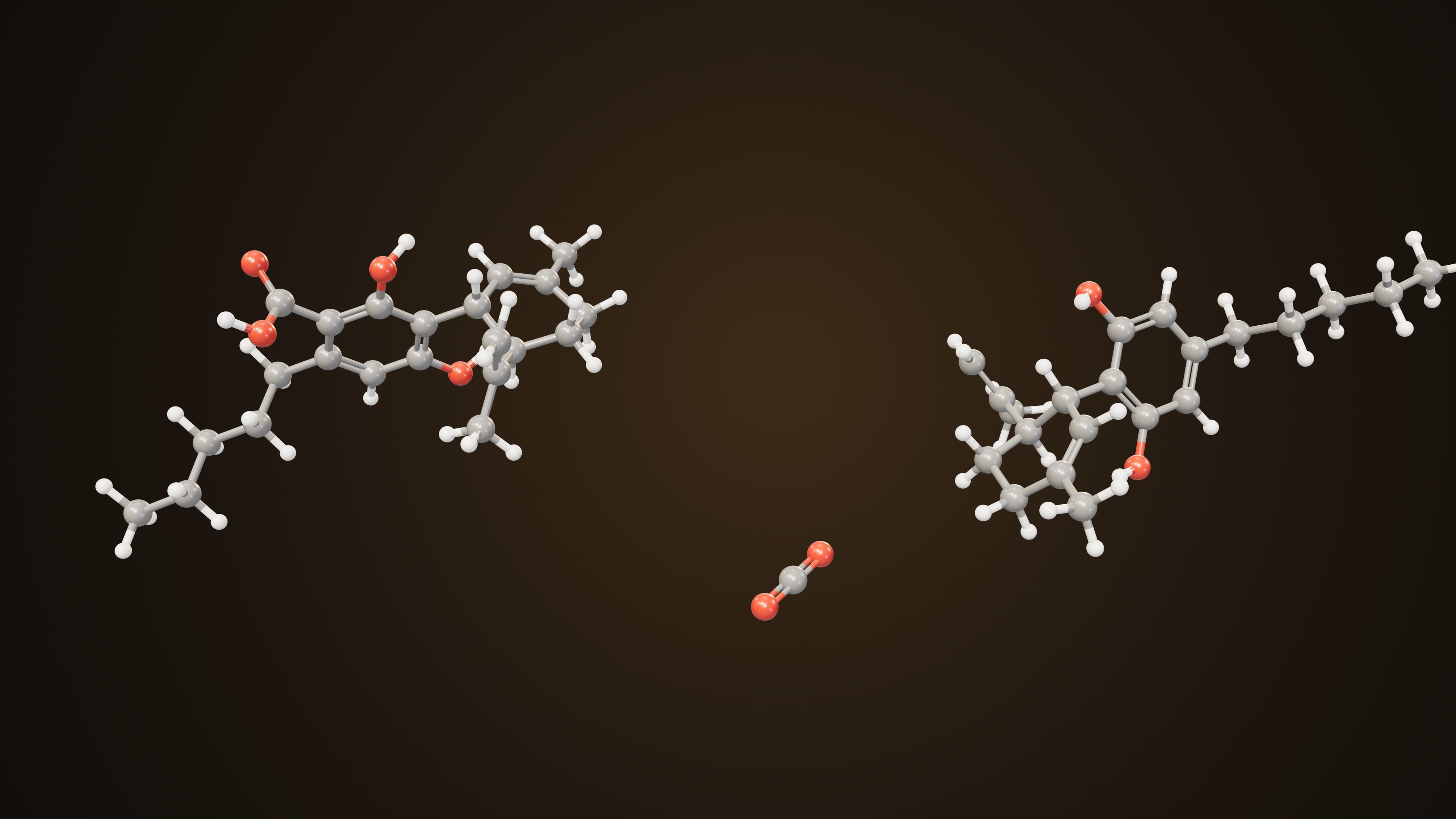
When you see "CO2 extracted" on the label of a CBD product, it is very natural to wonder what that means. On this page, we explain in plain language how CBD oil gets from the plant to the bottle, how the supercritical CO2 method works and how it differs from other methods. Our aim is not to give a production recipe; it is to help you read label wording correctly and know what to ask.
What’s in this article?12 sections
What is CBD oil made from?
CBD (cannabidiol) is one of the cannabinoids found in the cannabis plant (Cannabis sativa). In the plant, it builds up mostly in the flowers and in tiny resin glands on the leaves. Hemp seeds contain almost none; that is why oil pressed from the seeds and CBD oil are different products (details in our article CBD oil or hemp seed oil?).
In the fresh plant, most CBD is in its acid form (CBDA). When the plant is heated, this acid turns into CBD; this is called decarboxylation. Production generally involves these steps:
- Drying and grinding: Moisture is removed from the plant, and it is ground so the solvent can work easily.
- Extraction: A solvent separates the cannabinoids and terpenes from the plant.
- Refining: Waxes, plant oils and pigments are removed from the crude extract.
- Dilution: The concentrated extract is mixed with a carrier oil to the desired amount.
- Analysis: The product's contents and possible contaminants are measured in a laboratory.
According to a review of plant drying and extraction methods, solvent extraction is still the most common method for cannabis; supercritical CO2 is one of these solvent-based methods (Lazarjani 2021).
What is supercritical CO2?
Carbon dioxide (CO2) is a gas at room conditions. It can become liquid under pressure, but this takes a pressure of at least about 5.2 bar (about 75 psi); below that, CO2 cannot be a liquid. The claim found in some sources that "CO2 liquefies at around 60 psi" is therefore not correct.
When the temperature rises above about 31 °C and the pressure above about 73.8 bar (about 1,071 psi), CO2 is neither fully a gas nor fully a liquid. This state is called a "supercritical fluid." Like a gas, supercritical CO2 spreads easily into plant tissue, and like a liquid, it dissolves compounds (NIST; Qamar 2021).
The most valued feature of the method is that it can be adjusted. When the pressure and temperature are changed slightly, which compounds CO2 dissolves also changes. As pressure increases, its dissolving power increases but its selectivity decreases; that is, more substances dissolve, but unwanted ones can get mixed in too (Lazarjani 2021). Because CO2 is a fat-loving (nonpolar) solvent, it does not dissolve water-loving compounds well; in that case, a small amount of ethanol is sometimes added as a co-solvent.
How many drops of CBD oil?
Turn the dose your doctor prescribed into drops.
1. How many mg of CBD are in the bottle?
2. How many ml is the bottle?
3. How many mg did your doctor prescribe?
For 25 mg
5 drops
Each drop contains about 5 mg of CBD.
Your doctor decides the dose. This tool only shows how many drops that is.
For another bottle, a percentage (%) or a syringeSupercritical CO2 extraction step by step
- The dried and ground plant is placed in an extraction vessel built to withstand high pressure.
- A pump brings the CO2 to the desired pressure and temperature and passes it through this vessel.
- Supercritical CO2 dissolves the cannabinoids, terpenes and plant waxes in the plant.
- The mixture moves into a separator where the pressure is lowered. When the pressure drops, the CO2 turns back into a gas and separates from the extract.
- In closed systems, the separated CO2 is collected and reused.
- The dark, concentrated crude extract left behind is sent on to the refining stage.
CO2 is not flammable, is not toxic and leaves no solvent in the extract, because it simply evaporates when the pressure drops. One review summarizes that the method is selective, that the solvent is easily removed, and that its environmental impact is lower than that of many conventional methods (Qamar 2021). On the other hand, because the system runs at very high pressure, it requires special, durable equipment and trained staff.
The difference between supercritical and subcritical
In the "subcritical" method, CO2 is used below the critical point, that is, as a liquid. Because it works at lower pressure, its dissolving power is lower and its selectivity higher. The two methods can produce extracts of slightly different composition from the same plant. Which one is "better" depends on what product the manufacturer wants to make; no study shows that one is healthier than the other.
After extraction: refining and dilution
Besides cannabinoids, the crude extract also contains plant waxes and oils. One common way to separate them is winterization: the extract is dissolved in ethanol and chilled; the waxes that settle out are filtered off, and the ethanol is evaporated and recovered. If a purer product is wanted, distillation under vacuum is done.
How far the refining goes also determines the type of product: "full-spectrum," which also carries the plant's other compounds; "broad-spectrum," with the THC removed; or "isolate," which contains only CBD. We explain these differences in our spectrum guide. In the final stage, the concentrated extract is diluted to the desired amount with a carrier oil such as MCT oil or olive oil.
Comparison with other methods
Method | Strength | Point to watch |
|---|---|---|
Supercritical CO2 | Not flammable or toxic; separates from the extract when pressure drops; adjustable through pressure and temperature | Requires equipment that can withstand very high pressure; may need a co-solvent for water-loving compounds |
Ethanol | Dissolves cannabinoids well; widely used and easy to scale up | Flammable; may leave residue if not removed well; requires refining because it also pulls out chlorophyll and waxes |
Hydrocarbons (butane, propane, hexane) | Effective solvents | Can be flammable and explosive under pressure; the solvent itself may remain as a residue in the extract |
The safety notes in the table are taken from the review comparing cannabis processing methods (Lazarjani 2021). Whichever method is chosen, what matters is how well production is done and whether the final product has been analyzed.
Does the method alone guarantee quality?
No. "CO2" on a label describes only the extraction stage; other solvents such as ethanol may have been used in later refining steps. What a product actually contains is shown by laboratory analysis. Research shows why this matters:
- When 202 CBD products sold in the US were examined, the CBD amount in 74% of them differed from the label by at least 10%. Solvent residue was detected in 181 products; about 1% of these findings exceeded the legal limit; heavy metals were found in 44 products (Gidal 2024; the study was funded by a drug company).
- In Australia, 29% of unregulated cannabis products used for children with epilepsy had ethanol or isopropanol residues above the generally accepted limit (Suraev 2022).
That is why you look for a certificate of analysis that shows a product's cannabinoid content, THC level, solvent residues, heavy metals, pesticide residues and microbial load. We explain step by step what to check on the label in our label reading guide.
How is production regulated in Turkey?
In Turkey, facilities that will make products from cannabis must obtain a production site permit from the Turkish Medicines and Medical Devices Agency (TİTCK); applications opened in March 2026. During licensing, TİTCK analyzes the product; for supplement products, a report from an accredited laboratory showing that THC does not exceed 0.3% is also required. We describe the process in Turkey in our article CBD oil production from cannabis in Turkey.
Cannabis-derived products, including CBD, may be sold only in pharmacies (Law No. 7557; regulation of January 31, 2026). Those classed as medicines or health products are dispensed with a prescription; the regulation does not state a prescription requirement for supplement products with a THC content of at most 0.3%. As of October 2026, there is no approved (licensed) CBD medicine in Turkey. Details: Regulations guide.
If you are thinking about using CBD
The production method affects how pure a product is, but it does not determine whether CBD works for a health problem. That is shown by research on the condition in question. If you take medicines regularly, it is a good idea to talk with your doctor or pharmacist, because CBD can slow down how the body breaks down some medicines; you can find which medicines need care on our drug interactions page.
Conclusion
Supercritical CO2 extraction is an adjustable method that leaves no solvent behind and makes use of the special state carbon dioxide takes on above a certain temperature and pressure. Still, it is not a quality guarantee on its own: what a product contains is shown by laboratory analysis and licensing oversight.
Frequently asked questions
Does carbon dioxide remain in CBD oil made with CO2?
No. When the pressure drops, the CO2 turns back into a gas and separates from the extract, so it leaves no solvent in the extract. However, because other solvents such as ethanol may be used in later refining steps, solvent residues in the final product are still checked by laboratory analysis.
At what temperature and pressure does supercritical CO2 form?
Carbon dioxide becomes supercritical above about 31 °C and 73.8 bar (about 1,071 psi). In this state, it spreads into plant tissue like a gas and dissolves compounds like a liquid. Even for CO2 to become liquid, a pressure of at least about 5.2 bar (75 psi) is needed.
Is CBD oil made with CO2 more effective?
The production method affects a product's composition and purity, but it does not determine whether CBD works for a health problem. That is shown by research on that condition. The method itself is not a quality guarantee either; a product's contents are shown by laboratory analysis.
Are products made with ethanol or butane dangerous?
When properly refined, solvent residues can stay below safe limits. The problem is seen more in unregulated products: in Australia, 29% of the unregulated products examined had ethanol or isopropanol above the limit. That is why a certificate of analysis matters for every product.
Where can you buy CBD oil in Turkey?
Cannabis-derived products, including CBD, may be sold only in pharmacies (Law No. 7557; regulation of January 31, 2026). Those classed as medicines or health products are dispensed with a prescription; the regulation does not state a prescription requirement for supplement products with a THC content of at most 0.3%. As of October 2026, there is no approved (licensed) CBD medicine in Turkey.
References
Show 8 references
- Qamar S, Torres YJM, Parekh HS, Robert Falconer J. Extraction of medicinal cannabinoids through supercritical carbon dioxide technologies: A review. J Chromatogr B Analyt Technol Biomed Life Sci. 2021;1167:122581. PMID 33639334
- Lazarjani MP et al. Processing and extraction methods of medicinal cannabis: a narrative review. J Cannabis Res. 2021;3(1):32. PMID 34281626
- NIST Chemistry WebBook (SRD 69). Carbon dioxide: phase change data (critical point 304.18 K and 73.80 bar; triple point 5.185 bar). Accessed October 20, 2026.
- Gidal BE et al. Product labeling accuracy and contamination analysis of commercially available cannabidiol product samples. Front Pharmacol. 2024;15:1335441. PMID 38562466
- Suraev A et al. Determination of contaminants in artisanal cannabis products used for childhood epilepsy in the Australian community: A sub-analysis of the 'PELICAN' study. Epilepsy Behav. 2022;127:108496. PMID 34954507
- Turkish Ministry of Health. Kenevirden Elde Edilen Ürünlere Dair Yönetmelik (Regulation on Products Derived from Hemp). Official Gazette, January 31, 2026, issue 33154. Official Gazette 33154
- TİTCK. Applications Concerning Production Sites for Supplement and Health Products Made with Cannabis-Derived Components (announcement), March 27, 2026.
- Law No. 7557 Amending Certain Health-Related Laws and Decree-Law No. 663, article 9. Official Gazette, July 24, 2025, issue 32965. Official Gazette 32965
 What Is CBD Oil? How It’s Made, What It Does and Its Status in Turkey (2026)
 Making CBD Oil from Hemp in Turkey: The Legal Path from Field to Pharmacy
 CBD Oil or Hemp Seed Oil? 7 Key Differences
 CBD Spectrum Guide: The Differences Between Full-Spectrum, Broad-Spectrum and Isolate