
Hemp Seed Oil and the Skin: The Research
Hemp seed oil shows up both in the kitchen and in skin care, and it is often confused with CBD oil. We look at what research on the skin and menopause says about this oil.
By: cbd.school editorial teamUpdated: 9 sources
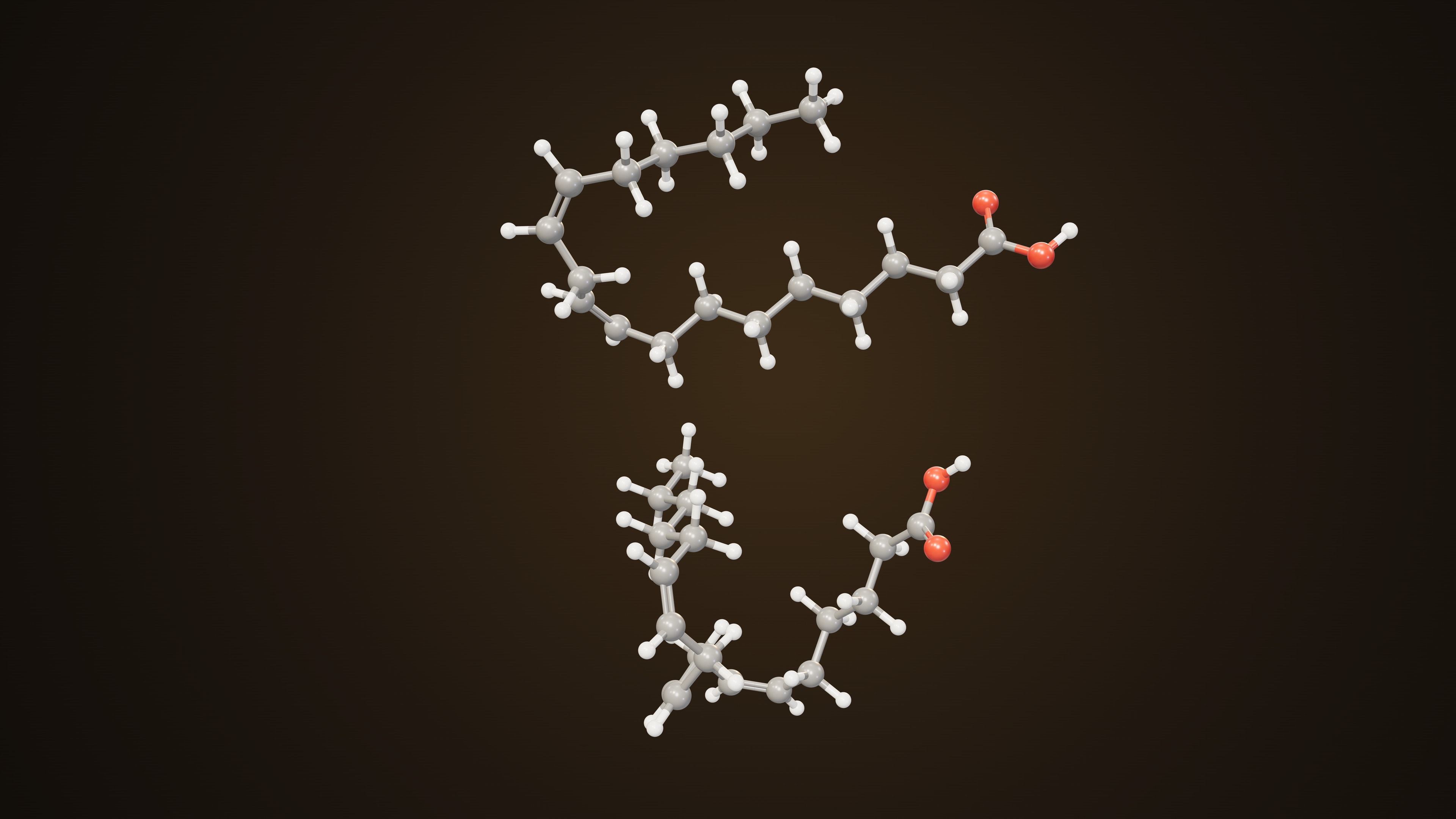
Hemp seed oil turns up both as an oil added to salads in the kitchen and as an ingredient in skin care products. Because its name includes "hemp," it is often confused with CBD oil, and people expect similar effects from it. In this article we explain what hemp seed oil is, what research on the skin and menopause says today, and which questions are still unanswered.
What’s in this article?10 sections
What is hemp seed oil, and how is it different from CBD oil?
Hemp seed oil is made by pressing the ripe seeds of the hemp plant. It is a rich and balanced source of omega-6 and omega-3 fatty acids; it also contains an omega-6 fatty acid called gamma-linolenic acid (GLA) (Callaway 2005). CBD, on the other hand, is found mainly in the plant's flowers and leaves, not its seeds. Products called "CBD oil" are made with an extract obtained from these parts. We explain the difference in detail in our article CBD oil or hemp seed oil?.
In a study that tested 20 hemp seed oils sold in Turkey, CBD came to at most about 0.02 mg per mL. In the same study, measurable levels of THC (the intoxicating substance in cannabis) were found in all the oils except one sample (Kacargil 2026). So there is no basis for expecting a CBD-related effect from seed oil; any possible effects have more to do with its fatty acids.
Why are people curious?
The outer layer of the skin forms a barrier made of fatty acids and fat-like substances called ceramides. In eczema, this barrier is thought to be weakened, and fatty acid deficiencies may be linked to the disease. According to a review of oral fatty acid supplements, there are findings that fish oil may be helpful in eczema; hemp seed oil has not yet been studied enough, but the first results are promising (Cespedes Zablah 2026). Interest in menopause comes mostly from the assumption that the GLA in the seeds may affect hormone-related processes.
What does the research say? The skin
Seed oil taken by mouth
In a study in people with eczema, participants took hemp seed oil and olive oil in turn over 20 weeks; they were not told which oil they were taking in which period. During the seed oil period, fatty acid levels in the blood changed, improvements in skin dryness and itching were reported, and use of medicines applied to the skin went down. Water evaporating through the skin also decreased, but this difference was not significant (Callaway 2005). The number of participants is not given in the abstract, and the result has not been repeated in other large studies.
Seed oil applied to the skin
In a study with healthy volunteers, new cream-like formulas based on hemp seed oil or flaxseed oil reduced the skin's water loss and redness; however, the study had no comparison group, and the abstract does not say which oil the best-performing formulas contained (Vitek 2024). We found no study comparing hemp seed oil applied to the skin with an inactive product in eczema, psoriasis or acne.
What does the research say? Menopause
The only direct study on menopause was done in animals. In 20 rats in which a menopause-like state had been created by removing the ovaries, hemp seed was added to their food in different amounts for 3 weeks. In the rats given seed, changes were seen in blood fat and calcium levels, and they appeared less anxious in behavioral tests (Saberivand 2010). This study was done with the seed itself and in rats; it cannot be applied directly to humans.
We found no human study looking at the effect of hemp seed oil on complaints such as hot flashes, sleep or mood in women going through menopause (PubMed search, October 2026). We cover research on CBD oil and menopause separately in our menopause article.
Products containing THC
In a survey of 258 people in the menopausal transition, most participants reported using medical cannabis for menopause complaints, most often for sleep problems and mood/anxiety. This survey was not about seed oil or CBD oil but about medical cannabis that was largely smoked or used as edibles (Dahlgren 2022). Most participants were already cannabis users, and the survey did not measure effect; the researchers also write that controlled studies are needed.
Possible side effects and drug interactions
Hemp seed oil is used as a food oil; the abstract of the eczema study does not mention side effects (Callaway 2005). When applied to the skin, however, an allergic skin reaction to hemp seed oil has been reported (Clark 2022); so it may be a good idea to try a new product on a small area first. The fact that most seed oils in Turkey contain measurable THC (Kacargil 2026) also shows how important label information is; how this affects the people who use them was not examined in that study. If you are thinking about using CBD oil, its interactions with medicines are covered on the drug interactions page.
How was it used in studies?
These are the forms used in studies (study doses; not a personal recommendation):
- Eczema: hemp seed oil taken with food, compared in turn with olive oil, 20 weeks in total; the daily amount is not given in the abstract (Callaway 2005).
- Menopause model: hemp seed making up 1%, 2% or 10% of the rats' food, 3 weeks (Saberivand 2010).
If you are thinking about using CBD or seed oil
You can talk with your doctor about:
- Whether your current treatment for eczema is enough, and whether dietary changes have a place.
- Options with a known effect for your menopause complaints; your gynecologist is a good place to start.
- Whether the product is a seed oil or a product containing CBD, and whether the label states the total amount of CBD.
In Turkey, the regulations keep the two apart: hemp seed counts as a part of the plant that can be used as food or feed (Regulation on Hemp Cultivation and Control). Products obtained from cannabis, including CBD, on the other hand, can be sold only in pharmacies (Law No. 7557, regulation of January 31, 2026). Those in the medicine and health product category are dispensed with a prescription; no prescription requirement is stated for support products and cosmetics with a THC content of no more than 0.3%. As of October 2026, there is no approved (licensed) CBD medicine in Turkey. Details are on our regulation page.
Conclusion
Hemp seed oil is a food and skin care oil that stands out more for its fatty acids than for CBD. There is a small, positive study on taking it by mouth for eczema, but it has not been confirmed in large studies; what we know about menopause still rests only on a rat experiment. Well-designed human studies are needed in this area. For the general properties of hemp oil, see our hemp oil article; for a summary of the evidence in skin conditions, see our Skin Conditions and CBD page.
Frequently asked questions
Does hemp seed oil contain CBD?
Next to none. In a study that tested 20 seed oils sold in Turkey, CBD came to at most about 0.02 mg per mL. Any possible effects of seed oil come from its fatty acids, not from CBD.
Is hemp seed oil good for eczema?
In a small study, seed oil taken with food improved skin dryness and itching compared with olive oil, and use of medicines applied to the skin went down. This result has not been confirmed in large studies; talk with your doctor before changing your eczema treatment.
Does hemp seed oil ease menopause complaints?
We found no human study showing this. The only direct study was done by adding hemp seed to the food of rats in which a menopause-like state had been created, and it cannot be applied to humans.
Are hemp seed oil and CBD oil subject to the same rules in Turkey?
No, the regulations keep the two apart. Hemp seed counts as a part of the plant that can be used as food or feed. Products obtained from cannabis, including CBD, on the other hand, can be sold only in pharmacies (Law No. 7557, regulation of January 31, 2026); those in the medicine and health product category are dispensed with a prescription, and no prescription requirement is stated for support products and cosmetics with a THC content of no more than 0.3%. As of October 2026, there is no approved (licensed) CBD medicine.
References
Show 9 references
- Callaway J, et al. Efficacy of dietary hempseed oil in patients with atopic dermatitis. J Dermatolog Treat. 2005. PMID 16019622
- Kacargil CU, et al. Determination of cannabinoids in commercial hemp seeds and hemp seed oil products in Türkiye by LC-MS/MS. Forensic Sci Int. 2026. PMID 41621128
- Cespedes Zablah A, et al. Oral Lipids/Fatty Acids Supplements and Eczema: What Is Known? Dermatitis. 2026. PMID 39772730
- Vitek M, et al. Clinical application of hempseed or flaxseed oil-based lyotropic liquid crystals: Evaluation of their impact on skin barrier function. Acta Pharm. 2024. PMID 38815204
- Saberivand A, et al. The effects of Cannabis sativa L. seed (hempseed) in the ovariectomized rat model of menopause. Methods Find Exp Clin Pharmacol. 2010. PMID 21069097
- Dahlgren MK, et al. A survey of medical cannabis use during perimenopause and postmenopause. Menopause. 2022. PMID 35917529
- Clark E, et al. Allergic contact dermatitis from Cannabis sativa (hemp) seed oil. Contact Dermatitis. 2022. PMID 35514096
- Regulation on Hemp Cultivation and Control. Official Gazette, January 31, 2026, issue 33154. Official Gazette 33154 (Ministry of Agriculture and Forestry)
- Kenevirden Elde Edilen Ürünlere Dair Yönetmelik (Regulation on Products Derived from Hemp). Official Gazette, January 31, 2026, issue 33154. Official Gazette 33154 (Ministry of Health)
 Gen Z, Skin Care and CBD: What the Research Says
 Dermatology and CBD Products: Current Research
 Skin Fungus and CBD: Lab Research
 CBD and Skin Aging: Research and Cosmetic Use