
CBD Oil in Beauty Products: What the Research Shows
From serums to masks, CBD is now a familiar face on beauty shelves. We look at where this interest comes from and how far the research keeps up with it.
By: cbd.school editorial teamUpdated: 9 sources
Quick check
This article is prepared according to our editorial policy.
- We do not sell products, recommend brands or give personal doses.
- We base health information on peer-reviewed studies or official bodies. If the evidence is weak, we say so clearly: How do we rate the strength of evidence?
- If you spot an error, write to us through our contact form. We check it against the source, correct it if it is right, and update the page's date.
More: Editorial Policy. Our content is for information only; it does not replace diagnosis or treatment.
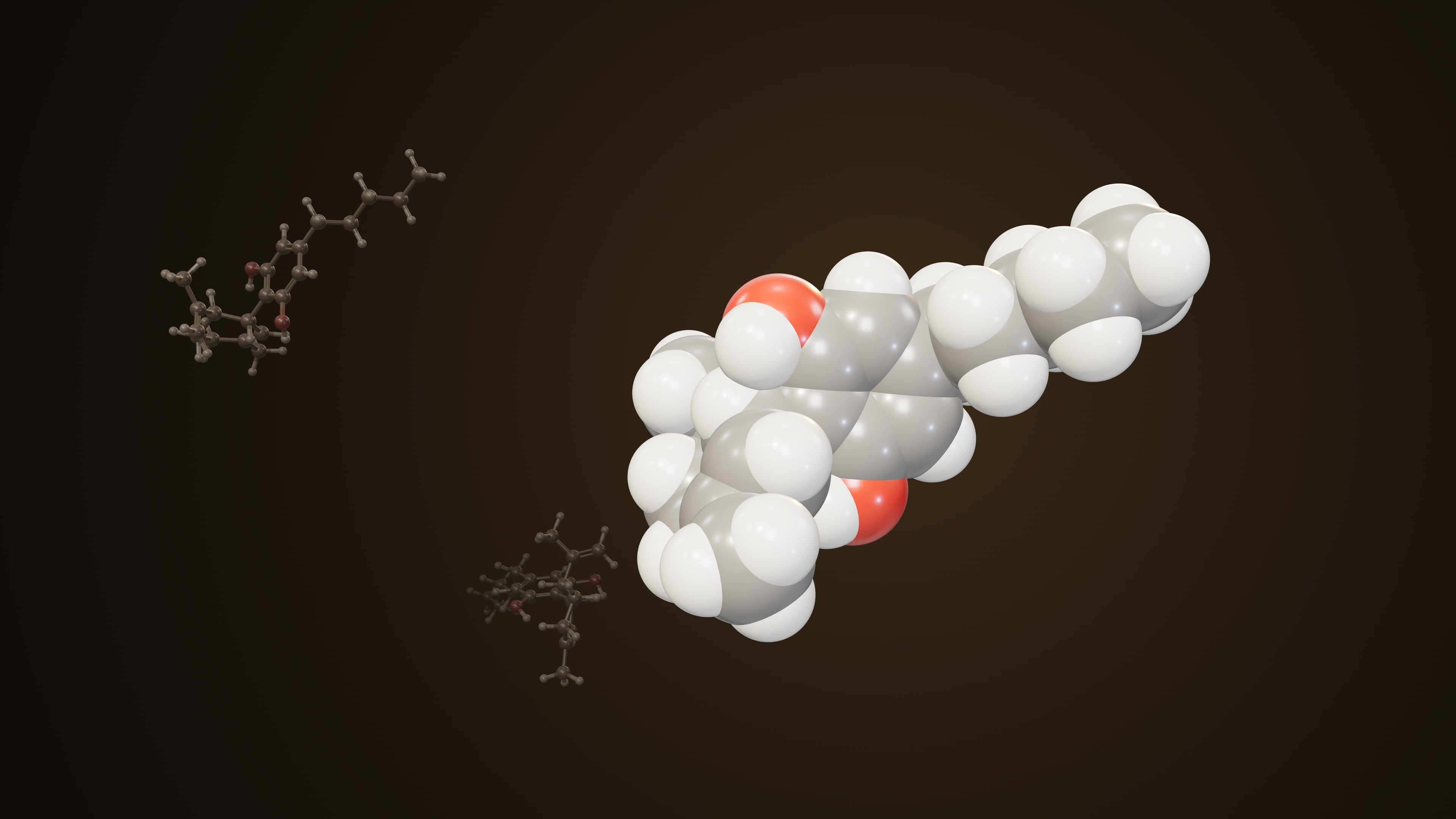
It is now common to see serums, face oils, masks and lip care products labeled "with CBD" on store shelves and online. It is only natural to be curious about an ingredient that has become so widespread: Does it really make a difference, or is it just a new fad? In this article, we explain why CBD became a favorite of the beauty world, how well the research matches this interest, and what might actually be inside a bottle.
What’s in this article?10 sections
What is CBD oil, and why is it in beauty products?
CBD (cannabidiol) is a compound from the cannabis plant. The compound in cannabis that makes you high is THC; CBD does not make you high. Products called "CBD oil" are made by mixing cannabis extract with a carrier oil such as olive oil or coconut oil. In beauty products, CBD is usually found together with these carrier oils, vitamins and other plant extracts.
A common mix-up: hemp seed oil is not CBD oil. Pressed from the seeds, this oil is rich in omega fatty acids but contains next to no CBD. In a study that measured 20 seed oils sold in Turkey, CBD came out at most about 0.02 mg per ml; measurable THC was also found in all but one sample (Kacargil 2026). A product whose label says only "cannabis" or "hemp" may not contain CBD.
Where does this trend come from?
Behind CBD's reputation in skin care are mostly lab studies. In cell culture experiments, CBD showed antioxidant effects (Hampson 1998), and in human oil gland cells it reduced oil production and inflammation (Oláh 2014). These findings often show up in product marketing in words such as "soothing," "antioxidant" and "balancing." One assessment noted that CBD products applied to the skin are often marketed as reducing inflammation, moisturizing and reducing wrinkles, even though good evidence is limited (Wang 2021).
The claims on labels show this too. In a study of 97 CBD products bought in stores and online in the US in 2020, made up of hair care, cosmetic and food and drink products, 24% of the products carried beauty claims such as "skin looks younger," and 40% carried treatment claims such as "relieves pain." 86% had statements that make a product look healthy, such as "paraben-free" or "dye-free." 63% of the products had no note saying that these claims had not been evaluated by the US Food and Drug Administration (FDA) (Dowd 2025).
What does the research say?
The lab findings are interesting, but their counterpart in people is still limited. A review looking at CBD's place in cosmetic dermatology writes that clinical studies in people are very few and that the problem of delivering CBD effectively into the skin has not been solved (Kuzumi 2024). In an analysis that combined 17 studies of cannabis and cannabinoid products in skin conditions, a small reduction in itching was seen; there was no clear difference in dryness, redness or quality of life between people who used the products and those who did not. Most of the products in these studies did not contain CBD alone (Sermsaksasithorn 2025).
We cover individual topics such as wrinkles, acne and dry skin in separate articles: skin aging, acne and skin hydration.
Another phrase you often hear is "CBD has been approved as a medicine." This is true, but only for a CBD medicine taken by mouth and purified to pharmaceutical quality, for certain rare types of epilepsy (details). This approval tells us nothing about how cosmetic products affect the skin.
Products containing THC
We could not find a human study of beauty products containing THC. Products sold as "full-spectrum" may contain trace amounts of THC; we explain what that means in our spectrum guide.
What is really in the bottle?
In the products tested, the amount of CBD often did not match the label. In the US study above, the label was accurate for only 9 of the 71 products that stated a CBD amount (about 13%). About half of the products contained more CBD than stated, and more than a third contained less; no CBD at all was found in 10 products. In one of the cosmetics, the CBD measured was more than ten times the amount on the label. Products saying "tested by an independent lab" did not have more accurate labels than those that did not (Dowd 2025).
So the word "CBD" on a beauty product does not, on its own, tell you how much CBD is inside. We explain step by step what to look for on a label on our label-reading page.
Possible side effects and drug interactions
CBD products applied to the skin are generally well tolerated, but the fragrances, preservatives and plant extracts in them can cause redness or allergy in sensitive skin. In a study testing five different products, CBD from three of them passed through the skin into the blood (Zamarripa 2024). You can find details, and the interactions of oral CBD with medicines, in our article CBD oil and the skin: side effects and on our drug interactions page.
How was it used in studies?
There is no amount of CBD for beauty use that has been tested in people and shown to work. The concentrations used in skin studies vary widely by product; for example, in a study on acne, solutions containing 2.5% and 5% CBD were tested (study dose; not a personal recommendation). We describe the result of this study in our acne article.
If you are thinking about using CBD
Before trying a beauty product, you can ask your pharmacist or dermatologist:
- How many mg of CBD the product contains in total, and which batch's certificate of analysis shows this.
- Whether the product is registered as a cosmetic (how to check is on our regulations page).
- Whether the fragrances and plant extracts in the ingredients are right for you, if you have sensitive skin, eczema or a known allergy.
- Whether there is any downside to applying it along with the prescription creams you use.
In Turkey, cannabis-derived products, including CBD, may be sold only in pharmacies (Law No. 7557, regulation of January 31, 2026). Those classed as medicines or health products are dispensed with a prescription; no prescription requirement is stated for supplement products with a THC content of no more than 0.3% or for cosmetics (personal care products). As of October 2026, there is no approved (licensed) CBD medicine in Turkey.
Conclusion
CBD's rise in the beauty world rests largely on promising lab findings and how they are reflected in product marketing. Studies in people are still few and small; for now, the most consistent finding is a small reduction in itching. And what is in the products does not always match the label. If you are curious, reading the label carefully and keeping your expectations in line with where the research stands today is a good start.
Frequently asked questions
Do CBD beauty products really work?
There is not enough research yet to say. The lab findings are interesting, but clinical studies in people are few and small; in an analysis that combined studies, the most consistent finding was a small reduction in itching. No clear difference was seen in dryness, redness or quality of life.
Does a product labeled "cannabis" or "hemp" contain CBD?
Not always. Hemp seed oil contains next to no CBD; in 20 seed oils measured in Turkey, CBD came out at most about 0.02 mg per ml. You can tell whether a product contains CBD, and how much, from the amount in mg on the label and from the certificate of analysis.
Can I trust the amount of CBD on the label?
Not always. In the US, the label was accurate for only 9 of 71 products that stated a CBD amount, and no CBD at all was found in 10 products. Products saying "tested by an independent lab" were not more accurate either.
Does CBD's approval as a medicine also apply to cosmetics?
No. The approval is only for a CBD medicine taken by mouth and purified to pharmaceutical quality, for certain rare types of epilepsy. This approval tells us nothing about how cosmetic products affect the skin.
Where can you buy CBD cosmetics in Turkey?
Cannabis-derived products, including CBD, may be sold only in pharmacies in Turkey (Law No. 7557, regulation of January 31, 2026). Those classed as medicines or health products are dispensed with a prescription; no prescription requirement is stated for supplement products with a THC content of no more than 0.3% or for cosmetics. As of October 2026, there is no approved (licensed) CBD medicine in Turkey.
References
Show 9 references
- Dowd AN, et al. Cannabinoid Content and Label Accuracy of Various Hemp-Derived Haircare, Cosmetic, and Edible Products Available at Retail Stores and Online in the United States. Cannabis Cannabinoid Res. 2025. PMID 39029473
- Wang JV, et al. Consumer interest in topical cannabidiol: An examination of online search trends from 2015 to 2019. Clin Dermatol. 2021. PMID 34920818
- Hampson AJ, et al. Cannabidiol and (-)Delta9-tetrahydrocannabinol are neuroprotective antioxidants. Proc Natl Acad Sci U S A. 1998. PMID 9653176
- Oláh A, et al. Cannabidiol exerts sebostatic and antiinflammatory effects on human sebocytes. J Clin Invest. 2014. PMID 25061872
- Kuzumi A, et al. The Potential Role of Cannabidiol in Cosmetic Dermatology: A Literature Review. Am J Clin Dermatol. 2024. PMID 39369127
- Sermsaksasithorn P, et al. Cannabis and cannabinoids in dermatology: a systematic review and meta-analysis of quantitative outcomes. Front Pharmacol. 2025. PMID 41181596
- Kacargil CU, et al. Determination of cannabinoids in commercial hemp seeds and hemp seed oil products in Türkiye by LC-MS/MS. Forensic Sci Int. 2026. PMID 41621128
- Zamarripa CA, et al. Pharmacokinetics and pharmacodynamics of five distinct commercially available hemp-derived topical cannabidiol products. J Anal Toxicol. 2024. PMID 38217086
- Kenevirden Elde Edilen Ürünlere Dair Yönetmelik (Regulation on Products Derived from Hemp). Official Gazette, January 31, 2026, issue 33154. Official Gazette 33154
 Acne and CBD: What Does the Research Say?
 CBD Oil and the Skin: Research and Side Effects
 CBD in Cosmetics: Ingredients and Research
 CBD and Skin Care: The Scientific Research